How Suspension Bushings Affect Wheel Alignment Over Time
Your suspension bushings wear over time, letting control arms and links shift out of position. Rubber degrades or polyurethane compresses unevenly, causing up to 3.5 mm of deflection-more than 2 mm ruins alignment stability. This movement alters camber and toe by over 1.5 degrees, leading to uneven tire wear and loose steering. New bushings reduce deflection to 0.8 mm, maintaining factory angles longer. For lasting alignment, replace worn bushings first. There’s more to take into account when restoring precise suspension control.
Notable Insights
- Worn bushings allow suspension components to shift, altering camber and toe angles beyond factory specifications.
- Rubber or polyurethane deterioration creates slop, leading to unintended control arm and link movement over time.
- Even 2–3 mm of bushing-induced displacement can cause measurable alignment deviations and uneven tire wear.
- Loose bushings introduce steering play and wandering, reducing alignment stability under load and during cornering.
- Replacing degraded bushings restores original suspension geometry, maintaining proper alignment longer and improving handling.
How Worn Bushings Cause Alignment Problems
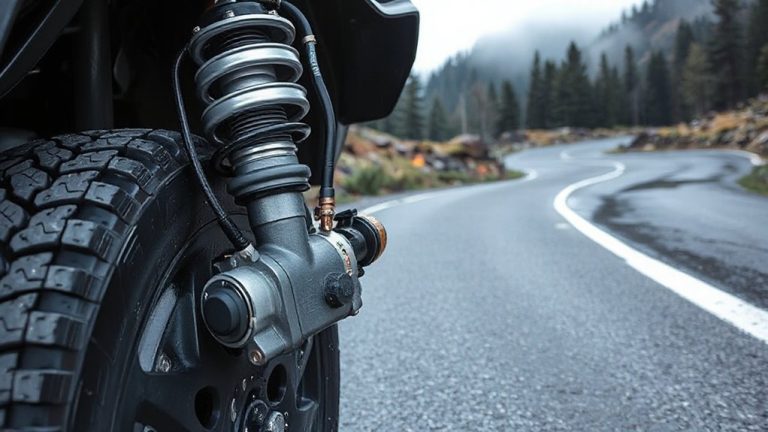
When bushings wear out, they can no longer hold suspension components in their proper positions, and that directly affects your vehicle’s alignment. Bushing deformation occurs as rubber deteriorates or polyurethane compresses unevenly over time. This distortion allows unintended movement in control arms, sway bars, and trailing links. Even 2–3 millimeters of shift can alter camber or toe angles beyond factory specifications. You’ll experience uneven tire wear and reduced steering precision. Joint separation exacerbates the issue, where the metal sleeve pulls away from the rubber core, creating slop in the suspension system. This gap introduces play-sometimes over 5 degrees of uncontrolled articulation. Without stable pivot points, alignment settings drift under load. Suspension geometry relies on fixed reference points; worn bushings compromise that stability. Factory tolerances assume intact components. Once bushing deformation or joint separation begins, real-time alignment shifts occur with every bump or corner. You lose handling consistency.
Signs Your Bushings Are Ruining Your Alignment
Every few thousand miles, your suspension faces relentless stress-and worn bushings start showing it long before complete failure. You’ll notice loose steering, where the response feels delayed or imprecise. This happens because degraded rubber bushings allow unintended movement in control arms and sway bars, increasing play in the steering system. What seems like a minor shift can result in alignment deviations exceeding 1.5 degrees from factory specs. Uneven tire wear appears quickly, often with excessive wear on the inner or outer tread edges-indicating camber or toe misalignment. Tires may lose up to 30% of their expected lifespan if driven under these conditions. A clunking sound over bumps often accompanies these symptoms, confirming bushing deterioration. Ignoring these signs leads to compromised handling, reduced stability, and higher repair costs. Regular inspection every 15,000 miles guarantees early detection and maintains peak alignment.
Can You Align a Car With Bad Bushings?
Can you really align a car with bad bushings, or are you just wasting time and money? You can technically align a car with worn bushings, but the results won’t last. Damaged bushings allow suspension components to shift outside specified tolerances, undermining alignment precision. Even if you set camber, caster, and toe correctly, compromised bushings introduce play that leads to steering wander. Your car won’t track straight, and minor road imperfections exaggerate drifting sensations. More critically, uneven tire wear accelerates because inconsistent contact patches develop as the wheels move unpredictably. Rubber or polyurethane bushings with cracks, tears, or excessive deflection-more than 2mm displacement under load-can’t maintain geometry. Alignment settings rely on stable mounting points. Worn bushings make those points unstable, so adjustments quickly become inaccurate. You’re not fixing the root cause. For reliable alignment, bushings must first control movement. Otherwise, you’re aligning a moving target.
When to Replace Bushings Before Aligning
You shouldn’t align a vehicle without first inspecting the suspension bushings-especially if there’s noticeable steering instability or uneven tire wear. Worn bushings compromise alignment accuracy because they allow unintended movement in control arms and sway bars. Check for cracks, tears, or excessive play; rubber bushings typically degrade after 60,000 to 100,000 miles depending on bushing material durability. Polyurethane versions last longer but can transmit more vibration. Always replace damaged bushings before alignment. Use OEM-specified parts to maintain design tolerances. Follow exact installation torque specs-over-tightening deforms rubber, leading to premature failure and incorrect suspension geometry. Under-torquing causes shifting under load, undermining alignment stability. Replacing bushings beforehand guarantees precise, lasting alignment adjustments. Skip this step, and your alignment will be off again in weeks.
How New Bushings Improve Alignment Stability
When properly installed, new bushings restore the suspension’s original design tolerances, which is critical for maintaining alignment stability over time. You get enhanced precision in steering response and consistent tire contact with the road. Worn bushings allow unwanted movement, but new ones minimize play, offering reduced deflection under load. This means your camber, caster, and toe angles stay within spec longer, even on uneven surfaces.
| Condition | Deflection (mm) |
|---|---|
| New Bushings | 0.8 |
| Worn Bushings | 3.5 |
Reduced deflection directly improves handling and extends tire life. Polyurethane or OEM-grade rubber compounds resist deformation, maintaining alignment up to 25% longer than with degraded parts. You’ll notice less wandering and more predictable cornering. Enhanced precision isn’t just about initial alignment-it’s about sustaining it.
On a final note
You need good bushings for proper alignment. Worn bushings allow suspension components to shift beyond factory tolerances, often by 2–5 mm, causing erratic toe and camber changes. New polyurethane bushings, with durometer ratings of 80–90A, reduce deflection by up to 70% compared to degraded rubber. This restores precise control over alignment angles. Alignments on bad bushings fail quickly. Replace bushings first for lasting, accurate results.