Evaluating Transfer Marks From Tape or Protective Films Left Too Long On Paint
You’re seeing transfer marks from chemically aged adhesive that’s undergone oxidative cross-linking. UV exposure and heat have hardened acrylic-based residues, increasing cohesion while reducing solubility. These bonds penetrate microscopically into paint, especially beyond 30 days. Removal requires heat (50–60°C), isopropyl alcohol, and light mechanical action. Improper treatment risks clearcoat damage. Surface analysis reveals contamination depth and safe intervention methods. A full strategy for reversal and restoration follows.
Notable Insights
- Prolonged tape exposure leads to adhesive oxidation, increasing residue and bond strength to painted surfaces.
- UV and thermal cycling accelerate adhesive cross-linking, making removal harder after 30 days.
- Residue patterns and spread indicate duration of film contact and potential solvent penetration.
- Heat softens aged adhesive; apply 50–60°C before using isopropyl alcohol for safer cleaning.
- Matte finishes risk damage beyond 30 days; gloss finishes should not exceed 180 days.
What Your Tape Residue Says About Damage
What does the residue left behind tell you about the surface it once protected? It reveals critical clues about tape aging and how adhesive chemistry interacts with painted surfaces over time. You’re seeing more than sticky leftovers-it’s a chemical footprint. As tape ages, ultraviolet exposure and thermal cycling degrade the adhesive, causing it to oxidize and cross-link. This increases its cohesive strength while reducing tack, making removal harder. Residue rich in acrylic polymers suggests a pressure-sensitive adhesive system common in high-performance tapes. When it bonds too aggressively, it can lift clear coats or leave imprints. The adhesive’s formulation-designed for durability-becomes a liability. You’re not just removing gunk; you’re evaluating unintended adhesion failure modes. Residue patterns indicate how long the tape stayed on and whether solvents or softeners have already penetrated the film.
Remove Paint-Safe Tape Residue in 5 Steps
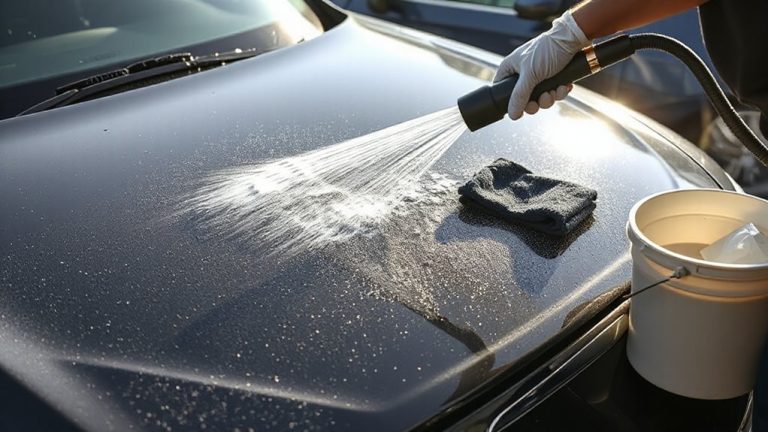
Start with a clean, dry surface-any moisture or contaminants will interfere with residue removal. First, gently warm the residue with a heat gun on low (50–60°C) to soften adhesive bonds. Next, apply an isopropyl alcohol-based chemical solvent using a microfiber cloth; this breaks down polar adhesive components without harming clear coat. Wipe in straight lines to minimize surface abrasion risk. For stubborn areas, use a clay bar with light pressure: it lifts contaminants without scratching, unlike abrasive pads. Third, reapply solvent if needed, letting it dwell 30 seconds for full penetration. Fourth, wipe residue away with a clean section of cloth to avoid redepositing contaminants. Finally, inspect under direct lighting-residual shine means leftover adhesive. Repeat steps if necessary, but never prolong chemical exposure beyond manufacturer limits. Always test chemical solvents on hidden areas first. For optimal results, choose a high-quality car clay bar that effectively removes bonded contaminants without marring the paint surface.
When to Hire a Paint Specialist for Stubborn Marks
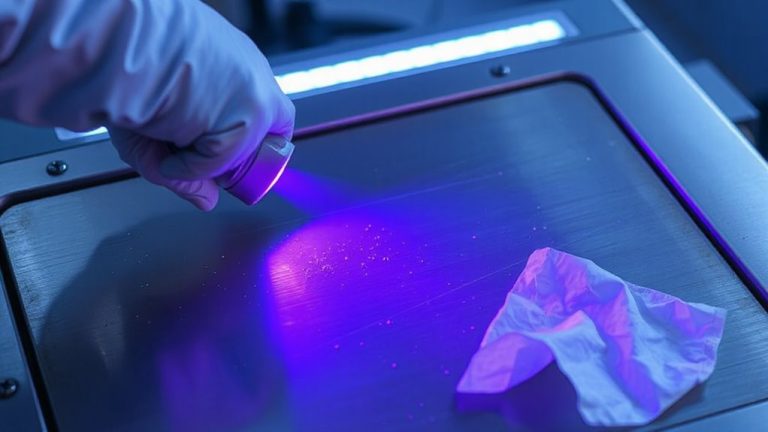
Persistent adhesive residues or hazing from protective films sometimes resist standard removal techniques, especially when cross-linked polymers or oxidized bonding layers are involved. You should hire a paint specialist when DIY methods fail or risk damaging the finish. A professional conducts a detailed surface evaluation to assess coating thickness, hardness, and adhesion integrity. They use calibrated instruments like profilometers and cross-cut testers to determine safe removal pathways. Paint analysis identifies the exact clearcoat and contaminants, guiding solvent selection. Specialists apply precision techniques-laser ablation or micro-abrasion-without exceeding 0.1 mils of material removal. They work within OEM specifications, preserving factory finish integrity. Attempting aggressive polishing or chemical stripping yourself could breach the clearcoat, which is typically only 1.5 to 2.0 mils thick. When marks persist, professional intervention guarantees safe, lasting results.
Why Old Adhesive Bonds So Strongly to Paint
Over time, adhesives undergo chemical and physical changes that dramatically increase their bond strength to automotive paint. This process, known as chemical aging, causes the adhesive to harden and cross-link, forming stronger molecular attachments to the paint surface. As it ages, the adhesive becomes less soluble and more resistant to removal agents. Simultaneously, surface degradation of the paint occurs, where the top layers slightly soften or break down, allowing the adhesive to bond more intimately. UV exposure and temperature fluctuations accelerate both chemical aging and surface degradation. The result is a bond so tenacious that simple peeling can damage the clear coat. Older tapes or films-left beyond 30 days-especially exhibit this behavior. You’ll need solvents or heat to disrupt the strengthened interface without harming the finish. For convenient access to removal tools while on the go, consider storing them using reliable car headrest hooks.
Prevent Sticky Residue With These Pro Tips
When applied correctly, high-quality tapes and protective films can shield vehicle surfaces without leaving behind stubborn residue. Preventing sticky residue starts with understanding adhesive degradation and surface porosity. Exposure to UV light and heat accelerates adhesive breakdown, increasing bond strength over time. Low surface energy paints and high porosity materials absorb adhesives more readily, making removal harder. Use acrylic-based tapes for long-term applications; they resist degradation better than rubber-based adhesives.
| Surface Type | Risk Level | Recommended Max Duration |
|---|---|---|
| Gloss Paint | Low | 180 days |
| Matte Finish | High | 30 days |
| Wrapped Vehicle | Medium | 90 days |
| Plastic Trim | Medium | 120 days |
Replace films before exceeding recommended durations. Clean surfaces with isopropyl alcohol before application to minimize adhesion issues linked to contamination and surface porosity.
On a final note
Your tape residue reveals whether surface damage is superficial or structural. Light, sticky films often lift with isopropyl alcohol (70% concentration) and a microfiber cloth. Heavier adhesives require specialized solvents like citrus-based degreasers. Bond strength increases after 30 days due to polymer cross-linking. Prevent issues by removing tapes within two weeks. For cured residues penetrating clear coat layers, professional wet-sanding (600–1200 grit) may be necessary.