How Poorly Maintained Suspension Leads to a Bumpy, Uncomfortable Ride
Your suspension absorbs road shocks through springs and dampens bounce with shocks or struts, typically allowing 4 to 6 inches of controlled travel. Worn shocks lose up to 60% of their damping ability, letting your car bounce excessively over bumps. Bad bushings, ball joints, or misaligned components add slack, reducing stability and comfort. As tires lose consistent contact, ride quality suffers. You’ll notice clunks, uneven tire wear, or nose dives-each sign pointing to deeper issues you can identify next.
Notable Insights
- Worn shocks fail to dampen spring oscillations, causing excessive bouncing and reduced ride smoothness.
- Damaged suspension components create clunks, squeaks, or rattles when hitting bumps or turning.
- Uneven tire wear from misalignment reduces traction and amplifies road vibrations into the cabin.
- Excessive body roll and nose dive during braking destabilize the ride, increasing discomfort.
- Loose steering and delayed response due to worn bushings or joints reduce control and ride quality.
What a Car Suspension Does: and Why It Smooths Your Ride
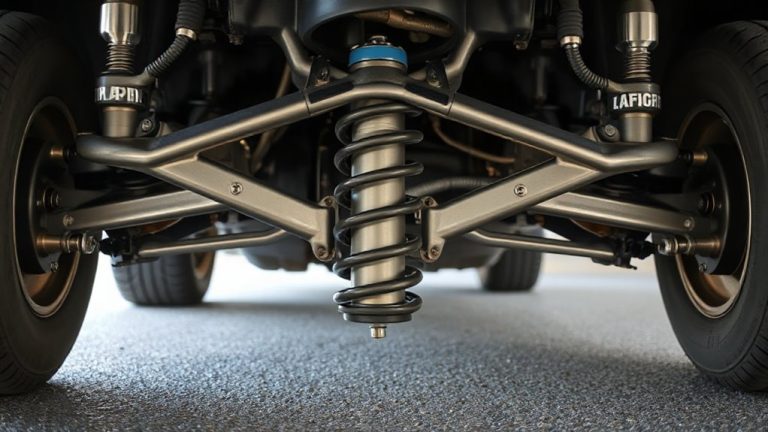
Every time you hit a pothole or drive over uneven pavement, your car’s suspension system goes to work. It absorbs impact forces to maintain tire contact and ride stability. Spring compression occurs as the coil or leaf spring shortens under load, storing kinetic energy. This action limits how much the wheel assembly moves upward into the chassis. Following compression, wheel rebound allows the wheel to return downward, maintaining traction. Rebound is controlled by shock absorbers, which dampen spring oscillations. Most systems use a rebound stroke of 4 to 6 inches, depending on vehicle design. Without proper rebound control, the tire can lift off the road surface. The suspension also isolates the cabin from road noise and vibration. Components like control arms and sway bars keep alignment geometry intact. Modern suspensions typically allow 6 to 10 inches of total wheel travel, balancing comfort and handling. Upgrading to the best car suspension can significantly improve performance on rough terrain.
7 Warning Signs of a Failing Suspension
You might not think about your suspension until something feels off-like when your car floats over bumps instead of absorbing them. That’s often the first sign of trouble. Listen for suspension noise-clunks, squeaks, or rattles-especially when turning or driving over bumps. These sounds typically indicate worn bushings, loose joints, or failing struts. Check your tires for uneven wear; cupping or scalloping suggests dampers aren’t maintaining consistent tire contact. A nose dive during hard braking or body roll on curves also signals weakening components. Most shocks last 50,000 to 100,000 miles-exceeding this range increases failure risk. Misalignment from failing control arms or ball joints worsens handling. If the vehicle sits lower on one side, springs may be fatigued. These symptoms compromise control, safety, and comfort. Ignoring them accelerates damage. Early detection saves cost and guarantees stability.
How Bad Shocks and Struts Cause a Bumpy Ride
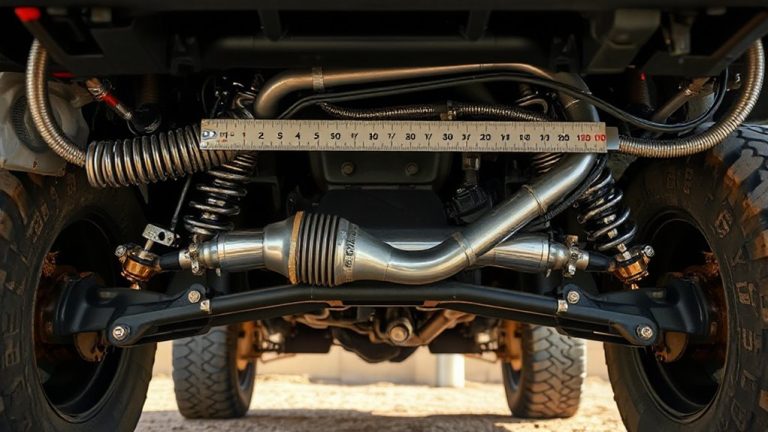
A vehicle’s ability to glide smoothly over uneven pavement begins with its shocks and struts-the core components of the suspension system. When these parts wear out, your ride becomes noticeably rougher. Worn shocks fail to dampen spring oscillations, causing excessive bouncing after hitting bumps. You’ll feel this during bouncy braking, when the front end dives sharply and takes too long to stabilize. Shaky steering often follows, as degraded struts allow wheel assembly movement that disrupts alignment. Typical service life is 50,000 to 100,000 miles, but rough roads shorten it. Factory-tuned damping rates fall by up to 60% in aged units, measured using shock dyno tests. Without proper damping force, tires lose consistent road contact, reducing grip. Modern vehicles use monotube or twin-tube designs, each calibrated for specific load and motion rates. Replacing worn units restores factory ride height and control. Upgrading to the best lifted truck shocks can significantly improve ride quality and handling for trucks with increased ride height.
Worn Bushings and Joints That Ruin Ride Quality
What makes your car feel loose and unstable over bumps? Worn bushings and joints are likely culprits. These components absorb vibrations and maintain precise suspension geometry. When degraded, they allow excess movement in control arms, sway bars, and steering linkage. You’ll notice loose steering, where inputs feel delayed or vague. Factory rubber bushings typically last 60,000–100,000 miles, but heat, road salt, and stress accelerate wear. Polyurethane alternatives offer greater durability and reduced deflection-often handling 2–3 times more load without deformation. Worn ball joints, rated for about 75,000 miles, can develop play exceeding 0.050 inches, worsening alignment stability. This excess motion directly contributes to uneven tire wear, especially on edges. Without snug connections, suspension parts shift under load, reducing contact patch consistency. Metal-on-metal clunks over bumps, reduced cornering control, and wandering steering confirm failure. Replacing worn bushings and joints restores factory rigidity, ensuring smoother, more predictable handling and extending tire life.
Why Poor Alignment Follows Suspension Damage
When suspension components wear or fail, alignment settings rarely stay within factory specifications-because control arms, tie rods, and steering knuckles rely on precise mounting points to maintain geometry. You’ll notice toe displacement when bent or loose tie rods shift the front wheels inward or outward beyond the ideal 0.1 to 0.3 degrees of toe-in. This causes rapid, uneven tire wear and wandering steering. Camber drift occurs when worn control arm bushings or sagging springs allow the top of the tire to tilt beyond ±0.5 degrees, reducing contact patch. Misaligned camber increases tread wear on one shoulder and degrades cornering stability. Even minor shifts-just 1.0 degree off spec-can scrub tires prematurely. These changes disrupt handling balance, forcing constant steering corrections. Alignment isn’t just about tires; it’s a direct result of suspension integrity. You can’t align out mechanical wear-fix the components first. Installing a leveling kit for Ram 1500 can alter suspension geometry and must be factored into alignment measurements post-installation.
How a Rough Ride Increases Crash Risk
Misaligned suspension doesn’t just wear tires-it compromises your control. When your vehicle’s shocks or struts are worn, you experience increased stopping distance-sometimes by up to 20% on wet roads. Worn suspension reduces tire contact with the road, meaning less grip during braking. This delay adds critical feet to your stop. You also face reduced steering control, especially in sudden maneuvers. Without proper damping, the wheels can bounce, leading to poor response and delayed directional changes. Consider: at 60 mph, a two- to three-foot deviation due to delayed input can mean the difference between safety and collision. The suspension’s job is to keep tires planted. When it fails, stability control systems struggle. Your modern car depends on predictable wheel movement. When components sag or bind, sensors receive erratic data. That increases accident risk, particularly in emergencies. Poor handling isn’t just uncomfortable-it’s dangerous.
Simple Maintenance That Prevents Bumpy Driving
While you might overlook the early signs of wear, addressing suspension maintenance now can save you from a rough, unsafe ride later. Regular checks guarantee smooth handling and extend component life. Proper tire pressure (typically 32–35 psi) maximizes tread contact and reduces uneven wear. Imbalanced wheels cause vibrations, especially at speeds over 50 mph. Correct wheel balance involves adding small counterweights to match rotational forces.
| Maintenance Task | Frequency | Key Benefit |
|---|---|---|
| Check tire pressure | Monthly | Improves fuel efficiency, grip |
| Wheel balance | Every 6,000 miles | Reduces vibration, tire wear |
| Suspension inspection | Every 12,000 miles | Detects worn struts, bushings |
Ignoring these steps stresses suspension parts. Balanced wheels and correct tire pressure stabilize ride quality. Treat them as essential as oil changes.
On a final note
You feel every bump because worn shocks exceed 50,000-mile service limits, reducing damping efficiency by up to 60%. Damaged control arm bushings, made of polyurethane or rubber, allow uncontrolled suspension movement. Misaligned camber angles beyond ±0.5° increase tire scrub. Steel coil springs degrade over time, losing 10–15% of their load capacity. Replace components every 75,000 miles or as OEM specifications mandate to maintain ABS effectiveness and steering response.