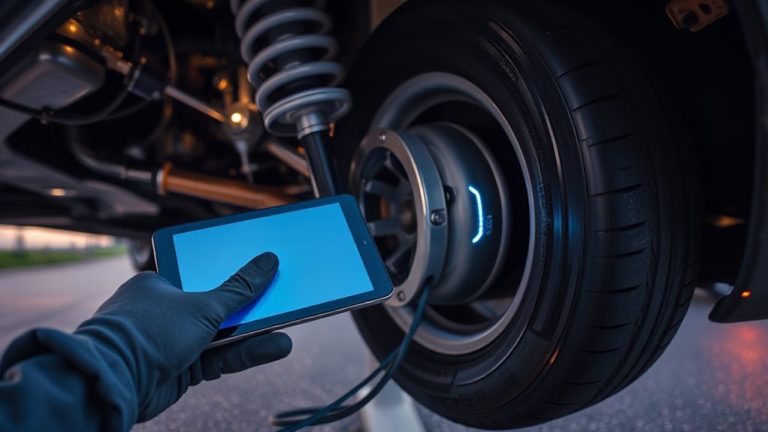
TPMS Sensor Care During Wheel Baths to Maintain Accuracy and Longevity
You must avoid harsh chemicals and high-pressure sprays to protect your TPMS sensors during wheel baths. Cleaners with a pH below 5 or above 9 corrode aluminum housings and degrade rubber seals. Never use pressure above 30 psi-most sensors are only IPX7-rated, meaning they can handle brief immersion, not sustained force. Use pH-neutral, non-corrosive cleaners and rinse below 20 psi. Dry valve areas thoroughly to prevent galvanic corrosion and signal loss. Damage from improper cleaning is irreversible-knowing the right methods guarantees long-term sensor reliability.
Notable Insights
- Use pH-neutral, non-corrosive wheel cleaners to prevent degradation of TPMS sensor seals and metal components.
- Avoid high-pressure rinses above 30 psi to protect sensor seals from water ingress and internal damage.
- Never use acid-based, alkaline, or solvent-heavy cleaners that accelerate corrosion and shorten battery life.
- Inspect valve stems and sensor bodies post-wash for corrosion, pitting, or moisture-induced signal interference.
- Dry sensor areas thoroughly with a microfiber cloth to prevent galvanic corrosion and maintain signal strength.
Skip the Soap: How Harsh Wheel Cleaners Damage TPMS
Why risk damaging a critical safety component just to make your wheels shine? Harsh wheel cleaners expose TPMS sensors to corrosive chemical exposure that degrades rubber seals and metal components. Most sensors use aluminum or stainless steel bodies rated for pH-neutral environments. Acidic or alkaline cleaners-especially those with pH below 5 or above 9-accelerate corrosion, particularly on valve cores and sensor PCBs. Over time, this weakens structural integrity and disrupts signal transmission. You also leave behind abrasive residues that cling to sensor surfaces. These microscopic particles act like sandpaper during rotation, wearing down o-rings and mounting points. Even silicone-based sprays can trap contaminants if not thoroughly rinsed. Always use pH-balanced, TPMS-safe cleaners. Rinse thoroughly with low-pressure water. Preventing chemical exposure and eliminating abrasive residues guarantees sensor accuracy, extends service life beyond 5–7 years, and maintains factory-calibrated pressure thresholds. Best Tire Pressure Monitoring Systems are designed with long-term durability in mind, but only when properly maintained during routine wheel care.
Don’t Blast: High-Pressure Washes That Wreck Sensors
While cleaning your wheels, it’s easy to overlook how much damage high-pressure water can do to your TPMS sensors. Direct spray above 30 psi can breach seals, especially near valve stems where sensor placement makes them vulnerable. Water ingress corrodes internal circuitry and risks shorting the transmission module. Even brief exposure compromises long-term reliability. Most sensors are rated IPX7-protected against immersion up to 1 meter for 30 minutes-but not continuous high-pressure exposure. Forceful streams force moisture past O-rings and into battery compartments, accelerating wear and reducing battery lifespan by as much as 40%. Once water enters, signal accuracy drops and false alerts increase. Avoid aiming nozzles at the inner barrel where sensors mount. Treat them like precision electronics, because they are. Replace damaged gaskets promptly. Preserve sensor integrity by rinsing at low pressure below 20 psi.
Use These Cleaners to Keep TPMS Safe
You’ve already protected your TPMS sensors from high-pressure damage-now it’s time to choose the right cleaner. Use only pH-neutral, non-corrosive cleaners specifically labeled safe for aluminum and rubber. Harsh chemicals like bleach or acid-based wheel cleaners degrade sensor materials, including seals and circuit boards, leading to premature failure. Avoid solvents containing toluene or xylene; they can crack the sensor’s housing. Instead, opt for isopropyl alcohol (70% or less) applied with a soft cloth. This cleans effectively without penetrating or swelling internal components. Exposure to aggressive cleaners can also shorten battery lifespan by corroding terminals or compromising seals. The battery, typically sealed within the sensor, can’t be replaced, so preserving its integrity is critical. Clean gently around valve stems and sensor bases where grime collects. Proper cleaning safeguards both accuracy and longevity.
Check for Corrosion After Every Wheel Wash
Regularly inspecting your TPMS sensors after each wheel wash is a smart habit that helps catch issues early. Corrosion inspection should be done visually and physically-check the valve stems and sensor bodies for rust, pitting, or white powdery deposits, especially on aluminum components. Even small amounts of corrosion can disrupt signal transmission or cause slow leaks. Moisture prevention starts the moment you rinse; residual water trapped around the sensor base or between the sensor and rim increases galvanic corrosion risk. Use a clean, dry microfiber cloth to wipe valve areas thoroughly. Sensors typically operate at 315 MHz or 433 MHz; corrosion can weaken signal strength by up to 30%. Most TPMS units have an expected service life of 5–7 years; routine checks extend that. A moment of inspection after washing protects long-term accuracy and functionality.
Wash Wheels the Right Way: 5 TPMS-Safe Habits
Since improper washing techniques can compromise sensitive components, adopting TPMS-safe habits is essential for maintaining sensor integrity and long-term performance. Avoid high-pressure sprays near valve stems to prevent damage to valve alignment. Use pH-neutral cleaners; harsh chemicals degrade rubber gaskets and affect sensor placement accuracy. Clean wheels when cool-thermal shock can warp components. Never use wire brushes; they scratch surfaces and risk damaging sensor housing. Dry thoroughly to inhibit moisture buildup inside the sensor cavity.
| Habit | Risk Mitigated | Technical Justification |
|---|---|---|
| Low-pressure rinse | Valve core damage | >30 psi distorts seals |
| Non-corrosive cleaners | Gasket erosion | pH 6–8 preserves rubber |
| Cool-wheel cleaning | Sensor misalignment | Thermal expansion >0.002″ affects placement |
On a final note
You protect your TPMS with every wash. Harsh soaps degrade rubber seals, risking air leaks at 33–45 psi operating pressure. High-pressure sprays exceeding 1,200 psi can crack sensor housings. Use pH-neutral cleaners below 9.0 to preserve aluminum and brass components. Inspect valve cores and stems monthly for corrosion. Clean gently with soft brushes. These habits extend sensor life beyond 5–7 years-matching OEM durability. Correct care maintains accuracy within ±1 psi and prevents costly replacements.