Using VCI-Coated Wraps for Long-Term Classic Car Storage
You’re using VCI-coated wraps to shield your classic car from rust during long-term storage. These 4-mil polyethylene wraps release corrosion-inhibiting molecules that form a 1–2 nanometer protective layer on metal. The vapor diffuses into seams and cavities, neutralizing moisture and stopping ionic transfer. Effective up to 95% humidity, they last up to 5 years. Proper overlap and sealing are critical. You’ll discover how to apply them correctly and avoid common mistakes.
Notable Insights
- VCI-coated wraps release corrosion-inhibiting vapors that protect metal surfaces at the atomic level during long-term storage.
- Ensure the classic car is clean, dry, and stored in low humidity before applying the VCI wrap for optimal effectiveness.
- Wrap the vehicle from front to rear with 2-inch overlaps and seal seams using VCI-compatible tape to maintain protection.
- Cover critical areas like brake calipers, exhaust manifolds, undercarriage, and wheel wells to prevent moisture and rust buildup.
- Inspect the wrap monthly for damage and avoid punctures, as gaps can compromise the vapor barrier and accelerate corrosion.
What Is VCI and How Does It Stop Rust in Storage?
What if you could stop rust before it starts? VCI, or Vapor Corrosion Inhibitor, does exactly that by releasing corrosion-inhibiting molecules into an enclosed space. These molecules disperse via molecular diffusion, spreading evenly across metal surfaces inside the wrap. Once the vapor saturation level is reached, the molecules bond at the atomic level, forming an invisible protective layer. This layer neutralizes moisture and halts electrochemical reactions that cause rust. VCI technology works in relative humidity up to 95%, with protection lasting up to five years. The wraps release VCI vapor steadily at temperatures between -4°F and 160°F. Unlike passive barriers, VCI actively migrates into seams, crevices, and cavities. Protection begins immediately after sealing. Each VCI-coated wrap maintains effective vapor concentration without airflow, ensuring complete coverage. You get long-term, maintenance-free defense without direct contact.
Why VCI Wraps Beat Traditional Car Covers
While traditional car covers shield your classic from dust and scratches, they do nothing to stop rust at the molecular level-something VCI wraps handle effortlessly. VCI wraps release corrosion-inhibiting molecules that penetrate seams, crevices, and metal pores, forming an invisible protective layer. Unlike standard covers, they actively prevent oxidation. Material durability is superior: polyethylene layers range from 3–5 mils thick, resisting tears and punctures during long storage. Standard fabric covers degrade faster, especially in damp conditions. Climate resistance is where VCI wraps truly outperform-engineered to function in 30–95% relative humidity, they block moisture intrusion without trapping condensation. Most are UV-stabilized, resisting degradation for up to 24 months indoors or outdoors. They remain dimensionally stable from -20°F to 140°F. This combination of active corrosion protection, material durability, and climate resistance makes VCI wraps a technically superior choice for preserving classic cars in storage.
Where to Apply VCI Wrap on a Classic Car
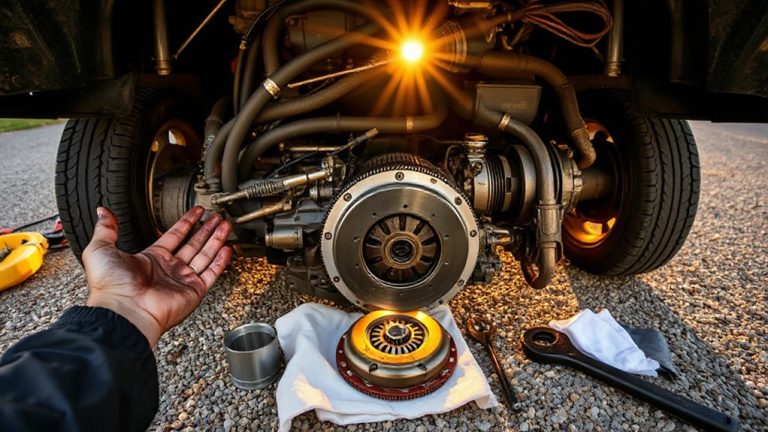
A VCI wrap should cover every exterior metal surface of your classic car to guarantee complete corrosion protection. You must include high-risk zones like brake calipers and exhaust manifolds, where heat and moisture accelerate corrosion. These components attract condensation during temperature swings, making them vulnerable even in dry storage.
| Area of Car | VCI Protection Needed | Reason |
|---|---|---|
| Brake calipers | Yes | Exposed metal, prone to rust |
| Exhaust manifolds | Yes | High heat causes oxidation |
| Undercarriage | Yes | Road salts and moisture collect here |
Wrap the entire frame, suspension parts, and wheel wells thoroughly. The VCI layer emits corrosion-inhibiting molecules that settle on metal, forming a protective film just 1–2 nanometers thick. This molecular barrier blocks ionic transfer responsible for oxidation. Don’t skip recessed areas-vapor diffusion secures coverage, but direct wrapping boosts protection.
How to Wrap Your Classic Car With VCI Material
If you’re preparing to wrap your classic car with VCI material, start by making certain the vehicle is clean, dry, and stored in a low-humidity environment. Begin at the front bumper, unrolling the wrap slowly to maintain consistent tension. Surface tension ensures the film adheres smoothly, minimizing air pockets. The material’s elasticity allows it to stretch snugly over curves and edges without tearing, conforming tightly to fenders, wheels, and trim. Use a hands-free technique-overlap each pass by 2 inches to guarantee full coverage. The wrap typically measures 4 mils thick, combining durability with flexibility. Seal seams with VCI-compatible tape to sustain protection. Work methodically from front to rear, then sides to roof, making certain uniform application. The wrap bonds to itself through controlled cling properties, not adhesives. Proper elasticity prevents sagging or loosening over time. Complete wrapping in one session for continuity.
VCI Wrap Mistakes to Avoid
You’ve cleaned the surface, maintained proper tension, and applied the VCI wrap with overlapping passes-now avoid undoing that work with preventable errors. Improper sealing is one of the most common mistakes. Gaps at edges or seams let moisture and contaminants enter, neutralizing the VCI’s corrosion-inhibiting vapor layer. Always seal edges with VCI-compatible tape or heat welding, ensuring a closed environment. Avoid insufficient material overlap-aim for at least 4 inches between layers. Less than that reduces protection and increases the risk of vapor escape. Never stretch the wrap too tightly; over-tension causes thinning and micro-tears, compromising barrier integrity. Use a consistent 10–15% tension during application. Store the vehicle in a dry, temperature-stable environment. Avoid puncturing the wrap during storage. Inspect it monthly. Proper sealing and adequate overlap are critical-they maintain the protective vapor equilibrium essential for long-term metal preservation.
On a final note
You protect your classic car effectively with VCI wraps. These wraps release volatile corrosion inhibitors that form a protective molecular layer on metal surfaces. Each wrap contains 1.5–2.0 grams of VCI per square meter, ensuring full coverage. Unlike passive covers, VCI actively prevents rust in humid environments. Proper sealing at seams with tape maintains protection for up to 24 months. Avoid punctures-damage reduces vapor retention.