Mitigating Inner Tire Wear by Matching Spring Drop to Negative Camber Adjustments
Lowering your car increases negative camber-up to 2.5° from a 1.5-inch drop-causing inner tire wear. Suspension geometry shifts reduce wheel travel and distort the contact patch. Match each inch of drop with 0.8° of adjustable camber correction. Use proper inflation (32–35 psi) and alignment within ±0.1° tolerance. Camber kits and correct offsets (+20 to +40 mm) restore balance. You’ll find further optimization strategies that improve tire life and handling precision.
Notable Insights
- Lowering a vehicle increases negative camber, which must be corrected to prevent excessive inner tire wear.
- For every inch of spring drop, aim for 0.5 to 1.0 degree of adjustable negative camber compensation.
- Use camber kits like adjustable control arms or strut plates to realign wheels after lowering.
- Maintain proper tire pressure (32–35 psi) to optimize contact patch and reduce inner edge loading.
- Perform professional alignment with precision tools to ensure camber, toe, and caster are within tolerance.
Why Lowered Cars Get Inner Tire Wear
While lowering your car can give it a sleek, aggressive stance, it often leads to inner tire wear due to changes in suspension geometry. Lowering alters the camber angle, tilting the top of the tire inward, which increases wear on the inner tread. This effect worsens if you don’t adjust spring drop with corresponding negative camber corrections. Tire pressure plays a critical role-underinflated tires amplify inner edge loading, accelerating wear. Your driving habits also contribute; aggressive cornering or frequent hard turns increases stress on the already compromised contact patch. Maintaining factory-recommended PSI helps distribute load more evenly. Even with ideal pressure, sustained hard cornering on lowered suspension magnifies inside tread degradation. You must balance ride height with alignment specs. Performance alignment typically requires -1.5 to -2.5 degrees of camber for street-driven lowered cars. Neglecting this balance guarantees premature inner wear, regardless of tire quality or driving style.
What Happens to Suspension When You Lower Your Car?
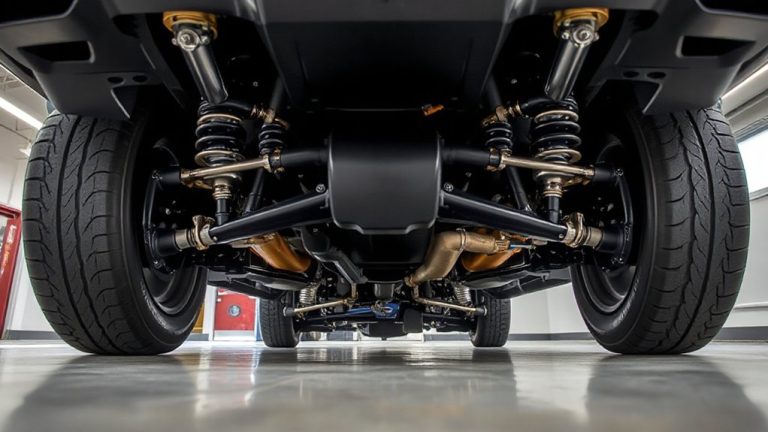
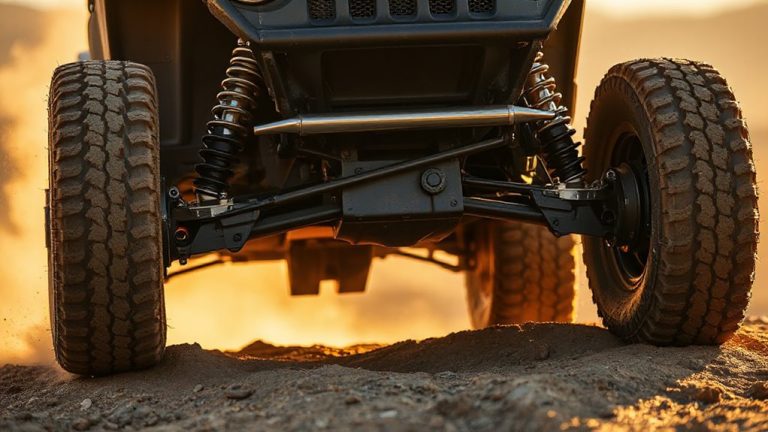
Lowering your car changes the suspension’s design limits, forcing components to operate outside their intended range. Your suspension geometry shifts, altering how forces transmit through the chassis. Control arms move to unnatural angles, reducing wheel travel and increasing stress on bushings and joints. The lowered ride height decreases the suspension’s arc of motion, causing premature bottoming and harshness over bumps. Tire deformation becomes more pronounced, especially during cornering, because the contact patch distorts under lateral loads. This reduces grip and accelerates wear, particularly on the inner shoulder. Stock bump stops engage sooner, limiting effective travel by up to 30%. Camber and toe curves deviate from factory specifications, even if static alignment appears correct. These changes compromise handling precision, ride quality, and component longevity, making proper spring rate and geometry compensation essential.
How Lowering Increases Negative Camber
When you lower your car, the suspension’s control arms shift to steeper angles relative to the ground, altering the pivot points that govern wheel motion. This change modifies the suspension geometry, forcing the top of the wheel to tilt inward-increasing negative camber. The lower you go, the more pronounced this effect becomes. Excessive negative camber shifts the tire’s contact patch unevenly, concentrating load on the inner edge. This not only accelerates inner tread wear but also increases tire scrub during cornering and straight-line driving. Tire scrub occurs as the misaligned tire drags laterally across the road surface, generating excess heat and wear. Without correction, even mild lowering-just 1.5 inches-can introduce 1.5 to 2.5 degrees of unwanted negative camber. These shifts compromise handling precision and reduce tire lifespan. Proper alignment after lowering is critical to restore ideal suspension geometry and minimize detrimental effects.
How to Measure Camber at Home vs. Alignment Shop
How accurately can you measure camber without professional tools? You can get close at home, but it’s not as precise as an alignment shop. Use a smartphone-based inclinometer app and a magnetic angle finder against the wheel hub for a DIY estimate-accuracy within ±0.5° is typical. For reliable results, guarantee correct tire pressure and verify wheel balance first; uneven loads skew readings. Alignment shops use laser-guided systems that measure to 0.05°, accounting for suspension load and steering axis geometry. They also perform dynamic checks that home methods can’t replicate. While your home setup gives a ballpark, small errors in camber measurement can accelerate inner tire wear. Professional alignment includes cross-axis comparisons and compensation for rim runout. Skipping it risks misdiagnosis, especially after lowering. Tire pressure and wheel balance aren’t just prep steps-they’re critical to data integrity in any camber assessment.
How Much Camber to Add Per Inch of Drop
Every inch of ride height reduction alters your suspension geometry, and that directly impacts camber. You’ll typically need to add 0.5 to 1.0 degree of negative camber per inch of drop to maintain ideal tire contact. This range depends on your suspension design and wheel offset. A lower wheel offset increases leverage on the tire, requiring more camber correction. Softer tire compound deforms more under load, making precise camber adjustment critical to prevent excessive inner wear. For most lowered street cars, aim for 0.8 degrees per inch as a starting point. Track-focused setups may need the full 1.0 degree. Always measure total scrub radius and confirm clearance. Too much camber reduces contact patch during straight-line driving, hurting grip and wear. Adjust in small increments, then test drive and inspect wear patterns. The goal is balanced contact across the tread under cornering loads.
Camber Fixes for Lowered Cars
Though lowering your car improves handling and appearance, it often leads to premature inner tire wear due to altered suspension geometry. You need camber correction to keep tires flat on the road. Camber kits, like adjustable control arms or strut plates, let you fine-tune alignment. Correcting camber reduces stress on inner tread edges. Proper wheel offset also plays a role-it positions the tire correctly within the fender well, reducing strain on suspension. Pair this with regular tire rotation every 5,000 miles to even out wear patterns.
| Drop (inches) | Camber Adjustment (degrees) | Recommended Wheel Offset (mm) |
|---|---|---|
| 1 | -0.8 to -1.2 | +35 to +40 |
| 2 | -1.5 to -2.0 | +30 to +35 |
| 3 | -2.2 to -2.8 | +25 to +30 |
| 4 | -3.0 to -3.5 | +20 to +25 |
Balanced Alignment for Longer Tire Life and Better Handling
When your vehicle’s alignment settings are properly balanced, you’ll get both longer tire life and sharper handling. Correct toe, camber, and caster angles reduce inner tire wear and optimize tread contact. You should maintain factory-specified tire pressure-typically 32–35 psi-to guarantee even loading across the tire’s footprint. Underinflation causes excessive shoulder wear; overinflation reduces center tread life. Your driving habits also influence tire longevity. Aggressive cornering, hard braking, and curbing amplify wear, especially on lowered vehicles with increased negative camber. Aim for smooth inputs and periodic alignment checks every 6,000 miles. A typical alignment spec includes ±0.1 degree tolerance for camber and 0.05 degrees for toe. Properly aligned, your car tracks straight with minimal steering correction. Balanced alignment isn’t just about tires-it enhances stability, steering response, and overall safety.
On a final note
You must balance spring drop with negative camber adjustments to prevent inner tire wear. Lowering a car alters suspension geometry, increasing negative camber beyond factory specs-often by 0.5° to 1.0° per inch of drop. Unchecked, this causes premature inside tread wear. Use adjustable coilovers or camber plates to correct alignment. Aim for -0.5° to -1.5° camber, depending on drop and driving style. Proper alignment extends tire life and maintains handling precision.