Worn Control Arm Bushings: Symptoms & Ride Isolation Loss
Worn control arm bushings reduce ride isolation by letting road vibrations pass directly into your cabin. They’re designed to absorb impacts and dampen frequencies above 200 Hz, but when compressed more than 20% of their original thickness, they lose deflection capacity. Cracked or deformed rubber or polyurethane allows metal-to-metal contact, increasing noise and harshness. This degradation means you feel more shudder over bumps and cracks appear in the material. Their failure to cushion suspension movement affects comfort and long-term component performance. More details on how this impacts overall handling follow.
Notable Insights
- Worn bushings lose their ability to absorb shocks, reducing ride isolation and comfort.
- Cracked or compressed bushings allow metal-to-metal contact, increasing vibration transfer to the chassis.
- Degraded materials fail to dampen high-frequency vibrations above 200 Hz, raising cabin noise levels.
- Excessive flex from worn bushings diminishes suspension compliance, compromising ride smoothness.
- Loss of deflection control reduces damping effectiveness, leading to harsher impacts over bumps.
What Are Control Arm Bushings: And What They Do
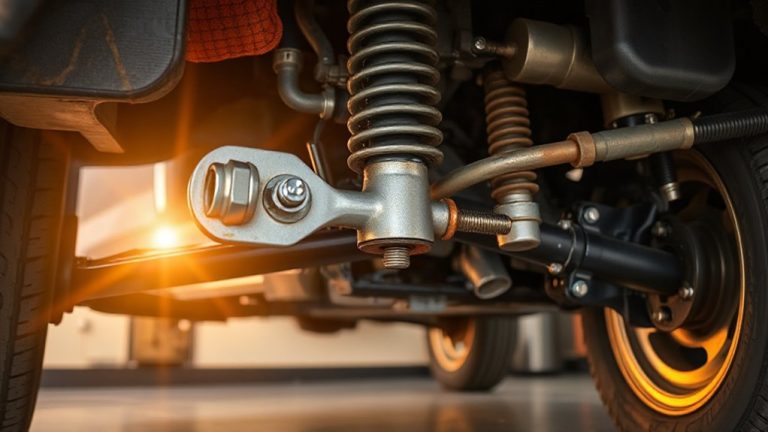
Think of control arm bushings as the silent shock absorbers within your vehicle’s suspension system. They cushion the connection between the control arm and the vehicle frame, reducing vibration and allowing controlled movement. Made from rubber, polyurethane, or hydraulic compounds, they balance flexibility and rigidity. Material durability varies-rubber lasts 60,000–100,000 miles but hardens over time; polyurethane resists wear but increases stiffness. Proper installation techniques are critical: torque specs must match OEM standards-usually 45–65 ft-lbs-to avoid premature failure. Misalignment during installation reduces effective range of motion by up to 30%. These bushings isolate road noise and minor impacts, improving ride comfort. They’re designed to operate within a deflection range of 15–25 degrees, maintaining wheel alignment under load. You rely on them every time you drive, even if you never see them.
Symptoms of Bad Control Arm Bushings
While driving over bumps or turning corners, you might notice unusual noises or handling changes if your control arm bushings are worn. A common sign is a distinct noise increase, often a clunking or popping sound, especially during suspension movement. This happens because degraded rubber or cracked polyurethane bushings allow metal-to-metal contact where flexibility should occur. You may also experience increased vibration transfer from the road into the cabin. Worn bushings lose their damping ability, letting more high-frequency energy pass through the control arm into the chassis. Standard OEM rubber bushings typically dampen vibrations up to 200 Hz; compromised ones transmit beyond that threshold. Misalignment isn’t the issue here-loss of isolation is. These symptoms worsen progressively, reducing ride comfort without immediate handling failure. Inspect bushings showing visible cracks, splits, or sagging-indicative of material degradation affecting noise and vibration performance.
How Worn Bushings Hurt Handling and Wear Tires
Worn control arm bushings compromise your vehicle’s handling precision and accelerate uneven tire wear. You’ll notice steering wander, where the vehicle drifts unpredictably across lane markings, especially on uneven roads. This occurs because degraded bushings fail to maintain proper suspension geometry, allowing excessive movement in the control arm. Without firm bushing support, toe and camber angles shift dynamically, leading to uneven alignment that standard adjustments can’t correct. Tires bear the brunt-edges wear faster than centers due to increased scrubbing during turns. Most bushings are made from rubber or polyurethane, designed to limit lateral flex within 0.5 to 1.0 mm under load. When they exceed this tolerance, suspension response lags, reducing cornering stability. The result is prolonged stopping distances and reduced grip. You’re not just risking tire life-you’re compromising fundamental control.
When to Replace Control Arm Bushings
How do you know when it’s time to replace control arm bushings? Look for visible cracks, splits, or deformities in the bushing material, typically made of rubber or polyurethane. If the bushings are compressed more than 20% of their original thickness, they’ve lost structural integrity. You may also notice clunking noises over bumps or misaligned suspension geometry, indicating excessive play. Most manufacturers specify 70,000 to 100,000 miles as the service life, but aggressive driving or poor road conditions shorten this. Polyurethane lasts longer than rubber but transmits more vibration. Rubber degrades faster due to heat and ozone exposure. Replacement cost averages $200 to $600 per axle, depending on vehicle make and bushing type. Labor accounts for nearly 60% of total cost. Always replace bushings in pairs to maintain balanced handling and ride isolation.
What Happens If You Delay Bushing Replacement?
If you put off replacing worn control arm bushings, the suspension system’s alignment and damping capabilities will gradually deteriorate. The bushings, made of rubber or polyurethane, normally absorb road impacts and maintain precise control arm positioning. As they wear, metal-to-metal contact increases, reducing ride isolation. You’ll notice increased cabin noise, especially over bumps or rough pavement, due to unfiltered vibration transfer. Misaligned suspension components also promote uneven tire wear, often exceeding 2/32″ tread depth variance across the tire face. This misalignment leads to premature suspension fatigue, stressing ball joints, struts, and control arms beyond design limits. Typical failure signs include clunking during acceleration or braking, as play exceeds the OEM-specified 0.5 mm tolerance. Delaying replacement accelerates wear on adjacent components, potentially doubling repair costs. Replacing bushings every 80,000–100,000 miles maintains ideal handling, comfort, and system longevity.
On a final note
You need functional control arm bushings for effective ride isolation. Worn bushings increase suspension noise, vibration, and harshness by allowing excessive wheel movement. They compromise alignment, reducing tire life by up to 30%. Most OEM rubber bushings last 70,000–100,000 miles. Polyurethane upgrades offer better durability and control. Delaying replacement accelerates suspension wear and degrades handling response. Replace them promptly to maintain ride quality and safety.