Understanding the Importance of Environmental Conditions in Car Maintenance Practices
Your car faces constant stress from environmental conditions you might overlook. Cold reduces battery capacity by 35% at 32°F-use a 650 CCA battery. Thick oil like 10W-30 impairs cold starts. Heat pushes radiators to dissipate 75% of engine heat, risking overheating above 220°F. Humidity over 60% accelerates rust and electrical oxidation. UV rays fade paint by 30% in 5 years and warp dashboards above 180°F. Salt and pollution speed undercarriage corrosion 50%. You’re not done learning yet.
Notable Insights
- Cold temperatures reduce battery capacity by up to 35% and thicken engine oil, impairing startup and lubrication in winter climates.
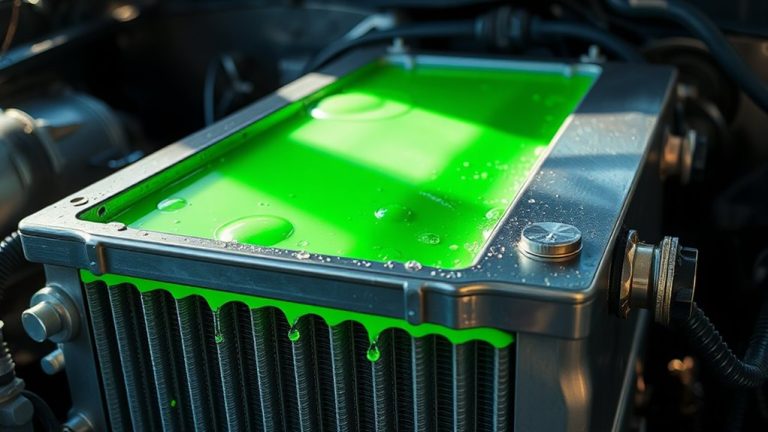
- High heat increases coolant evaporation and radiator workload, raising the risk of engine overheating above 220°F.
- Humidity above 60% promotes rust, electrical corrosion, and mold growth in cabin components and concealed metal areas.
- UV exposure fades paint, degrades interior materials, and weakens upholstery by breaking down chemical bonds over time.
- Road salt and pollutants accelerate undercarriage corrosion and paint degradation, requiring frequent cleaning and protective coatings.
Cold & Heat: Why Your Engine Struggles and Battery Dies
Why does your car struggle to start in freezing temperatures or overheat when the summer sun beats down? Cold saps your battery’s power-modern lead-acid batteries lose up to 35% of their strength at 32°F. Slow cranking during winter starts is common. Engine oil thickens in cold weather; 10W-30 becomes sluggish, reducing lubrication. In heat, coolant evaporates faster. Temperatures above 220°F risk overheating. The radiator must dissipate 75% of engine heat. Summer breakdowns spike when cooling systems fail. A thermostat stuck closed traps heat. Belts lose tension at high temps, reducing alternator efficiency. Your car needs a battery with at least 650 CCA for cold climates. Use 5W-20 oil in winter for easier starts. Guarantee coolant concentration is 50% antifreeze to withstand –34°F. Maintain proper tire pressure-heat expands air, increasing risk of blowouts. A reliable car jump starter can save you from being stranded during extreme weather conditions.
Humidity & Moisture: How Dampness Causes Rust and Electrical Failures
When humidity levels rise, your car’s metal components begin to corrode faster-especially if exposed for prolonged periods. Moisture in the air reacts with iron in steel, forming iron oxide, commonly known as rust. This electrochemical reaction accelerates in relative humidity above 60%. Condensation buildup inside door cavities, frame rails, and undercarriage traps water against metal surfaces, promoting corrosion. Electrical connectors and wiring harnesses suffer too-moisture causes oxidation, increasing resistance and risking short circuits. Over time, persistent dampness leads to mold growth in cabin air filters, floor mats, and ventilation ducts, compromising air quality. Sealed electrical systems rated below IP65 may allow ingress, accelerating failure. Protective coatings like zinc-rich primers and dielectric greases help resist degradation. Regular inspection of weather stripping, drain plugs, and undercoating maintains integrity. Keeping your vehicle in a climate-controlled environment reduces exposure. Applying a rust converter before priming can effectively halt corrosion on early-stage rusted surfaces.
Sun Damage: UV Rays That Fade Paint and Warp Interiors
Prolonged exposure to sunlight introduces a different set of challenges than humidity, yet both degrade your vehicle’s longevity over time. UV intensity breaks down chemical bonds in automotive paint, accelerating oxidation and causing fading, especially on dark finishes. This photochemical reaction results in material degradation, reducing gloss by up to 30% over five years in high-sun regions. Interior surfaces absorb UV radiation, raising dashboard temperatures beyond 180°F, warping plastics, and cracking leather. UV rays penetrate up to 2 mm into upholstery layers, weakening fibers and diminishing tensile strength by as much as 40%. Factory clear coats offer approximately 5–7 years of UV resistance, but repeated exposure overwhelms protective layers. You should apply ceramic coatings, which resist UV intensity 50% better than wax, and use reflective window film blocking 99% of UV rays. Parking in shade or using full-coverage sunshields slows material degradation markedly. For optimal protection, consider installing high-performance car window tint that enhances UV rejection and reduces interior heat buildup.
High Altitudes & Rough Terrain: Straining Engines and Cooling Systems
Though you might not realize it, driving at high altitudes and over rough terrain places extra stress on your engine and cooling system. Thinner air at elevation reduces oxygen intake, causing incomplete combustion and increasing engine stress. Your vehicle’s cooling system must work harder due to lower air pressure and fluctuating temperatures. Rough terrain accelerates terrain wear, affecting suspension and alignment, which indirectly strains engine mounts and hoses. Preventive maintenance is critical.
| Factor | Effect on Vehicle |
|---|---|
| High Altitude | Up to 3% power loss per 1,000 ft elevation gain |
| Rough Terrain | Increased vibration leading to fluid leaks |
| Engine Stress | Higher operating temps; risk of overheating |
Regular inspections of radiator function, air intake systems, and motor mounts help mitigate damage. Use high-quality coolant rated for extreme conditions and check fluid levels more frequently when driving off-road or at high elevations.
Pollution and Road Salt: Accelerating Corrosion and Finish Damage
If you live in an urban area or a region with harsh winters, your vehicle faces constant exposure to pollutants and road salt, both of which accelerate metal corrosion and damage exterior finishes. Chemical exposure from acidic rainfall, industrial fallout, and deicing agents breaks down protective coatings. These contaminants cling to paint and undercarriage surfaces, initiating oxidation. Surface erosion follows, especially on unpainted steel components like fenders and brake lines. Road salt is particularly aggressive, retaining moisture and increasing electrolytic activity that speeds galvanic corrosion. Vehicles in high-salt environments show 30–50% faster undercarriage deterioration, per SAE studies. Paint finishes may degrade by two to three times faster when exposed to daily pollution. Regular undercarriage rinsing every two weeks removes corrosive residues. Wax coatings with at least 25 microns thickness provide measurable barrier protection. Ignoring these factors shortens vehicle lifespan and compromises structural integrity over time.
Tailored Tips for Hot, Cold, and Humid Climates
While climate shapes every aspect of vehicle wear, adapting your maintenance routine to temperature and humidity extremes makes a measurable difference in longevity and performance. Use high oil viscosity grades like 10W-30 for hot climates to maintain lubrication under heat stress, especially during desert driving. In cold regions, switch to lower viscosity oils such as 5W-20 for easier cold starts. High humidity demands extra vigilance against moisture-related electrical issues and rust.
| Climate | Oil Viscosity | Key Maintenance Focus |
|---|---|---|
| Hot | 10W-30 | Cooling system, tire pressure |
| Cold | 5W-20 | Battery strength, antifreeze |
| Humid | 5W-30 | Electrical insulation, rust |
| Desert | 10W-40 | Air filter, fluid levels |
Regular fluid checks and climate-specific filters enhance reliability.
On a final note
Your car’s performance depends on environmental conditions. Extreme cold reduces battery capacity by up to 30% at 32°F. High heat accelerates fluid evaporation and tire pressure gain-roughly 1 psi per 10°F rise. Humidity promotes rust on steel components with iron oxide formation above 60% RH. UV exposure degrades paint and interior polymers. Altitude reduces engine efficiency by 3% per 1,000 feet. Road salt increases electrical conductivity, raising corrosion risk.