How Overloading Affects Springs, Shocks, and Bushings Over Time
Overloading stresses your suspension beyond design limits, accelerating wear. Springs weaken from repeated overstress, leading to permanent sag-leaf springs can deform after just 110% of rated load. Shocks overheat, degrading fluid and reducing damping by up to 40%. Bushings compress and crack, causing alignment shifts of 0.5 degrees or more, harming handling. These components fail 40–60% faster under excess weight. You’re risking long-term damage with every overload. There’s more to contemplate if you’ve pushed your vehicle past its limits.
Notable Insights
- Overloading exceeds spring design limits, causing metal fatigue, microfractures, and permanent sagging over time.
- Excess weight increases shock piston movement, generating heat and pressure that degrade fluid and reduce damping efficiency.
- Shock seals fail faster under overload stress, leading to fluid leakage and up to 60% shorter service life.
- Control arm bushings deform prematurely when compressed beyond design limits, causing alignment shifts and handling issues.
- Repeated overloading accelerates wear across all suspension components, reducing ride stability, tire life, and safety.
Why Overloading Destroys Suspension Springs
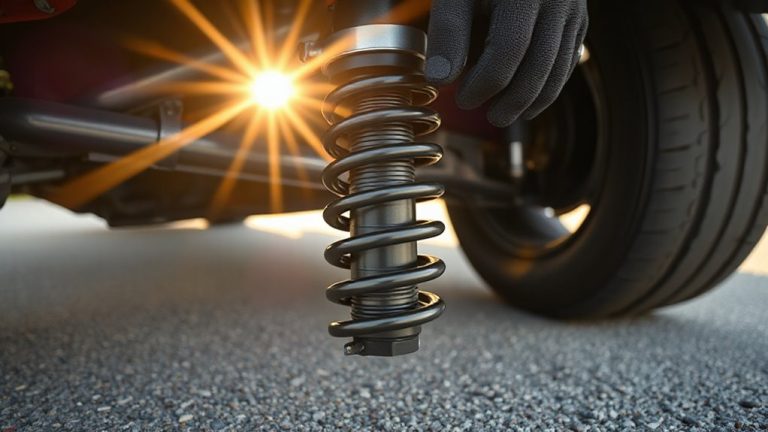
When you exceed a vehicle’s gross axle weight rating, the suspension springs are forced to operate beyond their designed load capacity, leading to accelerated fatigue and permanent deformation. Spring fatigue occurs as repeated overstress cycles weaken the metal structure over time. Each overload increases metal stress beyond the elastic limit, causing microfractures that compromise spring integrity. Most steel coil springs are engineered for 500,000 to 1 million load cycles at rated capacity-overloading cuts that lifespan drastically. Leaf springs, often rated for 10,000 to 15,000 pounds depending on axle class, sag under sustained excess weight, reducing ride height by 1 to 2 inches. This changes alignment angles and decreases effective suspension travel by up to 30%. Overloaded springs can’t return to original shape, diminishing load-bearing performance. Persistent metal stress leads to premature failure, increasing safety risks and repair costs.
Why Shocks Fail Faster When You Overload Your Vehicle
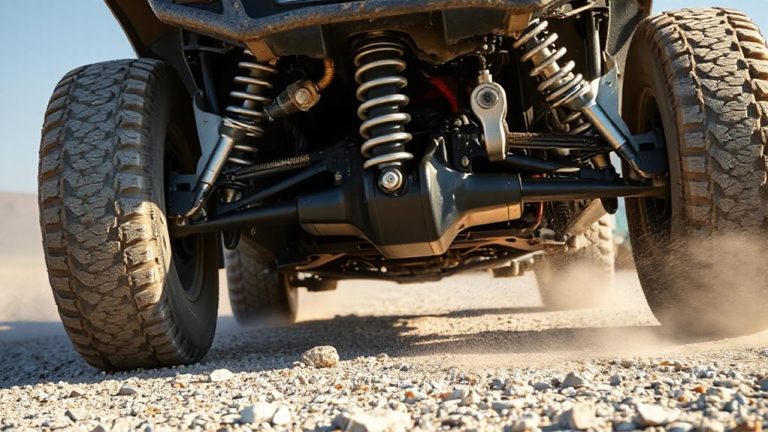
Because your vehicle’s shocks are designed to dampen motion within a specific weight range, overloading forces them to work harder than intended. Each bump causes excessive piston movement, increasing internal pressure beyond engineering limits. This leads to rapid heat buildup, degrading the damping fluid’s viscosity. Over time, overheated fluid loses its ability to control oscillations, reducing ride stability. Continuous stress also strains the seals, raising the risk of fluid leakage. Once fluid leaks out, the shock can’t maintain consistent damping, resulting in bottoming and poor wheel contact. Tests show overloaded shocks fail 40–60% faster than those under normal loads. You’ll notice longer stopping distances and increased body roll. Even slight overloads, sustained over time, accelerate wear. Unlike springs, shocks don’t sag visibly-failure happens internally. Fluid leakage and heat buildup are key warning signs. Your vehicle’s rated payload isn’t a suggestion-it’s a limit engineered for component longevity.
How Overloading Ruins Control Arm Bushings
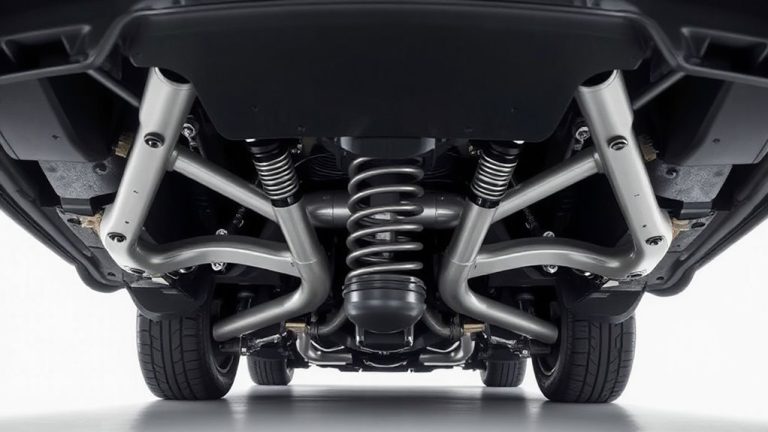
Your control arm bushings bear the brunt of every extra pound you carry. These rubber or polyurethane components connect the control arms to the vehicle frame, absorbing vibrations and allowing controlled movement. Overloading accelerates bushing deformation, where excess weight compresses the material beyond design limits. This deformation reduces compliance, increasing stress on mounting points. As the bushing loses its shape, it fails to maintain proper geometry, leading to an alignment shift. Even minor misalignment-just 0.5 degrees-can cause uneven tire wear and poor handling. Factory tolerances typically allow only ±0.25 degrees of variance before performance degrades. Repeated overloading compounds this damage, creating permanent gaps between the control arm and frame. The result is increased play, reduced steering precision, and compromised suspension response. Preventing overload guarantees bushings maintain their structural integrity and your suspension operates within intended performance parameters.
Signs You’ve Damaged Your Suspension by Overloading
A vehicle sitting lower than normal at one or more corners often signals overworked suspension components, especially after repeated overloading. Sagging indicates weakened springs that can no longer support design weight. You may notice uneven tire wear or pulling to one side, often tied to misaligned suspension geometry. A bent axle can result from excessive load, causing vibrations at highway speeds and premature bearing failure. Inspect the frame rails closely-overloading can lead to a cracked frame, especially near mounting points or stress bends. This compromises structural integrity and safety. Your shocks may leak fluid or feel spongy, reducing dampening efficiency by up to 40%. Bushings often split or deform, increasing play in control arms. These symptoms together suggest permanent damage. Immediate inspection is critical. Ignoring them risks catastrophic failure. Upgrading to high-performance best shocks for every ride can significantly improve load-handling capacity and prolong suspension life.
How to Avoid Suspension Damage From Overloading
When loads exceed a vehicle’s rated capacity, suspension components are forced to operate beyond their design limits, accelerating wear and risking permanent damage. You must adhere to the manufacturer’s Gross Vehicle Weight Rating (GVWR) to prevent excessive stress on springs, shocks, and bushings. Overloading increases the load on shock absorbers by up to 40%, reducing their ability to dampen motion effectively. This leads to uneven tire wear and alignment issues, as wheel geometry distorts under strain. Misalignment as little as 0.5 degrees degrades handling and cuts tire life by 25%. Leaf springs can sag permanently after exposure to 110% of rated load, while coil bind in front suspensions reduces travel by 30%. Use a certified scale to verify weight distribution. Proper loading keeps tire contact patches even, minimizing wear and maintaining factory-specified camber and toe settings.
When to Replace Suspension Parts After Overloading
Though the effects of overloading may not always be visible immediately, ignoring them can lead to compromised suspension integrity and unsafe driving conditions. You should replace suspension parts if you notice excessive sagging, inconsistent ride height, or fluid leaks from shocks. Springs weakened by overloading lose their original coil tension, reducing load capacity by up to 20%. Worn bushings increase joint play, affecting control. Misaligned suspension often results in uneven tire wear and poor tire alignment, requiring correction after part replacement. Always check wheel balance post-repair to prevent vibration at highway speeds. Inspect control arms, shocks, and bushings every 20,000 miles if you regularly carry heavy loads. Replace shocks if rebound resistance drops more than 30% from factory specs. Proper maintenance restores handling, extends tire life, and guarantees safe load distribution.
On a final note
You compromise suspension integrity when you overload. Excess weight exceeds spring yield strength, causing permanent sag-often over 1 inch in coil springs rated for 500 lb/in. Shocks overheat, degrading damping fluid and reducing cycle life by up to 40%. Bushings crack from shear stress exceeding 150% of design load. Replace components if sag, uneven tire wear, or handling drift occurs. Prevent damage with proper load limits.