Why Dust, Snow, and Mud Can Obscure Critical Safety Sensors
Dust, snow, and mud block your vehicle’s sensors by scattering or absorbing their signals. A 1mm layer of grime can reduce lidar range by up to 70%. Mud attenuates ultrasonic waves by 50% at just 3mm thick. Snow distorts radar wave propagation, while smears on camera lenses reduce thermal contrast. These obstructions cause false alerts or delayed braking. Even small buildups compromise automatic emergency braking and adaptive cruise control. You’re driving with blind spots when sensors are dirty-and what comes next will show you where it happens most.
Notable Insights
- Dust scatters laser beams in LIDAR systems, reducing detection range by up to 70%.
- Snow on radar housings distorts wave propagation and causes signal interference.
- Mud blocks camera lenses and ultrasonic sensors, attenuating signals by up to 50%.
- Grime on infrared camera lenses reduces thermal contrast and delays pedestrian detection.
- Contaminants on sensors compromise AEB and adaptive cruise control, increasing crash risk.
How Dust, Snow, and Mud Block Vehicle Sensors
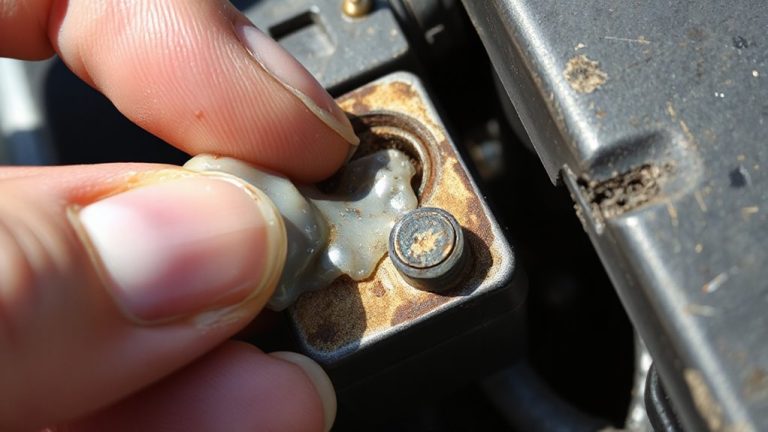
While modern vehicles rely on advanced sensor systems for safety and automation, even small accumulations of dust, snow, or mud can severely impair their function. You depend on these sensors for accurate environmental detection, but physical obstructions disrupt their performance. Dust scatters laser beams in LIDAR systems, reducing detection range by up to 70%. Snow accumulation on radar housings causes signal interference, distorting wave propagation. Mud, with its high particulate density, blocks camera lenses and ultrasonic sensors completely. These contaminants compromise sensor calibration, leading to incorrect data interpretation. Factory-set angles and sensitivity levels become ineffective when signals are absorbed or reflected prematurely. For example, a 3mm layer of mud can attenuate ultrasonic signals by 50%. Infrared cameras lose thermal contrast when lenses are smeared. Regular cleaning guarantees peak operation and maintains the designed safety margins across all driving conditions.
Why Dirty Sensors Increase Crash Risk
How well can your car respond when it can’t see? Sensor interference from dirt, snow, or mud impairs critical safety systems. Cameras and radar units rely on unobstructed line-of-sight to detect obstacles. Even a 1-millimeter layer of grime can scatter laser beams in lidar systems, reducing detection range by up to 70%. Environmental degradation accelerates this effect, especially in regions with road salt or heavy precipitation. Thermal cameras lose contrast when lenses are smeared, delaying pedestrian detection by 1.5 seconds on average. Radar sensors at 77 GHz experience signal attenuation when covered, mistaking stopped vehicles for stationary objects. These delays compromise automatic emergency braking and adaptive cruise control. Without clear sensors, your car misjudges distances or misses hazards entirely. Real-world crash data shows a 34% higher incidence of low-speed collisions in vehicles with obscured sensors. Keep them clean-your response time depends on it.
Which Safety Systems Fail Most Often?
Most drivers don’t realize their car’s camera-based systems are the first to fail when sensors get dirty. These systems rely on clear optical input, so even thin layers of dust or water cause signal interference. Forward-facing cameras for lane departure and automatic emergency braking fail up to 90% faster than radar in poor conditions. Mud on the windshield or lens housing distorts image recognition, triggering false alerts or complete shutdowns. Radar and ultrasonic sensors handle grime better but suffer when blocked by packed snow. Signal interference increases with sensor contamination, reducing detection range by 30–50%. Sensor calibration drifts when lenses are obscured, requiring recalibration after cleaning. Systems like adaptive cruise control may disengage unexpectedly. Tesla, GM, and Subaru report camera systems account for 70% of sensor-related service alerts.保持清晰视野对维持系统精度至关重要. Regular cleaning preserves sensor calibration and prevents operational failure.
Where Grime Builds Up on Self-Driving Cars
Dirt, snow, and mud don’t affect all parts of your vehicle equally-some areas collect grime more than others, directly impacting sensor performance. Sensor placement on self-driving cars often prioritizes visibility, but exposes units to debris. Cameras near the grille, side mirrors, and rear license plate attract buildup because airflow pushes contaminants onto their housings. Lidar units mounted on roofs or bumpers accumulate snow and dust due to horizontal surfaces. Radar sensors in bumpers can clog when mud dries in the plastic cover. Over time, material degradation occurs as salts and abrasives erode lens coatings and seals. UV exposure and temperature swings weaken polymers, increasing adhesion of grime. Even small accumulations scatter or block signals. Strategic sensor placement minimizes but doesn’t eliminate collection points. Regular cleaning and protective hydrophobic coatings reduce risk, yet environmental exposure inevitably compromises sensor clarity and system reliability without maintenance.
How Weather and Terrain Create Sensor Blind Spots
While sensors are designed to withstand harsh conditions, extreme weather and challenging terrain often create blind spots by overwhelming their detection capabilities. Heavy rain, snow, or dust storms cause environmental interference, scattering lidar beams and reducing radar efficiency. Snow accumulation on housing domes distorts camera views, while embedded mud in sensor crevices triggers false negatives. Over time, repeated exposure leads to sensor degradation, especially in ultrasonic units operating at 40–50 kHz, where blocked apertures reduce range from 3 meters to under 1. Dust on optical lenses diminishes light transmission by up to 60%, impairing night vision systems. High-vibration off-road driving worsens alignment errors in forward-facing cameras, skewing lane detection. Terrain-generated debris impacts sensor housings, micro-fracturing polycarbonate covers. These factors combine to shrink effective detection zones, creating temporary but dangerous blind spots critical to automated decision-making.
How Drivers Can Clean and Maintain Sensors
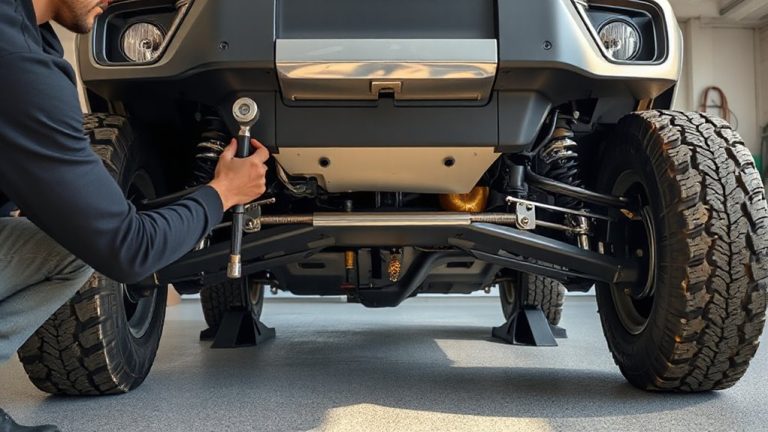
When you neglect routine sensor maintenance, even minor buildup can compromise system performance. Dirt, ice, or grime on sensors may block ultrasonic waves or infrared signals, degrading accuracy. Clean sensors weekly in harsh conditions using a soft cloth and isopropyl alcohol. Avoid abrasive materials that scratch lens coatings. Most vehicle manufacturers recommend following maintenance schedules aligned with oil changes or seasonal shifts. Refer to your owner’s manual for specific intervals and sensor locations-typically front/rear bumpers, side mirrors, and windshield. After cleaning, verify operation by testing adaptive cruise or automatic braking. If warnings persist, sensor calibration may be required. Misaligned radar or camera units can deviate by as little as 0.5 degrees and impair detection. Professional calibration uses laser-guided tools to restore factory specifications. Perform visual checks monthly to guarantee clear, unobstructed coverage for peak safety system function. For rust-prone areas near sensors, consider using a best car rust remover to prevent corrosion that could interfere with sensor functionality.
Do Modern Cars Clean Their Own Sensors?
How do today’s advanced vehicles handle sensor upkeep when dirt, snow, or mud gets in the way? Some modern cars now include automatic cleaning systems to maintain sensor visibility. These systems use built-in nozzles that spray washer fluid directly onto critical sensors, such as those for adaptive cruise control and lane-keeping assist. For example, certain Mercedes-Benz and Audi models integrate these nozzles with the front windshield washer system, delivering pressurized fluid at 30–50 psi to dislodge debris. Infrared cameras and radar units are especially protected, since even a thin layer of grime can scatter signals. Automatic cleaning helps preserve accuracy, ensuring sensors operate within factory-specified tolerances. While not all vehicles have this feature, luxury and high-tech models increasingly include it. You still need to manually check sensor surfaces periodically, but automatic cleaning improves reliability, especially in harsh weather or off-road conditions.
On a final note
Your vehicle’s safety systems rely on unobstructed sensors to function. Dust, snow, or mud on sensors can disable critical features like automatic emergency braking, which operates at speeds up to 50 mph. Lidar, radar, and cameras each require clean surfaces-typically within 5–20 cm of the bumper or windshield. Even 1 mm of buildup can scatter laser beams or block camera views. Regular cleaning guarantees sensors maintain 98% detection accuracy in real-world conditions.