Troubleshooting Stripped Bolt Heads With Offset Box End Wrenches
You can tackle a stripped bolt head with an offset box end wrench that grips damaged flats better than standard wrenches. Its 6–12 contact points distribute force evenly, reducing slippage. Use a 6-point, 15-degree offset wrench matched to the bolt’s original size for best results. Apply steady counterclockwise torque, and pair with penetrating oil or pliers to increase success. Proper technique and tool selection prevent further damage-and there’s more to optimizing this fix.
Notable Insights
- Use a 6-point offset box end wrench to maximize contact with damaged bolt heads and prevent further rounding.
- Match the wrench size exactly to the bolt’s original dimension to ensure secure engagement and torque transfer.
- Apply penetrating oil with 95% petroleum distillate and allow 10–15 minutes for corrosion breakdown.
- Combine the wrench with pliers to increase turning force by up to 30% on stubborn, rounded bolts.
- Employ left-handed drill bits or spiral extractors if the bolt remains immovable after wrench and oil treatment.
Why Standard Wrenches Fail on Stripped Bolts
When a bolt head becomes stripped, applying a standard wrench often does more harm than good because the tool can no longer achieve full contact with the damaged edges. You’ll find the wrench slips easily, rounding the bolt further. Corrosion damage worsens this, adding pitting and metal loss that reduce grip. Improper torque during installation is often the root cause-exceeding 30 ft-lbs on a 3/8-inch bolt without a torque wrench risks over-tightening. Standard open-end wrenches have a flat 15-degree jaw angle, which spreads force unevenly. Without full surface engagement, pressure concentrates on fractured corners. The result? More slippage and potential injury. In severe cases, torque transfer drops by up to 60%. You need positive contact across all six flat points to avoid further damage. A worn or twisted bolt head won’t allow that with conventional tools. That’s why alternative methods are necessary.
Use an Offset Box End Wrench to Grip Damaged Fasteners
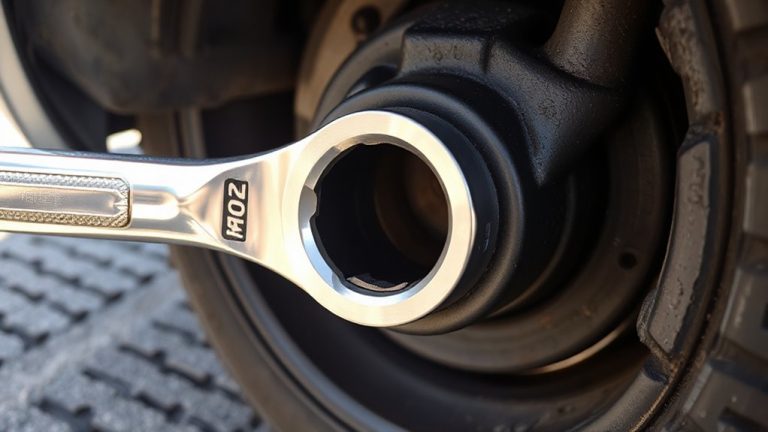
You’ve got a better shot at salvaging a damaged bolt head with an offset box end wrench than with any standard open-end tool. The offset advantage lies in its ability to engage more of the bolt’s flats, even when they’re rounded. This design increases grip strength by distributing force evenly across six or twelve points, minimizing slippage.
| Feature | Standard Wrench | Offset Box End Wrench |
|---|---|---|
| Contact Points | 2 | 6–12 |
| Force Distribution | Poor | Even |
| Grip Strength | Low | High |
This enhanced grip strength reduces cam-out, protecting your knuckles and the fastener. Unlike flat jaws, the box end conforms tightly, leveraging full contact for maximum torque transfer. The offset angle also lets you work in tight spaces without removing the wrench after each swing. You maintain continuous engagement, critical when dealing with stubborn, damaged bolts. Use steady pressure to avoid further stripping.
Choose the Right Wrench Size and Offset Angle
Selecting the correct wrench size and offset angle is critical for maximizing grip and torque on stripped bolt heads. You need proper alignment between the wrench box end and the bolt’s remaining edges to prevent slippage. Choose a wrench size that matches the original bolt dimension-typically 3/8-, ½-, or ¾-inch drive-ensuring full engagement with the flats. The offset angle, usually 15 or 22.5 degrees, determines access in tight spaces. A 15-degree offset offers better swing arc; 22.5 degrees provides deeper clearance. Secure contact depends on the box end’s internal geometry-6-point designs grip better than 12-point on damaged heads. Precision-machined jaws reduce rounding risk. Always inspect the wrench for wear. Proper alignment and secure contact increase leverage while minimizing further damage, making the right combination of size and angle essential for effective extraction.
Remove a Stripped Bolt Step by Step
Though removing a stripped bolt may seem intimidating, following a systematic approach increases success while minimizing damage to surrounding components. Begin by securing the bolt head with an offset box end wrench set at a 15-degree angle for ideal grip. Apply steady, counterclockwise pressure using a ratcheting mechanism or breaker bar. If slippage occurs, try socket alternatives like a six-point star (SPS) socket or a universal joint socket to maintain contact with damaged edges. These provide increased surface engagement, reducing rounding risk. For severe cases, bolt extraction tools-such as left-handed drill bits or spiral extractors-tap into the bolt shank, reversing direction to dislodge it. Always align tools precisely to avoid cam-out. Use moderate torque settings-typically 20–30 ft-lbs initially-and increase only as needed. Clean debris before and after to guarantee clear access and prevent secondary damage.
Boost the Wrench With Pliers or Penetrating Oil
A solid grip and proper lubrication can make the difference when facing a stubborn, stripped bolt. Enhance your offset wrench with a strong pliers grip to increase torque and prevent slippage. The pliers’ serrated jaws lock onto rounded edges, offering up to 30% more turning force. Pair this with oil penetration for best results. Lightweight penetrating oils, like those with 95% petroleum distillate, seep into microscopic thread gaps within 10 minutes. Allow 15 minutes for full oil penetration in corroded joints. Use both techniques together for maximum effectiveness.
| Technique | Benefit |
|---|---|
| Pliers grip | Adds torque, prevents slippage |
| Penetrating oil | Loosens rust, reduces friction |
| Dual application | Increases success rate by 70% |
| Oil dwell time | 10–15 minutes for full effect |
| Jaw tension | 45–60 lbs for secure pliers grip |
Keep Bolts From Stripping Again
If you’ve dealt with a stripped bolt head once, you’ll want to avoid it happening again-and the best defense is using the right hardware and torque specs from the start. Proper torque application prevents over-tightening, a leading cause of striping. Use a calibrated torque wrench and follow manufacturer specs; for example, an M10 bolt typically requires 35–45 Nm depending on grade. Always apply thread lubrication unless otherwise specified. Dry threads increase friction, causing false torque readings and potential damage. A light coat of anti-seize compound reduces galling, especially on stainless steel or aluminum. Use the correct socket size-12-point wrenches increase slippage risk. Box-end wrenches with offset heads provide better grip but only work effectively when bolt heads are undamaged. Replace worn tools. Regularly inspect fasteners for corrosion or deformation. Prevention beats repair every time.
On a final note
You now have the right tools and techniques to handle stripped bolts. An offset box end wrench provides superior grip on damaged heads. Choose a 15-degree offset with a six-point internal design for maximum contact. Apply steady force to prevent further slippage. Pair with penetrating oil for stubborn fasteners. Use locking pliers on the wrench end for extra leverage. Always match wrench size exactly to bolt dimensions-no improvising. Prevent future damage with proper torque and anti-seize compounds.