Why Regular Waxing Extends the Life of Chrome Plating
You extend chrome’s life by applying wax every 4–6 weeks to maintain a 0.5 to 2.0 mil barrier that blocks moisture and pollutants. This hydrophobic layer prevents water spots and inhibits chloride ions from causing micro-pitting as small as 0.1 microns. High-carnauba waxes with polymers boost durability, resisting degradation from UV and road salts. Without it, unprotected chrome corrodes faster, losing up to 0.0001 inches annually. Best protection starts with proper application.
Notable Insights
- Wax forms a protective barrier that shields chrome from moisture, pollutants, and corrosive elements.
- It fills microscopic pores in chrome, preventing water ingress and reducing the risk of micro-pitting.
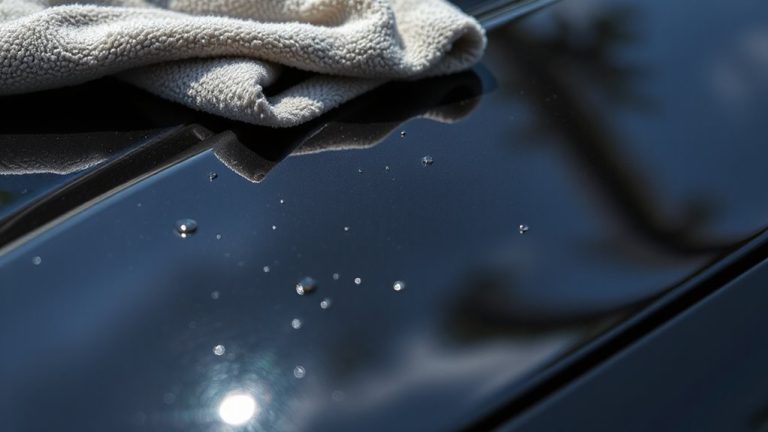
- High-quality wax promotes water beading, minimizing contact time and wetness duration on the surface.
- Regular waxing blocks chloride ions from road salts, slowing electrochemical corrosion and metal degradation.
- Consistent thin wax layers maintain reflective clarity and extend chrome plating life up to six months.
Why Wax Keeps Chrome From Corroding
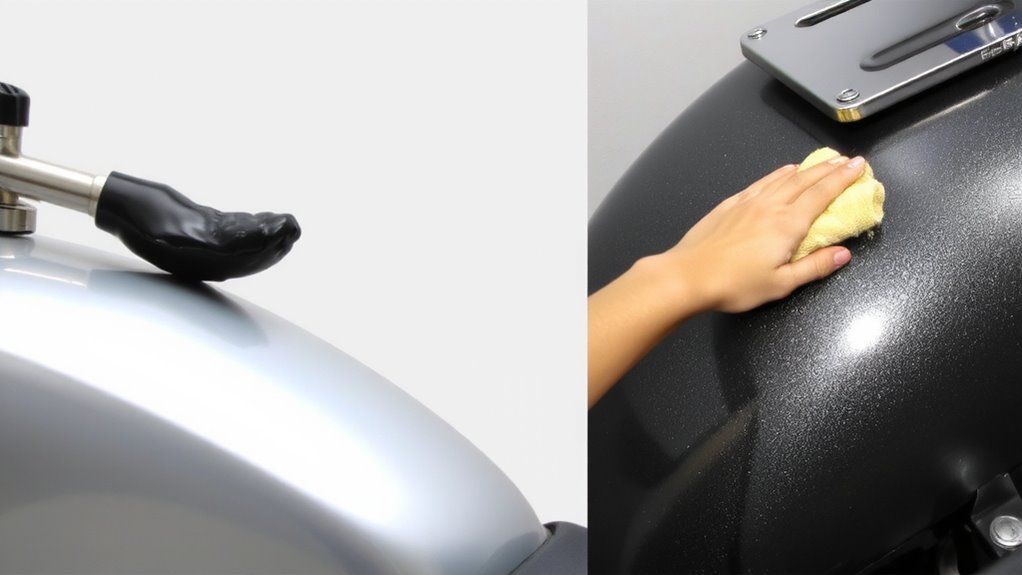
While moisture and contaminants are always present in the environment, wax creates a protective barrier that shields chrome from corrosive elements. This barrier prevents direct contact between chrome and airborne pollutants, drastically reducing the risk of chrome oxidation. Chrome oxidation occurs when oxygen and moisture react with the metal’s surface, especially in humid or salty conditions. Wax layers, typically 0.5 to 2.0 mils thick, fill microscopic pores in the plating, blocking moisture ingress. Without this shield, water spots form as evaporated droplets leave mineral deposits that etch the surface. These deposits accelerate pitting and weaken structural integrity over time. Quality carnauba or synthetic waxes offer contact angles of 90–110°, causing water to bead and roll off before damage occurs. Regular waxing every 6–8 weeks guarantees uninterrupted protection. You maintain surface hardness at its original 750–1,000 Vickers hardness by preventing early degradation.
How Chrome Degrades Without Wax Protection
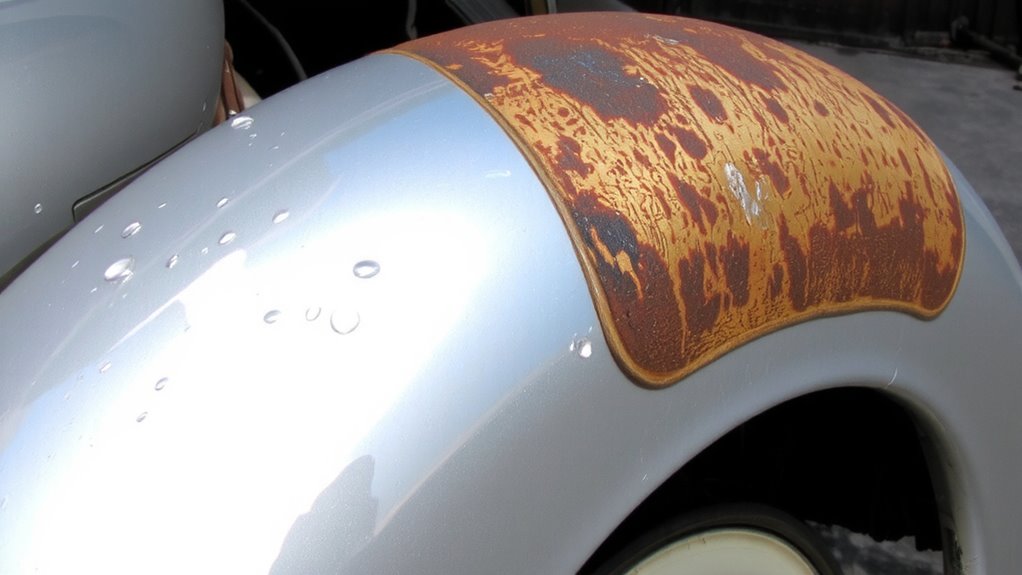
When chrome lacks wax protection, it’s exposed to environmental hazards that trigger rapid surface deterioration. Moisture exposure initiates electrochemical reactions on the metal’s surface, accelerating corrosion. Without a hydrophobic barrier, water droplets cling to the chrome, increasing contact time and permeation risk. This prolonged wetness promotes chrome oxidation, where oxygen interacts with chromium atoms, forming unstable oxides that weaken the finish. Surface micro-pitting begins at 48 hours of continuous moisture exposure in high-humidity environments (above 60% RH). These pits, though microscopic (0.1–0.5 microns), compromise reflectivity and invite chloride ion infiltration. Road salts and industrial pollutants further expedite degradation, reducing chrome’s thickness by up to 0.0001 inches per year without protection. UV radiation exacerbates molecular breakdown, fading luster. Over time, oxidation spreads laterally beneath surface layers, causing flaking. Regular waxing prevents this cascade by sealing pores and repelling contaminants.
Pick the Best Wax for Chrome Durability
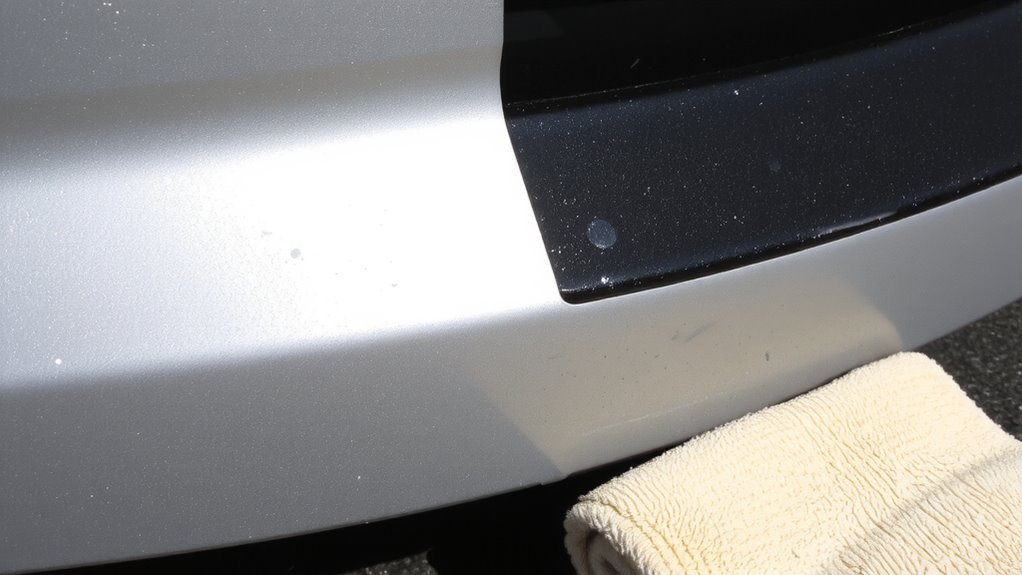
The best wax for chrome durability combines high carnauba content with advanced polymers to deliver long-lasting protection. You need a product where the chemical composition resists UV rays and repels moisture, which prevents oxidation. Look for waxes with at least 30% pure carnauba for maximum hardness and a glossy finish. Polymers like synthetic silicones enhance durability, maintaining protection for up to 6 months. Consider the application temperature-ideally between 60°F and 80°F-for ideal spreadability and adhesion. Applying wax outside this range reduces bonding efficiency. Cold surfaces slow curing; hot surfaces may cause premature drying and hazing. Choose a wax specifically labeled for use on chrome to guarantee compatibility and reflective clarity. Always verify performance data from independent lab testing. A quality wax forms a sacrificial layer, shielding chrome from environmental contaminants and minor abrasives. That’s how you maximize longevity.
Wax Chrome Like a Pro: Step-by-Step
How do you achieve that flawless, long-lasting shine on chrome without swirl marks or patchy buildup? Start by cleaning the surface with a pH-neutral soap and drying thoroughly. Apply a thin layer of chrome-specific wax using a microfiber applicator pad. Use circular motions, then wipe off with straight-line passes to prevent haze. The ideal wax thickness is 0.5 to 1.0 mils-any thicker and you risk residue; any thinner and protection drops. Buff after 10–15 minutes with a clean microfiber cloth. This guarantees maximum adhesion and a deep chrome shine. Reapply every 4–6 weeks for peak durability. Proper technique enhances UV resistance and shields against moisture and road contaminants. Consistent thin layers outperform thick, infrequent coats. You’re not just adding shine-you’re adding measurable protection. For heavily degraded trim, consider using a dedicated trim restorer before waxing to revive the surface and improve long-term protection.
Avoid These Chrome Waxing Mistakes
Getting that mirror-like chrome finish isn’t just about applying wax-it’s about avoiding the errors that undermine your effort. Harsh scrubbing creates micro-scratches, disrupting the surface’s optical continuity and accelerating corrosion. Chrome plating is only 0.0002 to 0.0005 inches thick-once damaged, it can’t be repaired. Use only non-abrasive foam applicators or microfiber pads rated below 20 microns. Never use steel wool, stiff brushes, or abrasive cloths. Ammonia cleaners strip protective wax rapidly and degrade the chromed surface over time. They can etch the metal, especially on older or thin platings. Always select pH-neutral cleaners with a value between 6.5 and 7.5. Wipe in straight lines, not circles, to prevent swirl patterns. Immediate drying with a clean, low-lint towel prevents water spotting. Avoid direct sunlight during application.
How Often to Wax Chrome for Long Life
Regularly waxing chrome plating every 4 to 6 weeks maintains ideal protection and extends service life. This wax frequency prevents oxidation and moisture penetration, common causes of pitting and corrosion. Chrome plating is only 0.0005 to 0.001 inches thick, so protective measures must be consistent. Without proper waxing, microscopic contaminants degrade the surface, dulling chrome shine over time. A high-quality carnauba-based wax forms a hydrophobic barrier, resisting pH variations from acid rain and road chemicals. Apply wax in thin, even layers using a microfiber applicator to avoid buildup in crevices. Buff to a clear finish with non-abrasive cloth. Inspect monthly under direct light; if water no longer beads, it’s time to reapply. Proper wax frequency guarantees reflectivity remains above 85% of original chrome shine, preserving both appearance and structural integrity.
On a final note
You protect chrome by applying wax every 6–8 weeks. Wax forms a hydrophobic barrier that blocks moisture and chlorides. Unprotected chrome absorbs water, enabling pitting and oxide formation. Use a carnauba-based wax with at least 20% active solids for durability. Apply with a microfiber applicator at 60°–80°F. Buff residue within 15 minutes. Avoid silicon-heavy polishes; they trap moisture. Regular maintenance extends chrome life by up to 4 years.