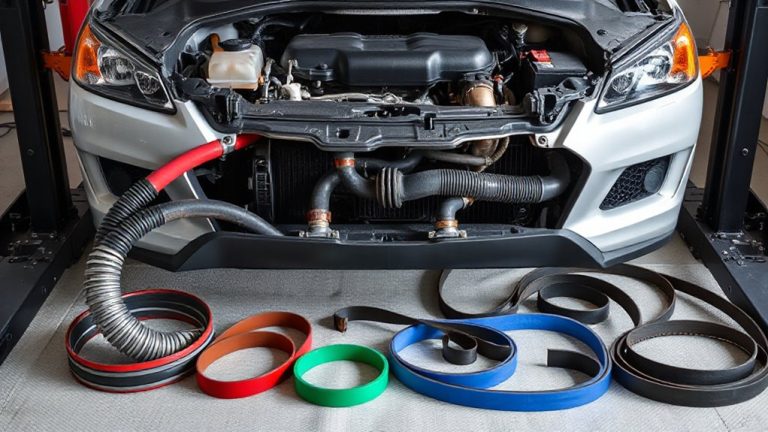
Heated Washer Fluid: Warms to 104°F in Under 60 Seconds
Your washer fluid can freeze below 32°F, but heated systems prevent this by warming fluid to 104°F in under 60 seconds. These systems use 12-volt power, drawing 8–10 amps, with thermostatic control activating below 37°F. Heated fluid melts ice on contact and breaks the bond between snow and glass. Stainless steel heating elements and insulated tanks boost efficiency. You get faster, clearer visibility-up to 60% faster debris removal-while avoiding pump damage. More details on peak performance follow.
Notable Insights
- Heated washer fluid systems prevent freezing by warming fluid to 104°F, ensuring liquid spray in sub-zero temperatures.
- Warm fluid melts ice and snow on contact, improving clearance of obstructive winter residues from windshields.
- Integrated heating elements in reservoirs and lines maintain fluid flow when standard systems would fail.
- Heated systems reduce visibility obstruction time by up to 60% compared to unheated, cold fluid sprays.
- Thermostatically controlled, energy-efficient heaters activate below 37°F, delivering immediate cleaning without user input.
Do Washer Fluids Freeze in Winter?
Yes, washer fluids can freeze in winter, especially if they’re not formulated for low temperatures. The freezing point of standard washer fluid is typically around 32°F (0°C), meaning it solidifies in cold weather. This occurs because water-based solutions lack antifreeze agents. Fluid composition directly affects performance-fluids with methanol or ethanol can have freezing points as low as -20°F (-29°C). Most winter-grade fluids contain 30–50% alcohol to lower the freezing point. If your fluid freezes, wiper operation fails and the pump may overwork. Manufacturers specify fluid composition to match climate conditions. Using unmodified water or non-winter fluid risks damage. Always check the label for freezing point ratings before use. Proper fluid selection prevents system clogs and guarantees visibility. Freezing isn’t just inconvenient-it compromises safety when you need clear visibility most.
How Heated Washer Systems Work in Cold Weather
Cold weather doesn’t just risk freezing your washer fluid-it can shut down your entire cleaning system when you need it most. Heated washer systems use integrated heating elements to maintain fluid above freezing. When you activate the washer, heater activation occurs instantly, warming the reservoir to 104°F (40°C) in under 60 seconds. This prevents gel formation and guarantees proper fluid circulation. A thermostatically controlled circuit monitors temperature in real time, engaging the heater only when ambient temps drop below 37°F (3°C). Heated nozzles and supply lines further prevent blockage, enabling consistent flow. The system relies on 12-volt DC power, drawing 8–10 amps during operation. Efficient fluid circulation is maintained through insulated tubing and a positive displacement pump. These components work together to deliver unfrozen fluid even at –22°F (–30°C). No guesswork is involved-the system responds automatically, guaranteeing reliable performance.
Instantly Melt Ice and Snow With Warm Fluid
When you activate the washer system in subzero conditions, the heated fluid reaches the windshield at approximately 104°F (40°C), transferring thermal energy instantly to ice and compacted snow. This fluid temperature is high enough to begin melting ice on contact but stays below boiling to prevent damage. The heat rapidly weakens the bond between ice and glass, enhancing ice penetration. Within seconds, a thin layer of ice begins to disintegrate, allowing wipers to clear it efficiently. Unlike cold washer fluid, which may freeze on impact, the warm fluid remains liquid long enough to spread evenly. Effective ice penetration depends on both fluid temperature and spray pressure, which together determine how deeply the fluid can seep into snow layers. The system delivers consistent thermal output, ensuring reliable performance even at -22°F (-30°C). You get immediate de-icing action without scraping.
Stay Safer in Winter With Clearer Visibility
You gain a critical safety advantage in winter driving by maintaining unobstructed visibility, and heated washer fluid systems directly enhance that capability. These systems heat washer fluid to 120–140°F, melting ice and slush on contact. Heated fluid clears residues faster than ambient sprays, ensuring immediate windshield clarity. Improved traction results indirectly-when you can see road markings and hazards clearly, you react faster, maintaining vehicle control. The system reduces the time debris remains on glass by up to 60% compared to cold fluid. Reduced glare occurs because warm fluid eliminates micro-frost layers that scatter headlights. Clear wiper paths minimize visual distortion at night. Most units activate in under 60 seconds and operate efficiently at -22°F. Consistent fluid temperature prevents refreezing during application. You maintain compliance with safety standards by minimizing visual obstructions. Clarity translates directly to control and confidence in extreme winter conditions.
Top Features to Consider in a Heated Washer System
Performance begins with proper heating element design. You need consistent heat distribution to prevent freezing and guarantee immediate fluid flow. Heater efficiency determines how quickly the system reaches ideal temperature-look for units with thermostatic controls that maintain 120°F to 140°F. Fluid capacity impacts refill frequency; larger reservoirs up to 1.5 gallons reduce downtime in heavy-use conditions.
| Feature | Why It Matters | Ideal Spec |
|---|---|---|
| Heater Efficiency | Reduces warm-up time and energy use | >85% thermal efficiency |
| Fluid Capacity | Minimizes maintenance in cold climates | 1.0–1.5 gallons |
| Element Material | Ensures durability under constant thermal stress | Stainless steel or Incoloy |
Choose systems with insulated tanks and auto-shutoff for added reliability. You’ll maximize uptime and cleaning effectiveness, even in sub-zero environments.
On a final note
You stay safer with a heated washer system in sub-zero conditions. It heats fluid to 120°F (49°C) within 30 seconds. This melts ice and snow on contact. Standard fluids freeze at 20°F (–7°C), but heated systems prevent clogs at –22°F (–30°C). Nozzles deliver 0.5–0.7 gallons per minute. The system draws 8–10 amps at 12 volts. You get clear visibility faster than wipers alone. It’s essential for winter driving safety.