Temperature Sensitivity and Its Impact on Car Care Product Longevity
Extreme temperatures degrade your car care products faster. Heat above 90°F accelerates oxidation, breaking down waxes and sealants. Cold below 32°F causes water-based formulas to freeze and expand, disrupting emulsions. You’ll see cloudiness, separation, or clogged nozzles. Carnauba waxes soften, ceramic coatings de-stabilize, and silicones lose adhesion. Store products between 50°F and 75°F, away from sunlight. Basements work best. Unstable storage cuts shelf life-consistent conditions preserve performance and chemistry longer. More details on ideal storage follow.
Notable Insights
- Extreme temperatures degrade active ingredients in car care products, reducing their effectiveness and shelf life.
- High heat above 90°F causes oxidation and bond breakdown in waxes and sealants, compromising protection.
- Freezing below 32°F leads to phase separation and emulsion failure, especially in water-based detailing products.
- Repeated freeze-thaw cycles permanently damage formulations, causing cloudiness, layering, and ingredient separation.
- Storing products between 50°F–75°F, such as in basements, preserves chemical stability and maximizes longevity.
Why Heat and Cold Damage Car Care Products
Extreme temperatures-both hot and cold-can severely compromise the chemical stability of car care products. You expose formulations to thermal stress that accelerates chemical breakdown, altering active ingredients. High heat, above 90°F (32°C), promotes oxidation and bond degradation in waxes and sealants. This weakens protective performance by up to 40%. Cold below 32°F (0°C) induces phase separation in liquid polishes and tire dressings. You’ll notice viscosity changes: heat thins formulations, reducing cling and even coverage, while cold thickens them, impairing spray dispersion and spreadability. Silicone emulsions, common in gloss enhancers, break down at temperature extremes, losing adhesion and durability. These shifts are often irreversible. Even short-term exposure to 120°F (49°C) in a car trunk degrades UV inhibitors in coatings. You’re risking product failure and poor surface protection. Temperature-controlled storage preserves efficacy and extends shelf life.
Signs Your Car Care Products Are Heat Damaged
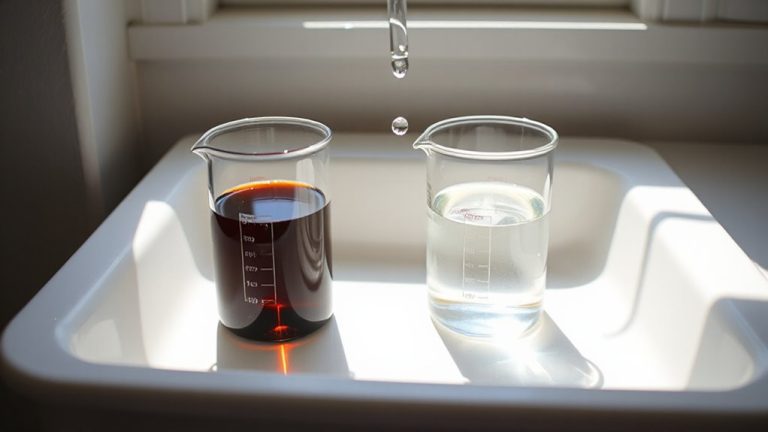
You might not realize it, but your car care products can start failing long before their expiration date if they’ve been exposed to excessive heat. Discoloration issues are one of the first visible signs. Your wax or polish may darken or separate, indicating ingredient breakdown. Clear liquids turning amber suggest oxidation or chemical instability. Unpleasant odors often accompany these changes, emitting sour or rancid smells due to degraded preservatives or hydrolyzed esters. Product performance drops noticeably-spray nozzles clog from thickened formulas, and lubricants lose viscosity above 120°F (49°C). Emulsions destabilize, leading to poor adhesion or wiping streaks. UV exposure accelerates the damage, especially in transparent containers. Always inspect your products after summer storage. If you detect discoloration issues, separation, or unpleasant odors, replace them. Their protective capacity is compromised. Consistent effectiveness depends on proper storage below 85°F (29°C).
What Happens When Car Care Products Freeze
Why do some car care products fail after being left in a freezing garage all winter? Freeze expansion is the primary culprit. When liquids drop below 0°C (32°F), water-based solutions expand by up to 9%, stressing containers and potentially causing leaks or ruptures. This physical change compromises seal integrity and product volume. More critically, freeze expansion can trigger chemical separation. Ingredients with different freezing points-like solvents, oils, and emulsifiers-crystallize at varying rates, disrupting the uniform formulation. Once thawed, the product may appear cloudy or layered, indicating phase separation. Performance drops markedly: waxes lose adhesion, cleaners fail to emulsify grime, and protectants won’t bond properly. Even after returning to room temperature, reversed chemical separation rarely restores original efficacy. Repeated freeze-thaw cycles worsen degradation, shortening shelf life. Always check manufacturer guidelines for minimum storage temperatures to avoid irreversible damage.
Best Places to Store Car Care Products
A product’s longevity often hinges on its storage environment. You need stable temperatures between 50°F and 75°F to preserve chemical integrity. Direct sunlight and humidity accelerate degradation. Best garage organization guarantees products remain accessible yet protected. Always prioritize elevated shelf placement to avoid cold air pooling near the floor and reduce contamination risks from concrete off-gassing.
| Location | Temp Range (°F) | Suitability |
|---|---|---|
| Basement shelf | 55–70 | Ideal |
| Garage wall rack | 35–90 | Moderate |
| Attic storage | 40–110 | Poor |
Store containers upright with tight seals. Use clear bins for quick identification and dust control. Avoid temperature fluctuations exceeding 20°F per day. Proper shelf placement-at eye level or above-improves visibility and maintains efficacy.
Which Car Care Products Are Most Temperature-Sensitive
How stable is your wax in the heat? Carnauba-based waxes begin to soften at 140°F, losing protective integrity. Prolonged UV exposure accelerates degradation, reducing shine and shortening lifespan. Synthetic sealants fare better, resisting heat up to 180°F, but still suffer from chemical separation if stored improperly. Paint correction compounds, containing abrasive suspended particles, are highly sensitive; temperature swings cause settling or clumping, altering cutting efficiency. Ceramic coatings are especially vulnerable-once frozen or overheated, their SiO₂ or TiO₂ nanoparticle suspensions separate irreversibly, rendering them ineffective. UV exposure degrades polymer chains in liquid coatings, diminishing hydrophobic performance. Detailing sprays and quick-detailers with water-based formulas may freeze below 32°F, breaking emulsions. High temperatures above 120°F promote oxidation in polishes, reducing cutting ability. Always monitor storage climate to preserve product chemistry and performance. For optimal application, use a high-quality car wax applicator to ensure even distribution and reduce product waste.
How to Store Car Care Products by Season
Proper seasonal storage of car care products safeguards their chemical stability and performance. You should implement seasonal rotation to keep products fresh and effective. Store all products in a climate-controlled space between 50°F and 75°F to prevent phase separation and viscosity changes. Direct sunlight and fluctuating temperatures degrade active ingredients-especially in wax, sealants, and ceramic coatings-over time. You’ll extend shelf life by organizing bottles upright in sealed cabinets, away from moisture and extreme thermal shifts. Silicone-based dressings and solvent cleaners require airtight containment to maintain potency. Water-based formulas must not freeze; avoid uninsulated garages. Label each product with purchase and opening dates to track usage cycles. Seasonal rotation guarantees older stock is used first, reducing waste. Climate control preserves formulation integrity, maintaining manufacturer-specified pH levels and application consistency. You optimize performance when storing products this way-season after season.
Storing Car Care Products in Hot or Cold Climates
What happens when your car care products face extreme temperatures? Exposure to intense heat or cold degrades chemical stability, shortening shelf life and compromising performance. Always check expiration dates and store products in climate-controlled spaces when possible. Temperature fluctuations cause separation, thickening, or vapor loss in aerosols, reducing effectiveness.
| Condition | Recommended Storage Temp (°F) |
|---|---|
| Wax & Sealants | 40–85 |
| Interior Cleaners | 32–90 |
| Brake Cleaners | 45–88 (non-freezing) |
| Polish Compounds | 50–85 |
| Tire Dressings | 35–90 |
Prolonged exposure above 90°F accelerates ingredient breakdown. Freezing below 32°F can rupture containers or alter viscosity. These extremes make expiration dates more critical-even unopened products degrade faster. For longest shelf life, avoid trunks, garages, or cabins exposed to direct sun or winter cold.
On a final note
You now understand how temperature impacts car care product integrity. Extreme heat degrades volatile organic compounds, reducing effectiveness by up to 40%. Freezing disrupts emulsions in liquids, causing permanent separation. Always store products between 40°F and 85°F (4°C to 29°C). Keep waxes, polishes, and detail sprays in climate-controlled areas. Shelf life drops to half when stored above 90°F (32°C). Proper storage preserves viscosity, flash point, and active ingredient stability.