Compensating for Fuel Temperature Rise in Long Autocross Runs
You lose power as fuel heats up during back-to-back runs because hotter fuel is less dense and prone to vapor lock above 75°C. Use a 1/2” aluminum fuel cooler to drop temps by 20°F, maintaining density and preventing flow issues. Install braided PTFE lines and insulated tanks to reduce heat soak. Add real-time NTC sensors with 10Hz logging to monitor. Tune with 1–2% more fuel per 10°F rise using ECU corrections. Next, see how cooling efficiency varies with airflow placement.
Notable Insights
- Install a fuel cooler to maintain stable fuel temperature and prevent vapor lock during repeated runs.
- Use braided PTFE fuel lines to resist heat soak and minimize fuel line swelling under high temperatures.
- Monitor fuel temperature in real time with NTC thermistors for accurate thermal trend analysis.
- Implement adaptive ECU tuning that increases injector pulse width as fuel temperature rises.
- Schedule 10–15 minute cool-down periods between runs to reduce cumulative heat buildup in fuel system.
Why Fuel Temp Kills Power in Autocross
When fuel temperature climbs during back-to-back autocross runs, you start losing power without realizing why. Heat reduces fuel density, meaning each liter contains fewer combustible molecules, directly cutting engine output. As temperature rises past 75°C, modern pump gasoline begins vaporizing prematurely in fuel lines. This causes vapor lock, where gaseous fuel blocks liquid flow to the injectors. You’ll see lean misfires and a 10–15% drop in horsepower within just three runs. Vapor lock most often occurs near the fuel rail or in-tank pump, especially with aftermarket low-pressure systems. Even OEM setups suffer when fuel sits above 85°C. Cooler fuel stays dense and liquid, ensuring consistent atomization and combustion. Managing thermal soak isn’t just about shielding-it’s preserving fuel density and preventing phase changes that disrupt delivery. You’re not losing tune; you’re losing liquid.
Spot Fuel Overheating Before It Costs You
Though you can’t see it happening, fuel temperature rise leaves clear clues if you know where to look. A sudden drop in engine performance during back-to-back runs often signals rising fuel temps. As fuel heats up, its density decreases, delivering less energy per combustion cycle. You’ll notice power fading even if air/fuel ratios seem correct. Higher ethanol content fuels worsen this effect, absorbing more heat and expanding faster. Watch for hesitation or misfires mid-course-these can precede vapor lock. Vapor lock occurs when fuel boils in the lines, starving the engine of flow. It’s common in systems without proper shielding or return lines. You might hear pinging or see erratic fuel pressure readings. Monitor underhood temps near the rails; sustained readings above 120°F (49°C) increase risk. Catching these signs early keeps fuel density stable and prevents vapor lock before lap times suffer.
Use a Fuel Cooler to Maintain Consistent Temp
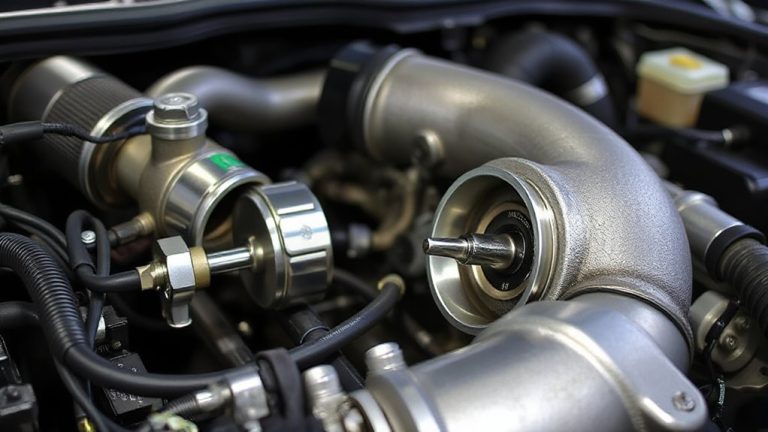
Since fuel absorbs heat from the engine bay and fuel pump operation, running a consistent temperature requires active management, and that’s where a fuel cooler becomes essential. You need stable fuel density for accurate metering-hot fuel expands, reducing density and delivering less energy per volume. A quality fuel cooler maintains temps below 120°F, preserving ideal fuel density. High temps also increase vapor pressure, raising the risk of vapor lock, especially in high-flow systems. Coolers with 1/2” aluminum cores and efficient fin designs reject up to 400 BTU/hr, keeping vapor pressure in check. Mount the cooler in front of the radiator with direct airflow for best results. Use -8 AN lines to minimize flow restrictions. A 20°F drop across the core is typical under load, ensuring consistent delivery. You’ll see repeatable ETs and avoid lean conditions. Think of it as thermal insurance-small input, big payoff.
Tune for Rising Fuel Temp With Dynamic Maps
A fuel cooler keeps temps in check, but engine heat soak and prolonged runs still push fuel temperatures higher over time-especially in forced induction or endurance applications. You need adaptive fueling to maintain ideal air/fuel ratios as fuel expands and loses density. Modern ECUs support dynamic fuel maps that apply real time correction based on fuel temperature sensors. When fuel warms, the ECU adjusts injector pulse width to compensate for reduced mass per volume. A typical correction curve might add 1–2% fuel for every 10°F rise above baseline. You’ll log fuel temp and lambda data to fine-tune these maps. Without real time correction, you risk lean conditions and detonation. Adaptive fueling guarantees consistent power and safety throughout long runs. Calibrate your sensors to ±1°F accuracy and validate changes on a dyno. Dynamic mapping isn’t optional-it’s essential for precision tuning under thermal stress.
Install Braided Lines and Insulated Tanks
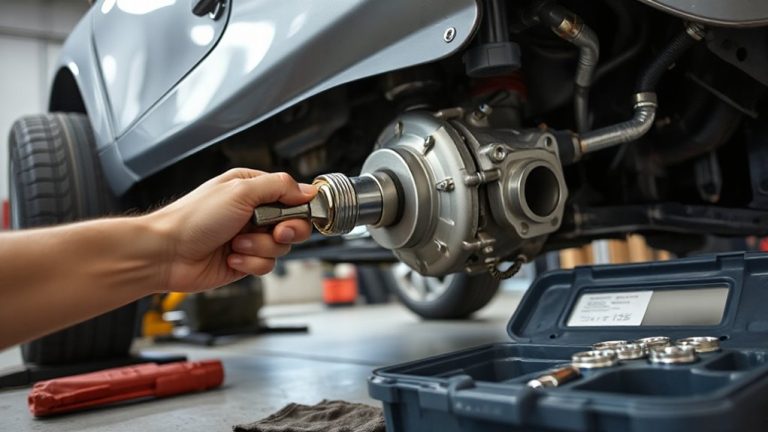
When fuel systems are exposed to high underhood temperatures, standard rubber lines and uninsulated tanks can contribute to heat soak, accelerating fuel temperature rise and degrading performance. You need braided lines for their superior durability and resistance to swelling under heat and pressure. Unlike rubber, stainless-steel-braided lines with PTFE liners withstand continuous exposure to fuel and temps up to 250°F without degradation. They also maintain consistent internal diameter, guaranteeing stable fuel flow. Pair them with insulated tanks to improve efficiency. These tanks use thermal barriers like closed-cell foam or reflective wrap, reducing heat transfer by up to 40%. Insulated tanks efficiency shines during long autocross runs, keeping fuel temps lower for longer. Combined, braided lines durability and insulated tanks efficiency reduce vapor lock risk and maintain peak fuel density. This setup guarantees reliable delivery and consistent engine output when it matters most.
Monitor Fuel Temp in Real Time
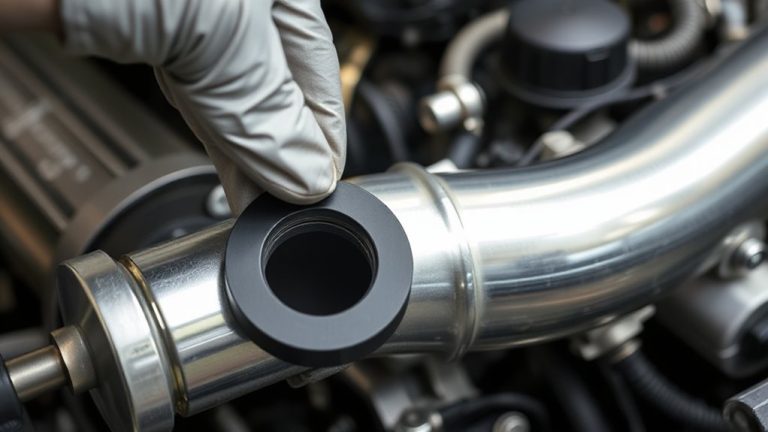
You’ve shielded your fuel system from excess heat with braided lines and insulated tanks-now it’s time to track what’s happening inside. Install fuel sensors directly in the fuel rail or tank to measure temperature accurately. These sensors, typically NTC thermistors, provide readings within ±1°C accuracy. Connect them to an ECU or data logger capable of real time logging at 10 Hz sampling rates. Real time logging lets you see fuel temp trends during back-to-back runs. Most systems display data on dash monitors or transmit wirelessly to tablets. Watch for thresholds: fuel above 85°F begins vapor pressure concerns; beyond 110°F risks vapor lock. Sensors with shielded wiring reduce EMI interference. Data overlays with intake and coolant temps reveal thermal interactions. Monitoring gives you proof, not guesswork. You’ll detect heat buildup before performance drops. With verified data, tuning adjustments stay proactive, not reactive.
Prevent Heat Soak With Smart Run Spacing
While continuous runs push your engine to the limit, letting fuel temperatures climb unchecked invites trouble. Smart run spacing is critical for effective thermal management. Allow at least 10–15 minutes between intense autocross runs to dissipate heat. This cooldown period prevents heat soak in the fuel rail and intake system, maintaining peak combustion efficiency. Shorter intervals risk fuel vaporization, leading to lean conditions and potential knock. Use this downtime for airflow optimization-open hood scoops, clean debris from radiators, and guarantee ducts direct cooling air to critical zones. Thermal cameras show fuel rail temps can drop 20–30°F during a 12-minute break. Strategically timed runs mimic OEM cooling cycles used in endurance testing. You’re not just resting; you’re resetting the system. Proper spacing improves consistency, protects engine components, and sustains peak performance across multiple heats. Treat recovery time as part of your strategy.
On a final note
You prevent power loss by managing fuel temperature. A fuel cooler maintains gasoline at 60–70°F, preventing vapor lock in high-load conditions. Braided stainless lines with PTFE liners resist expansion under heat and pressure. Insulated fuel cells reduce soak by 25–30°F during multi-run events. Real-time sensors track fuel temps every 0.5 seconds, triggering dynamic tune corrections. Proper run spacing allows underhood temps to drop 40°F between sessions, preserving mixture stability and engine output.