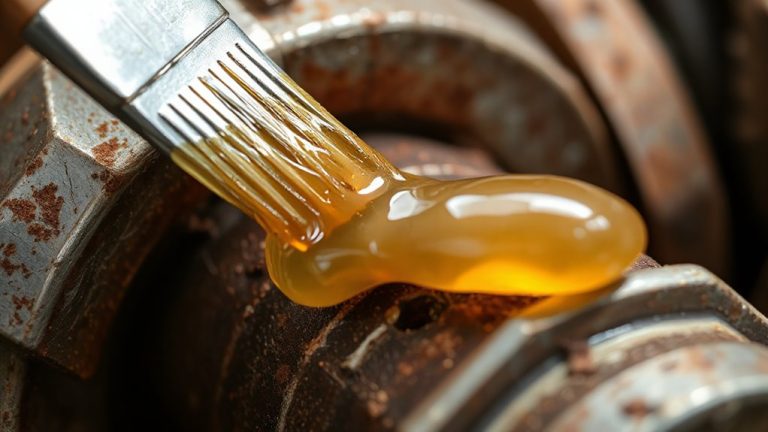
How to Remove Iron Contamination From Wheel Lug Nuts Without Scratching
Spray a pH-neutral iron remover on dry, cool lug nuts to dissolve contamination without scratching. The solution uses chelating agents that bind to iron, turning purple as it lifts ferrous debris. Let it dwell for 2–3 minutes without drying. Use a soft nylon brush (≤60 Shore D, 3/4″ bristles) with light 1–2 psi pressure in circular motions for 30 seconds. Rinse with 300–500 psi water using a wide-angle nozzle. Inspect under bright light-any remaining specks mean you should repeat. A second application often provides full clearance.
Notable Insights
- Use a pH-neutral iron remover with organic chelating agents to safely dissolve contamination without damaging surfaces.
- Spray the cooler, dry lug nuts evenly and allow 2–3 minutes of dwell time before rinsing.
- Avoid metal or stiff brushes; use a soft nylon brush with ≤60 Shore D bristles to prevent scratching.
- Apply light pressure (1–2 psi) in circular motions, limiting scrubbing to 30 seconds per lug nut.
- Rinse thoroughly with 300–500 psi low-pressure water and inspect for residue under direct light.
Remove Iron Contamination From Lug Nuts Fast
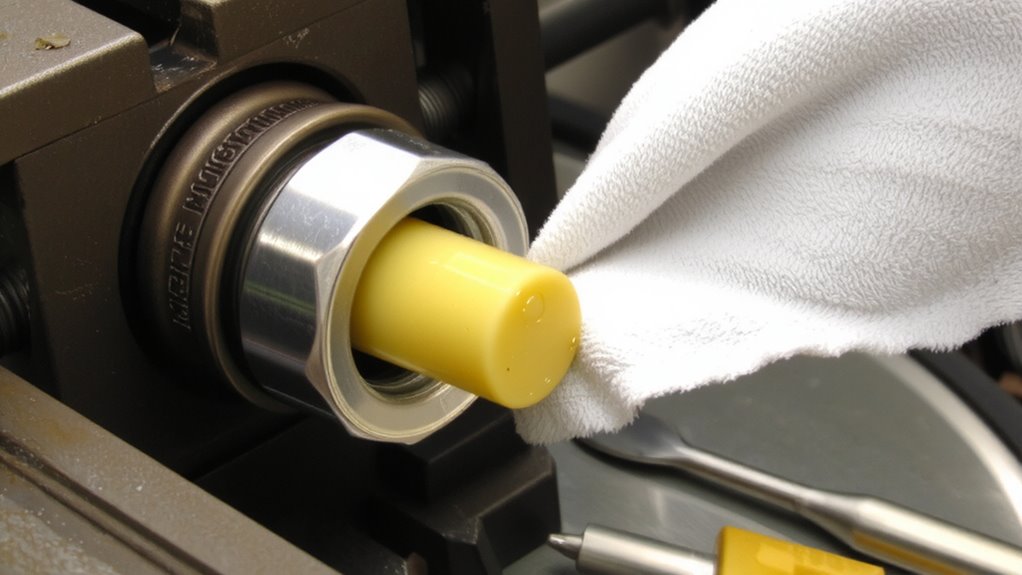
How do you get rid of stubborn iron contamination on lug nuts quickly? You rely on chemical reactions that dissolve ferrous debris without damaging metal. Iron fallout contains magnetic particles embedded in brake dust, bonding to lug nuts through heat and friction. These particles oxidize, causing surface staining and corrosion. Fast removal requires a pH-balanced iron remover that triggers a chemical reaction, turning particles purple as they lift. Spray the solution directly onto dry lug nuts-do not let it dry. Within 2–3 minutes, the reaction breaks down contamination at a molecular level. Rinse thoroughly with low-pressure water. Use a soft nylon brush only if necessary. Avoid abrasive tools. The process removes 95% of magnetic particles without scratching. For best results, clean every two weeks, especially in winter. Top-performing iron removers for car paint deliver consistent results on metal surfaces like lug nuts.
Pick the Best Iron Fallout Remover
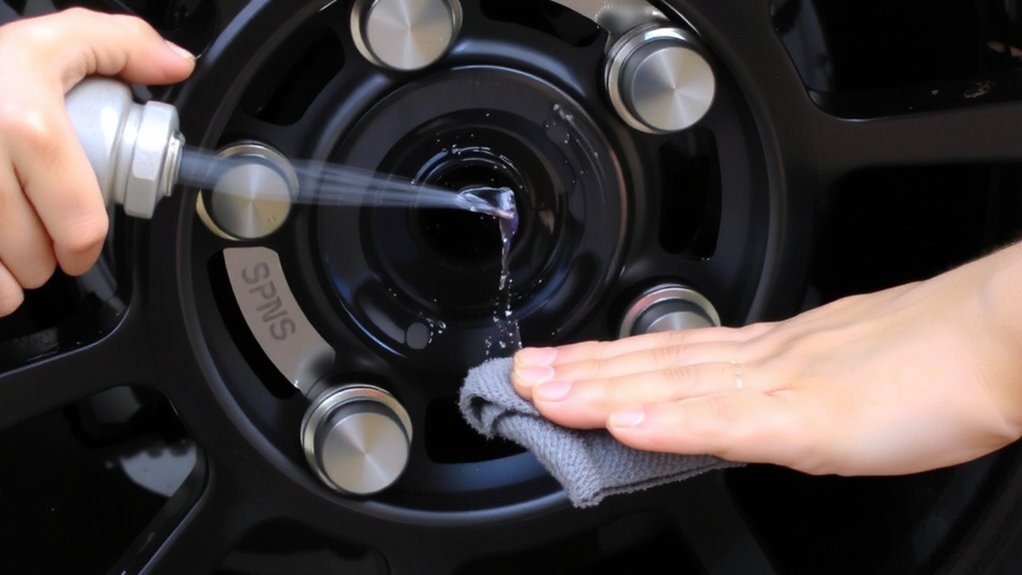
A handful of iron fallout removers deliver fast, safe results-most don’t. Choosing the right one hinges on chemical composition and application frequency. Acidic formulas work quickly but risk damaging brake dust shields or paint near lug nuts. pH-neutral options are safer but may need longer dwell times. Always verify compatibility with alloy wheels and steel studs.
| Product Type | Chemical Composition | Application Frequency |
|---|---|---|
| Acidic Gel | Sulfuric acid-based | Every 1–2 weeks |
| pH-Neutral | Organic chelating agents | Weekly |
| Spray-Foam | Non-acidic surfactants | Biweekly |
| Pro-Grade | Iron-reactive indicators | Monthly |
| Budget | Weak acidic blends | 2x weekly (riskier) |
Check dwell time and avoid overspray. Your lug nuts’ integrity depends on smart, consistent choices.
Apply the Remover for Maximum Effect
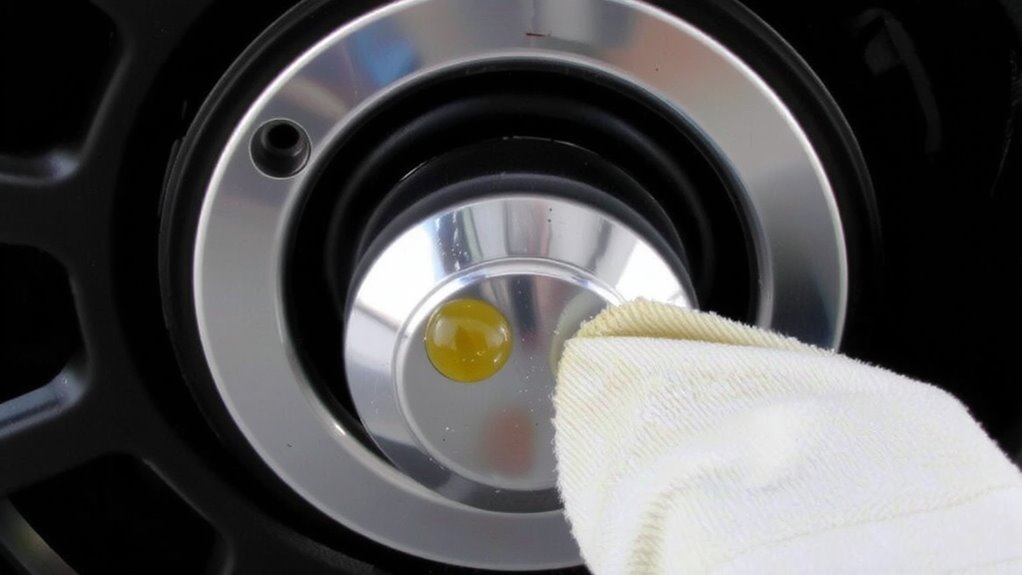
Proper application guarantees the remover breaks down iron particles without harming surrounding components. You must observe correct application timing-apply the remover when lug nuts are cool to the touch and out of direct sunlight to prevent premature drying. Spray evenly until the surface is fully wetted, but avoid oversaturation that could migrate to brake components. Surface dwell time is critical; let the product sit for 3–5 minutes to allow the pH-balanced formula to react with embedded iron. Do not allow the remover to dry on the surface, as this reduces effectiveness and increases residue. Reapply if contamination is heavy, waiting between applications. Work on one wheel at a time to maintain control. The chemical reaction turns visible as the solution changes from purple to red, indicating iron dissolution. This color shift confirms active decontamination, ensuring thorough results before brushing.
Scrub Lug Nuts Safely With a Soft Brush
Once the iron remover has reacted fully and the solution has shifted from purple to red, it’s time to agitate the surface safely. Use a soft-bristled brush with nylon filaments no harder than 60 Shore D to avoid marring the lug nut’s finish. Apply light pressure-about 1 to 2 pounds per square inch-and use circular brush techniques to dislodge residual contaminants trapped in microscopic pores. This method maintains cleaning efficiency without introducing swirls or scratches. The bristle length should be at least 3/4 inch to guarantee adequate reach around threaded areas. Limit scrubbing duration to 30 seconds per lug nut to prevent unnecessary abrasion. Proper brush techniques enhance chemical effectiveness by promoting contaminant lift, not grinding. Use a dedicated wheel brush to avoid cross-contamination from metallic particles. This step bridges chemical action and physical removal, guaranteeing thorough decontamination while preserving surface integrity. For best results, choose a brush specifically designed for wheels, such as those featured in top car wheel brushes reviews.
Rinse and Check for Residue
After neutralizing the iron remover’s reaction, rinse each lug nut thoroughly with low-pressure water, ideally between 300 and 500 psi, to avoid forcing contaminants into crevices. Maintain consistent water pressure to guarantee effective debris removal without damaging the surface. Use a wide-angle spray nozzle to distribute water evenly and reduce localized force. Inspect each lug nut under direct light, checking for any remaining discoloration or residue, especially in threads and recessed areas. Residual iron particles appear as faint orange specks. If residue persists, repeat the treatment process. Once clean, dry thoroughly using a lint-free microfiber cloth. Use a compressed air drying technique to remove moisture from hard-to-reach spaces. Proper drying prevents water spots and flash rust. Final inspection guarantees corrosion protection and long-term finish integrity. This routine maintains wheel hardware performance and appearance.
On a final note
You’ve effectively removed iron contamination using a pH-balanced iron fallout remover. These formulas dissolve ferrous particles on contact, changing color as proof of reaction. A soft-bristle brush with non-abrasive nylon filaments prevents marring OEM finishes. Rinse thoroughly with water at 40–60 psi to eliminate residue. Inspect under direct light; repeat if surface contamination persists. Proper technique preserves lug nut integrity while restoring clean, corrosion-resistant surfaces.