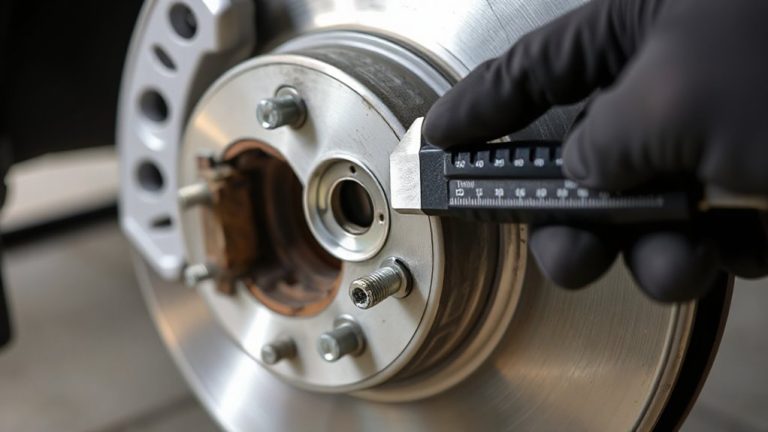
Using Dedicated Brake Cleaner Instead of WD-40 on Caliper Assemblies to Avoid Swelling
You should never spray WD-40 on brake calipers-it contains petroleum distillates that swell nitrile and EPDM rubber seals by up to 25%. This expansion distorts the seal geometry, leading to piston binding and brake drag. Instead, use a dedicated non-chlorinated brake cleaner. It evaporates in under two minutes, leaves zero residue, and maintains seal integrity. These cleaners meet OEM specifications for rubber compatibility, ensuring long-term resilience under high pressure and heat. Proper solvent choice prevents premature caliper failure and keeps your brake system operating safely. There’s more you need to know about protecting sensitive components during maintenance.
Notable Insights
- WD-40 contains petroleum solvents that cause rubber seals to swell and degrade.
- Dedicated brake cleaner is formulated to be safe for nitrile and EPDM rubber components.
- Brake cleaner evaporates quickly, leaving no residue that could attract moisture or heat.
- Using proper brake cleaner prevents seal distortion and maintains caliper piston movement.
- Swelling from oil-based products can lead to brake grabbing and reduced braking performance.
Why WD-40 Damages Brake Calipers
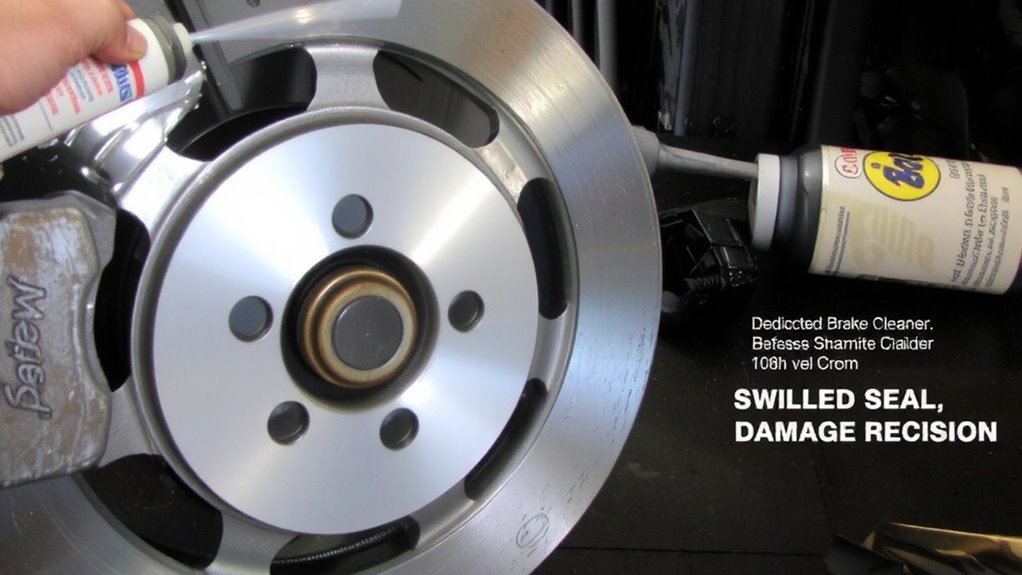
While it might seem convenient to reach for WD-40 when cleaning brake components, doing so can cause serious harm to caliper assemblies. WD-40 isn’t formulated for brake fluid compatibility and can react negatively with system materials. Its petroleum-based solvents trigger seal material degradation in rubber components like pistons and slide pins. Most caliper seals are made from nitrile or EPDM rubber-materials designed to withstand glycol-based fluids, not hydrocarbon solvents. Exposure leads to swelling, cracking, and eventual failure. Even brief contact compromises seal integrity, reducing braking performance. Unlike dedicated brake cleaners, WD-40 leaves behind a residual film that attracts dust and moisture. This residue interferes with precise caliper movement and heats up under friction. You risk uneven pad wear, grabbing, or premature lockup. The solvent also softens bonding agents in composite seals. Always use a DOT-compliant cleaner that guarantees material safety and full system compatibility.
How Brake Cleaners Protect Rubber Seals
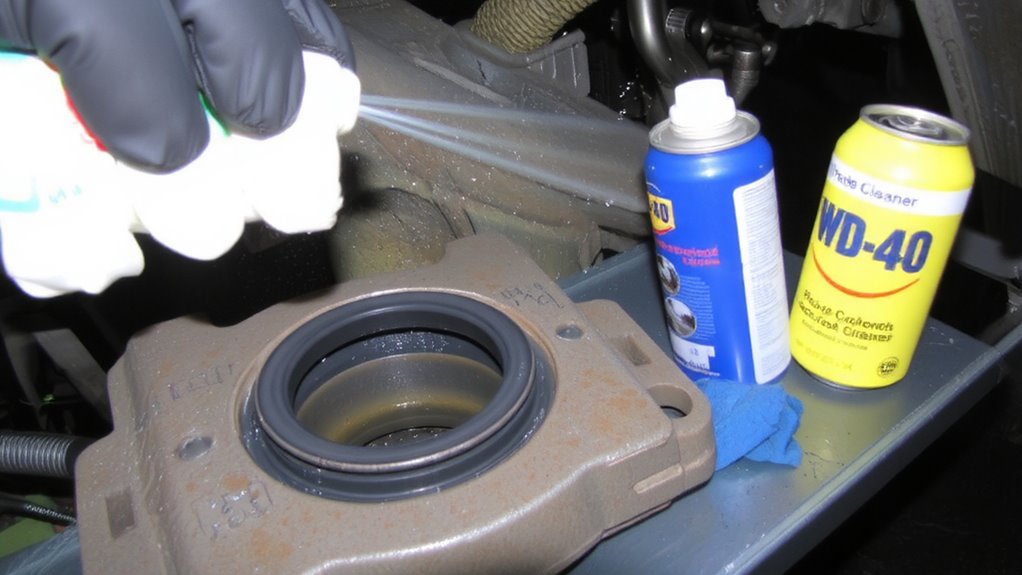
Since brake cleaners are specifically engineered for use in hydraulic braking systems, they won’t harm the rubber seals found in caliper assemblies. Their chemical compatibility with nitrile rubber and EPDM materials guarantees safe contact without degradation. Brake cleaners evaporate quickly-typically within 1–2 minutes-leaving no residue that could weaken or distort seals. Unlike general solvents, they maintain seal resilience by avoiding swelling, cracking, or hardening over time. Most formulations operate effectively across temperatures from -40°F to 300°F, matching the thermal extremes brake systems face. They’re tested to meet or exceed OEM specifications for rubber exposure, preserving seal integrity after repeated applications. You can rely on their precise chemistry to clean pistons, housings, and seal areas without risk. This targeted performance protects longevity and function, keeping caliper seals tight, flexible, and fully functional under pressure.
Why Oil Swells Brake Caliper Seals
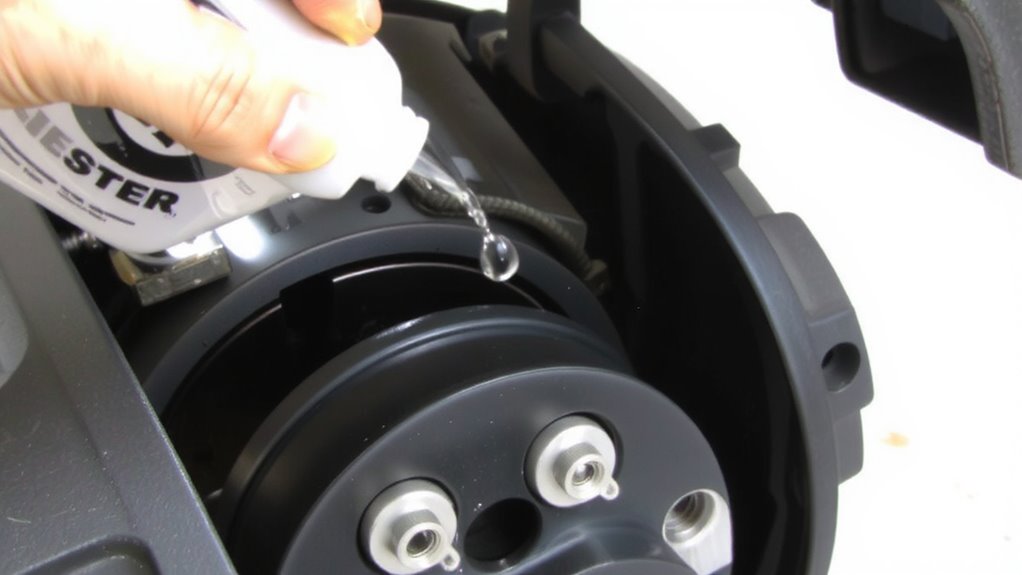
Brake cleaners protect rubber seals because they’re formulated to be chemically neutral toward nitrile and EPDM compounds. In contrast, oil causes brake caliper seals to swell due to oil absorption. These seals are designed to resist brake fluid, not petroleum-based oils. When exposed to oil, the rubber absorbs hydrocarbons, increasing volume by up to 25%. This swelling distorts seal geometry, impairing piston movement. Oil absorption also accelerates seal degradation by breaking down polymer chains. Swollen seals create drag, reduce braking efficiency, and may cause uneven pad wear. Even small amounts of oil, such as from WD-40, initiate this process. Unlike brake fluid, which is glycol- or silicone-based, mineral and synthetic oils are incompatible. The result is permanent deformation and compromised performance. Using non-approved lubricants risks long-term damage. Always avoid oil contact with caliper assemblies to maintain safety and function.
Step-by-Step: Cleaning Calipers Safely
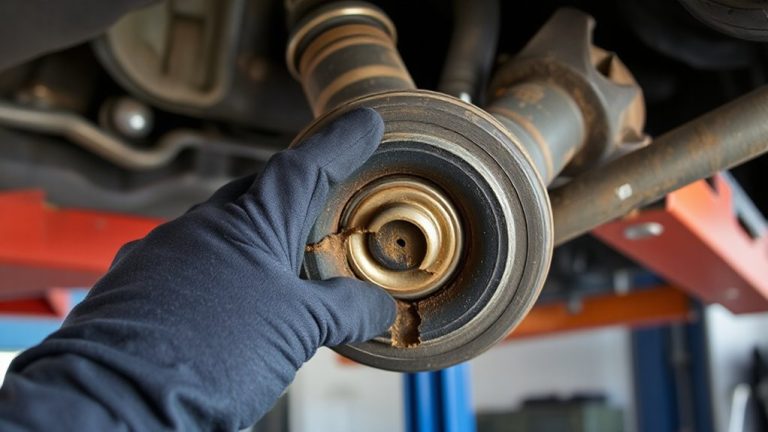
Start by positioning the vehicle on a level surface and securing it with wheel chocks and a properly rated jack stand-never rely on a hydraulic jack alone. Remove the wheel to access the caliper. Perform a thorough brake pad inspection, checking for even wear and minimum thickness (typically 3mm). Use a dedicated brake cleaner to spray all caliper surfaces, eliminating grease, debris, and contaminants. Avoid brake fluid contact with painted surfaces. Clean mounting bolts and bracket points carefully. Once dry, examine caliper pins for corrosion; proper function depends on them sliding smoothly. Apply high-temperature synthetic grease during caliper slide lubrication-lithium-based or silicone-based compounds rated to 400°F. Reassemble carefully.
| Component | Action | Product Spec |
|---|---|---|
| Caliper Body | Spray & Wipe | Non-chlorinated brake cleaner |
| Slide Pins | Inspect & Lubricate | Synthetic moly grease |
| Brake Pads | Measure & Replace if Thin | Minimum 3mm thickness |
5 Mistakes That Ruin Brake Assemblies
If you overlook proper cleaning procedures, you risk introducing contaminants that degrade braking performance. Using incorrect lubricants or solvents can lead to caliper overheating, especially when residue builds up on pads or rotors. This excess heat warps components and reduces stopping power. You may also cause piston misalignment by forcing stuck calipers without proper retraction. Misaligned pistons drag against rotors, increasing wear and generating dangerous heat levels. Always inspect bushings and mounting pins-worn hardware causes uneven caliper movement, accelerating failure. Avoid hammering components into place; even slight deformation disrupts alignment tolerances. Never reuse damaged seals-moisture or debris ingestion leads to seal swelling or corrosion. Apply only high-temperature brake grease rated to 400°F+ on guide pins. Precision matters: a 0.003-inch misalignment can trigger pad taper wear. Stay meticulous-your brake system operates under 900+ psi, demanding exact tolerances.
Best Brake Cleaner for Caliper Maintenance
While effectiveness and material compatibility are critical, choosing the right brake cleaner comes down to formulation and application precision. You need a non-chlorinated solvent that evaporates quickly-within 2–3 minutes-without leaving residue. This guarantees accurate brake pad inspection by removing oil, grease, and brake dust without damaging rubber seals or plastic components. Look for cleaners labeled safe for disc brakes, calipers, pads, and rotors. A high flash point (above 100°F) improves safety during use. Spray in short bursts from 6–8 inches away to avoid forcing contaminants into piston boots. After cleaning, verify dryness before proceeding with caliper lubrication. Use only high-temperature synthetic grease on slide pins and contact points. Proper brake cleaner use extends component life, guarantees consistent braking, and supports smooth operation during reassembly.
On a final note
You must use dedicated brake cleaner, not WD-40, on caliper assemblies. Brake cleaners are non-petroleum-based and have a 0% hydrocarbon content, preserving rubber seals. WD-40 contains mineral spirits that swell nitrile rubber seals by penetrating their polymer matrix. Swollen seals cause brake drag and piston failure. Top cleaners evaporate in under 2 minutes, leaving no residue. Always choose a DOT-compliant, chlorinated solvent for safe, effective cleaning.