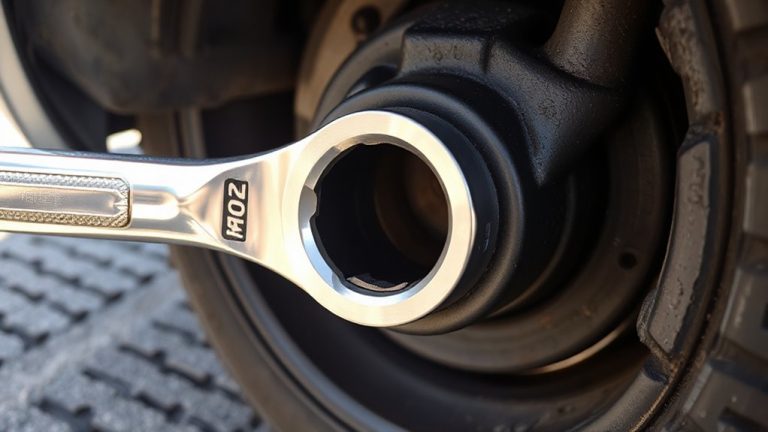
Lubricating Steering Tie Rod Ends on a 2012 Chevrolet Silverado: A Complete Guide
You should grease your 2012 Chevrolet Silverado’s tie rod ends every 15,000 miles using NLGI #2 lithium complex or polyurea grease. Look for zerk fittings on the tie rod ends-use a threaded 1/8-inch NPT coupler and hand-operated grease gun. Pump slowly until fresh grease exits the boot, ensuring contaminant flush and full lubrication. Avoid over-tightening fittings beyond 15–20 ft-lbs or trapping air with rapid pumping. Damaged boots require immediate replacement to maintain joint integrity. There’s more to get right.
Notable Insights
- Inspect tie rod end boots for cracks or grease leaks before lubricating to prevent contamination.
- Use NLGI #2 lithium complex grease with a Timken OK load over 50 lbs for optimal performance.
- Clean the zerk fitting thoroughly before attaching the grease gun to avoid introducing debris.
- Pump grease slowly until fresh lubricant appears at the boot, ensuring proper joint saturation.
- Never exceed 15–20 ft-lbs when tightening zerk fittings to avoid damage to the tie rod end.
How to Tell If Your 2012 Silverado’s Tie Rod Ends Need Greasing?
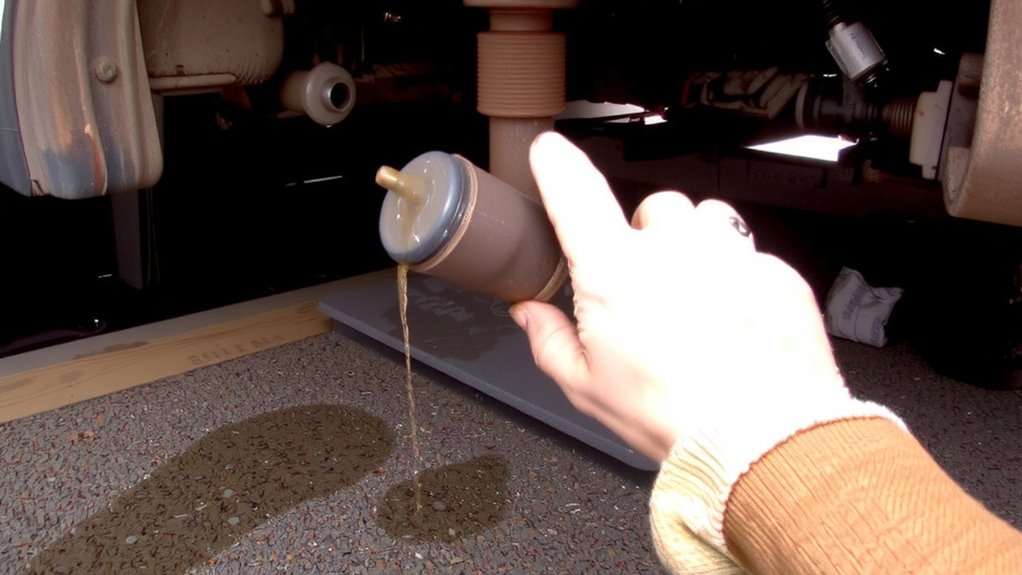
How can you tell when your 2012 Silverado’s tie rod ends need greasing? Check for steering wheel vibration, especially at highway speeds. This often signals excessive friction or wear in the tie rod ends. Inspect the rubber boots for cracks or grease leaks-damaged boots let contaminants in and expel lubricant. Perform a ball joint inspection while you’re underneath; worn ball joints can mimic tie rod symptoms. Lift the front end safely and grasp the front and back of each front tire, rocking it back and forth. Any clunking or movement indicates loose components. Refer to GM service specs: end play over 0.060 inches requires replacement. Grease zerk fittings every 15,000 miles using chassis Lubriplate or equivalent NLGI #2 lithium complex grease. Proper maintenance prevents premature wear and maintains steering accuracy.
Why Greasing Your Tie Rod Ends Prevents Steering Problems
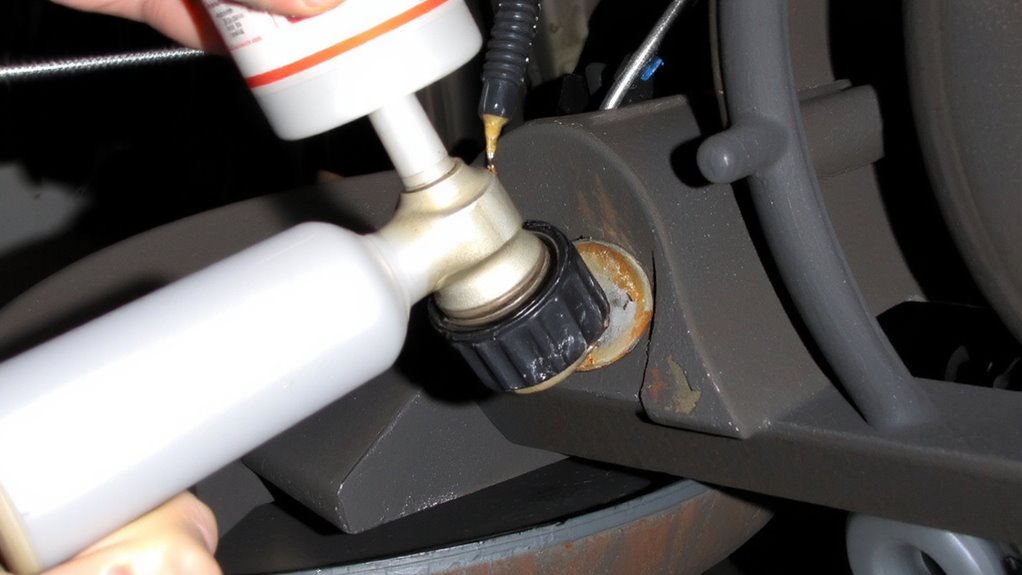
A single neglected grease point can quietly accelerate wear in your 2012 Silverado’s steering system, leading to costly damage. Greasing your tie rod ends regularly minimizes joint friction, which is a primary cause of steering wear. Without proper lubrication, metal-on-metal contact increases, degrading the internal bearing surfaces. This wear leads to play in the steering linkage, resulting in imprecise control and unsafe handling. Factory-equipped zerk fittings allow you to inject grease directly into the joint, maintaining a protective barrier against contaminants and moisture. Fresh grease also flushes out dirt and old lubricant, reducing abrasion. Consistent lubrication preserves the integrity of the tie rod’s internal boot and pivot point. Over time, this simple maintenance step prevents premature failure, ensuring your steering remains tight and responsive. Preventing joint friction now avoids expensive repairs later.
Grease & Tools for 2012 Silverado Tie Rod Ends
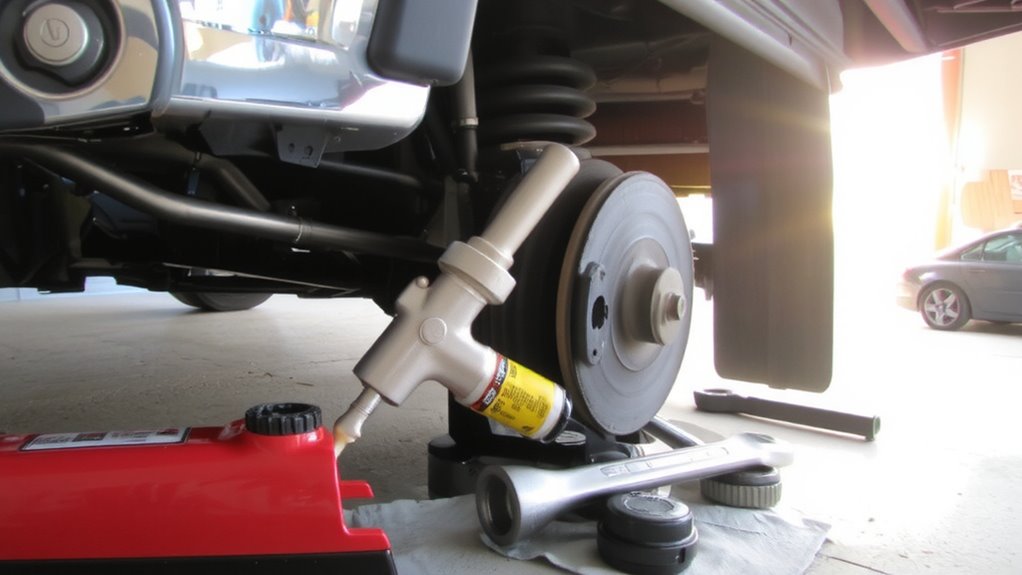
You’ve seen how regular lubrication keeps your Silverado’s steering tight and prevents premature wear, so now it’s time to focus on the right grease and tools for the job. Use a high-quality lithium-based or polyurea grease with an NLGI consistency grade of 2 for maximum flow and durability. These grease types resist water washout and maintain viscosity under heavy loads, critical for front-end steering components. Look for specs like Timken OK load ratings above 50 lbs and drop points exceeding 500°F. For tool selection, a sturdy hand-operated or pistol-grip grease gun with a threaded coupler guarantees secure attachment to the zerk fitting. Use a flexible extension hose to reach tight spaces around the tie rod ends. Always verify your fittings are standard 1/8-inch NPT to avoid leaks. Proper grease types and tool selection extend component life and guarantee complete lubrication. For reliable performance, consider a manual grease gun with positive ratcheting action to reduce hand fatigue during repeated use.
Step-by-Step: Greasing Your Tie Rod Ends Safely
Start with your 2012 Chevrolet Silverado on a level surface and the engine off-safety comes first. Engage the parking brake and chock the rear wheels to prevent movement. Lift the front of the truck using a floor jack at the designated lift points, then secure it on jack stands. With the front end off the ground, rotate each front tire by hand and watch for binding or resistance. Perform a tie rod inspection by grasping the tie rod end and attempting to wiggle it; any movement indicates wear. Check for steering play detection by having an assistant turn the steering wheel slightly while you observe the tie rod linkage. Excessive lash means failure is imminent. Once cleared, attach the grease gun to the zerk fitting and apply chassis lubricant until fresh grease emerges from the boot. Wipe away excess.
5 Common Mistakes to Avoid When Lubricating Tie Rod Ends
What happens when grease doesn’t reach the friction point? You risk premature wear and steering instability. Over tightening zerks can damage the grease fitting or puncture the boot, so apply only 15–20 foot-pounds of torque. The tie rod end boot must remain intact-ignoring boot damage lets in dirt and moisture, accelerating internal corrosion. Inspect each boot for cracks or tears before greasing. Use NLGI #2 lithium-based grease, compatible with OEM specifications. Pump slowly until fresh grease emerges slightly at the joint. Fast pumping traps air, reducing lubrication efficiency. Confirm proper zerk alignment to guarantee grease flows directly into the ball socket. A blocked passage means disassembly may be required. Avoid generic grease guns with inconsistent pressure output. Replace worn zerks immediately. Prevent contamination by wiping fittings clean before attaching the grease gun.
On a final note
You should grease your 2012 Silverado’s tie rod ends every 15,000 miles. Proper lubrication prevents premature wear and guarantees smooth steering response. Use high-quality lithium-based grease with a NLGI #2 rating and zinc additives for corrosion resistance. A working pressure of 2,500–3,000 psi from your grease gun guarantees full zerk fitting penetration. Inspect boots for cracks; compromised seals lead to contamination. Consistent maintenance extends component life and maintains factory steering precision.