How Flood-Damaged Vehicles May Have Compromised Safety Systems
Your car’s airbags may fail to deploy after flood exposure because water damages impact sensors and the airbag control unit. These components, often under seats or in floor consoles, are highly sensitive to moisture. Corrosion in wiring harnesses or inflators disrupts the millisecond signal needed for deployment. Even slight voltage drops from damaged circuits can disable safety systems. OBD-II scans might not catch these hidden faults-further investigation reveals deeper risks.
Notable Insights
- Flood exposure can corrode airbag sensors and control units, leading to failure during a crash.
- Water damage may cause brake system corrosion, reducing stopping power and increasing pedal sponginess.
- Brake fluid contamination from moisture lowers boiling points and compromises brake performance.
- Flood-damaged electronics often suffer hidden corrosion, disrupting ABS, stability control, and airbag operation.
- Corroded wiring and connectors can create intermittent faults undetectable by standard OBD-II scans.
How Flood Damage Disables Airbags
Even if your car seems to run after a flood, its airbags might not protect you when you need them most. Floodwater causes sensor immersion, damaging critical crash detection systems. Submerged impact sensors can short-circuit or corrode, failing to send deployment signals during a collision. Airbag control units, typically under seats or in consoles, are highly sensitive to moisture. Once wet, internal circuitry may degrade, leading to permanent failure. Airbag corrosion also affects wiring harnesses and inflators, weakening connections needed for millisecond-level response times. Saltwater immersion accelerates this damage, corroding metal contacts within hours. Manufacturers design airbag systems to deactivate when faults are detected, meaning water-exposed systems often disable themselves silently. No warning light guarantees full functionality. Diagnostic trouble codes may indicate moisture exposure, but not all failures are logged. Replacement-not repair-is recommended for any airbag system exposed to flood conditions. Safety depends on it.
Do Flood-Damaged Brakes Still Work?
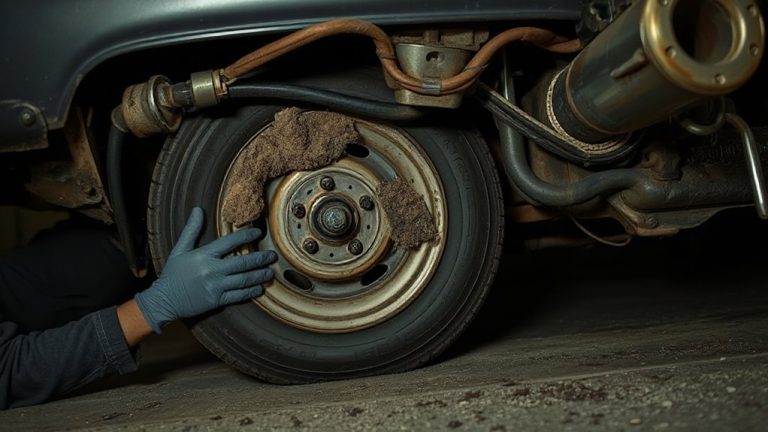
Brake failure starts where you least expect it-under the hood and inside the lines. Flood-damaged brakes may still function initially, but hidden issues compromise safety. Water exposure leads to brake corrosion on rotors, calipers, and lines-especially in steel components. Rust builds quickly, weakening structural integrity and reducing stopping power. Even light corrosion disrupts smooth contact between pads and rotors, increasing brake fade. Fluid contamination is equally dangerous. Brake fluid is hygroscopic and, when mixed with floodwater, forms sludge or vaporizes under heat. This causes spongy pedal feel and longer stopping distances. DOT 3 and DOT 4 fluids lose boiling points rapidly when contaminated. Internal valves in the master cylinder and ABS module may fail due to sediment. While brakes might respond at low speeds, high-pressure demands reveal critical weaknesses. Replacement of all brake fluid and components exposed to water is essential-no flushing fully restores safety.
Flood-Damaged Cars: When Electronics Fail
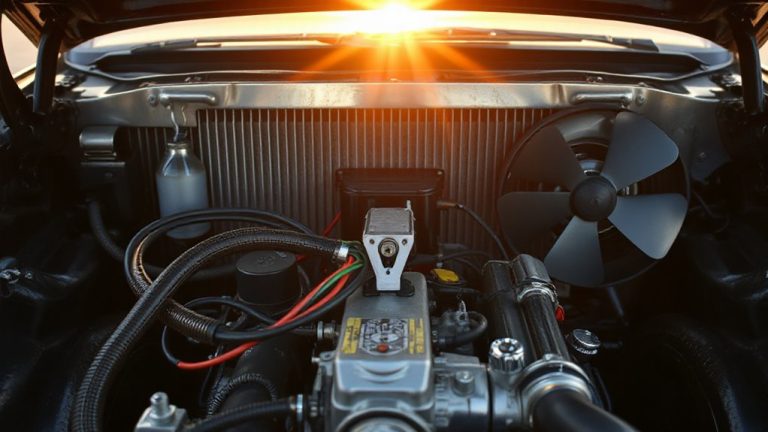
How could a few inches of floodwater disable your car’s most critical systems? It starts with electronic corrosion. Modern cars rely on intricate wiring harnesses and control modules positioned near floorboards-areas vulnerable to water intrusion. Even brief exposure can trigger oxidation in connectors, degrading signal transmission. You might not notice it right away, but over time, this corrosion disrupts communication between systems. Sensor malfunctions follow. ABS, airbag, and stability control units depend on real-time data. If a wheel speed sensor sends incorrect readings due to compromised circuits, the vehicle can’t respond properly in emergencies. Voltage irregularities worsen the damage, causing intermittent faults. Repairs rarely restore original integrity, as moisture accelerates wear inside sealed components. These failures happen silently-and suddenly. That’s why flood-damaged electronics compromise safety: they create unpredictable system behavior without warning, putting you at risk every time you drive.
Hidden Rust in Safety Sensors and Wiring
A thin layer of rust inside your vehicle’s safety sensors or wiring can compromise critical functions without visible warning. Moisture intrusion from flood exposure seeps into sealed harnesses, reaching sensitive circuitry. Over time, water reacts with metal contacts, forming corrosive buildup that disrupts signal transmission. Corroded connectors increase electrical resistance, potentially disabling systems like ABS, airbags, or lane departure warnings. Even minor voltage drops-just 0.5 volts below specification-can cause sensor miscalibration. These faults often appear months after the initial damage, making early detection difficult. Rust thrives in hidden zones like underdash modules or door jambs, where humidity lingers. Standard OBD-II scans might miss intermittent faults caused by degraded wiring. Unlike mechanical wear, electrical corrosion progresses silently, escalating until total failure. Protection relies on preventive inspection of harness routing, sealing integrity, and connector condition-especially in vehicles with submerged history. Using a high-quality air compressor for car painting can help ensure proper application of protective coatings during restoration.
How Scammers Hide Flood Damage
While flood damage can cripple a vehicle’s electronic systems, unscrupulous sellers often go to great lengths to conceal it. They use title washing to disguise a car’s history, transferring it across state lines to obtain a clean title despite prior flood damage. Resale fraud becomes widespread when dealers omit water exposure from disclosures. Mud, silt, or mold in crevices are red flags, but scammers steam-clean interiors and apply chemical deodorizers to mask moisture. Corroded connectors in the OBD-II port, located under the dash, may still show pitting or discoloration. Electronics like airbag sensors or ABS modules often fail months later, compromising safety. VIN checks and third-party vehicle history reports can uncover discrepancies. These tactics exploit regulatory gaps, leaving buyers unaware until critical systems fail without warning. Always inspect wiring harnesses for residue and demand documentation before purchase.
What to Do If You Bought a Flood-Damaged Car
What now? If you bought a flood-damaged car, act quickly. First, get a vehicle history report and perform a title search to confirm if it has a salvage or flood title. Inspect for musty odors, rusted fasteners, or silt under carpets-signs of water intrusion. Electrical systems often fail; check airbag controllers, ABS modules, and engine control units for corrosion. Moisture degrades wiring insulation, increasing short-circuit risk. Contact your insurer immediately to file an insurance claim. Most policies don’t cover used cars bought “as-is,” but documentation helps. Have a certified mechanic perform a diagnostic scan; hidden fault codes indicate compromised safety systems. Saltwater exposure accelerates corrosion, reducing structural integrity over time. According to NHTSA, even dried flood vehicles pose fire and failure risks. Disclosure laws vary, so verify local regulations. Never attempt repairs alone-faulty systems endanger occupants.
On a final note
You must inspect flood-damaged vehicles carefully. Water corrodes wiring harnesses and sensors, disabling airbags and ABS systems. Corrosion in brake lines reduces structural integrity, increasing failure risk. Electronics fail unpredictably-modules short or misread data. Scammers conceal damage with chemical cleaners and title washing. Check for musty odors, silt under carpets, or rust on seat brackets. Use VIN checks and professional inspections. Safety systems rely on dry, intact circuits-moisture compromises them permanently, like a rusted bridge support.