Flushing Brake Fluid in a 2013 Honda Pilot With Brake Line Inspection
You should flush your 2013 Honda Pilot’s brake fluid every 24 months or 30,000 miles using DOT 3 fluid with a minimum boiling point of 205°C (401°F). Moisture contamination lowers performance and causes internal corrosion. Use an 8mm wrench and vacuum bleeder with 5/16-inch vinyl tubing. Inspect steel lines for rust and rubber hoses for cracks. Torque fittings to 12–15 ft-lbs (steel) or 23–29 ft-lbs (banjo bolts). There’s more to get right.
Notable Insights
- Use DOT 3 brake fluid with a minimum dry boiling point of 205°C for the 2013 Honda Pilot.
- Flush the system every 24 months or 30,000 miles to prevent moisture buildup and corrosion.
- Inspect steel brake lines for rust and rubber hoses for cracks or bulges before flushing.
- Torque steel line fittings to 12–15 ft-lbs and banjo bolts on rubber hoses to 23–29 ft-lbs.
- Use an 8mm wrench and vacuum bleeder with clear tubing to properly flush and monitor fluid flow.
How to Flush Brake Fluid in a 2013 Honda Pilot
Why does brake fluid matter? It transfers force from your brake pedal to the calipers, enabling stopping power. Over time, moisture contaminates the fluid, reducing boiling point and corroding components. You’ll notice a soft brake pedal if the fluid is degraded. Check the fluid color: fresh DOT 3 fluid is clear amber; dark brown means it’s time to flush. Honda specifies DOT 3 fluid with a minimum boiling point of 205°C (401°F). A complete flush removes old fluid entirely, unlike simple bleeding. Use a clear hose during draining to monitor fluid color changes. Guarantee the reservoir doesn’t run dry mid-process to avoid air entering the system. Proper flushing restores pedal feel and safeguards hydraulic integrity. Follow service intervals every three years or as needed based on moisture tests.
What You’ll Need for a Brake Fluid Flush
Gather the right tools and materials before starting the brake fluid flush to guarantee a clean, efficient process. You’ll need DOT 3 or DOT 4 brake fluid-confirm compatibility with your 2013 Honda Pilot’s manufacturer specifications, as using incorrect brake fluid types can damage seals and reduce braking performance. A complete flush requires approximately 1 quart (946 ml) of fresh fluid. Use a brake bleeder wrench sized 8mm for the bleed screws. A hand vacuum pump or pressure bleeder kit secures consistent fluid removal with minimal air intake. Clear vinyl tubing (5/16 inch ID) routes fluid from bleeder valves to collection container. Always follow the recommended flushing frequency-every 24 months or 30,000 miles-since moisture absorption degrades fluid performance. Safety goggles and nitrile gloves protect against chemical exposure and contamination.
Inspect Brake Lines on Your 2013 Honda Pilot
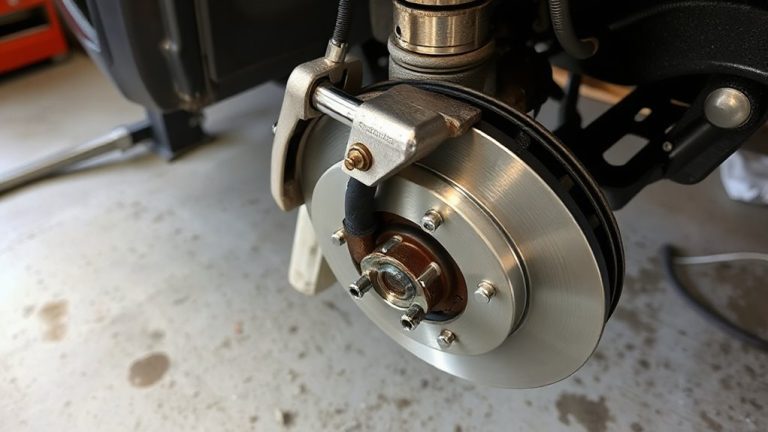
Brake line integrity is critical to your 2013 Honda Pilot’s stopping power and overall safety. Inspect each steel brake line along the frame and suspension for signs of brake line corrosion, especially near wheel wells where road salt accumulates. Surface rust may be normal, but pitting or flaking indicates weakening and potential failure. Check rubber hoses for cracks, bulges, or soft spots that compromise pressure transfer. Verify line fitting tightness at every connection point-包括calipers, proportioning valves, and the master cylinder-using a 10 mm or 12 mm wrench as needed. Loose fittings cause air ingress or fluid leaks, reducing braking effectiveness. Torque steel line fittings to 12–15 ft-lbs and rubber hose banjo bolts to 23–29 ft-lbs. A single compromised line or loose joint risks total brake failure. Address issues immediately before fluid flushing.
Why Your Pilot Needs Regular Brake Fluid Flushes
Typically, your 2013 Honda Pilot’s brake fluid degrades over time due to moisture absorption, compromising braking performance. Brake fluid degradation reduces boiling point and corrodes internal components. Moisture contamination is inevitable since DOT 3 fluid is hygroscopic, absorbing water from the air. This leads to softer pedal feel and reduced stopping power. Honda recommends replacing brake fluid every 3 years to maintain safety and performance.
| Factor | Effect of Moisture Contamination | Recommended Standard |
|---|---|---|
| Boiling Point | Drops from 401°F to ~284°F | Maintain >311°F |
| Corrosion | Damages calipers, ABS unit | Inspect every flush |
| Viscosity | Increases, slows response | Use only DOT 3 |
| Pedal Feel | Spongy due to vapor bubbles | Flush every 3 years |
| Safety Margin | Reduced in hard braking | Prevents brake fade |
Regular flushes prevent long-term damage caused by moisture contamination.
How to Maintain Your 2013 Honda Pilot’s Brake System
While proper brake fluid maintenance sets the foundation, keeping your 2013 Honda Pilot’s entire brake system in top condition requires systematic checks and timely service. Inspect brake pad wear every 12,000 miles; pads thinner than 3 mm need replacement to prevent rotor damage. Uneven wear may indicate seized calipers or worn hardware. Measure rotor thickness with a micrometer; front rotors must be at least 22.8 mm and rear at least 9.8 mm. Rotors below minimum thickness compromise braking and generate excessive heat. Replace if under spec or if pulsation is felt during stops. Check brake lines for rust, cracks, or soft spots during each inspection. Replace any compromised lines immediately. Pair fluid flushes every 24 months with visual brake assessments. Consistent monitoring of brake pad wear and rotor thickness guarantees reliable performance, extends component life, and maintains stopping power under all driving conditions.
On a final note
You’ve completed a critical maintenance task. Flushing brake fluid every 24 months preserves hydraulic efficiency and prevents corrosion. Your 2013 Honda Pilot requires DOT 3 brake fluid with a dry boiling point of 401°F. Inspect steel brake lines for rust or swelling. Guarantee fittings torque to 89 in-lbs. Proper fluid exchange maintains ABS and brake booster operation. This procedure extends system life and guarantees safe stopping distances.