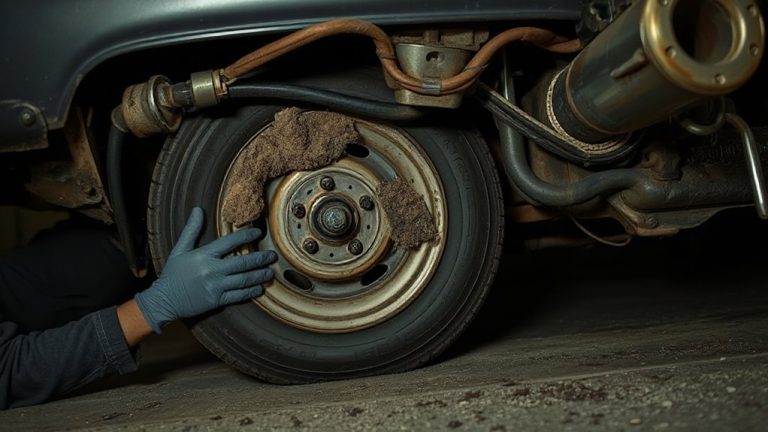
How to Replace Front Brake Hoses During Pad and Rotor Service on a Lexus ES350
Replace your Lexus ES350’s front brake hoses during pad and rotor service to guarantee reliable braking. Use OEM-spec 22-inch hoses with M10 x 1.0 threads and crimped sleeves rated for 2,000 psi. Disconnect the banjo bolt at the caliper with a 10mm wrench, always installing new copper washers. Torque to 27 ft-lbs and maintain proper routing to avoid kinks. Bleed the system starting at the right rear wheel. You’ll get complete step-by-step guidance with torque specs and fluid type details next.
Notable Insights
- Replace front brake hoses while pads and rotors are removed for easier access to caliper banjo bolts.
- Use a 10mm wrench to loosen the banjo bolt and disconnect the hose from the caliper.
- Install new OEM-spec hoses with fresh copper washers and torque banjo bolts to 27 ft-lbs.
- Ensure hoses are routed correctly with 1.2-inch clearance from suspension and frame components.
- Bleed brakes in sequence-right rear, left rear, right front, left front-to remove air after replacement.
Why Replace Brake Hoses on a Lexus ES350
A failing brake hose can compromise your Lexus ES350’s braking performance, putting safety at risk. Over time, brake hose corrosion develops, especially at metal fittings, weakening structural integrity and potentially causing leaks under pressure. You’ll notice reduced pedal feel or a spongy response-signs the system may be losing hydraulic efficiency. Hose material degradation is common after 60,000 to 100,000 miles due to exposure to heat, moisture, and road contaminants. The EPDM rubber and synthetic reinforcement layers break down, making hoses brittle or prone to bulging. These flexible sections flex with suspension movement, so cracks often form near bends or clamps. Unlike steel lines, hoses degrade internally and externally without obvious surface signs. Replacing them during pad and rotor service guarantees reliability. Factory-specified hoses measure 22 inches long with M10 x 1.0 male threads and include crimped sleeves rated for 2,000 psi.
Tools and Parts for Lexus ES350 Front Brake Hose Replacement
When replacing the front brake hoses on your Lexus ES350, having the correct tools and components guarantees a safe, leak-free repair. You’ll need a 10mm wrench for bleeder screws, an 18mm socket for the hose fitting, and a torque wrench calibrated to 24 lb-ft. Use OEM-spec stainless steel braided hoses rated for 1,500 psi. Always match approved brake fluid types-DOT 3 or DOT 4-to prevent seal damage and guarantee proper boiling points. A quality two-person brake bleeder kit maintains fluid flow without introducing air. Follow precise caliper mounting techniques: lubricate guide pins with silicone grease, torque mounting bolts to 31 lb-ft, and align brackets squarely. Use thread locker on caliper bolts if specified. Keep a clean workspace to avoid contaminating the hydraulic system. Have a spill tray ready-brake fluid damages paint.
Replace the Front Brake Hoses
Start by lifting the front of your Lexus ES350 with a floor jack and securing it on jack stands rated for at least 3 tons. Remove the front wheels to access the brake hoses. Disconnect the old hose by loosening the banjo bolt at the caliper using a 10mm wrench. Support the caliper to prevent stress on the slide pins during caliper alignment. Inspect the steel brake lines during brake line inspection, looking for cracks, rust, or bulges. Install the new brake hose, ensuring the rubber section isn’t twisted and the mounting bracket is secured. Torque the banjo bolt to 27 ft-lbs with a fresh copper washer. Reconnect the hose to the metal line using a 14mm flare-nut wrench. Confirm proper routing to avoid contact with suspension components.
Bleed the Brakes After Hose Replacement
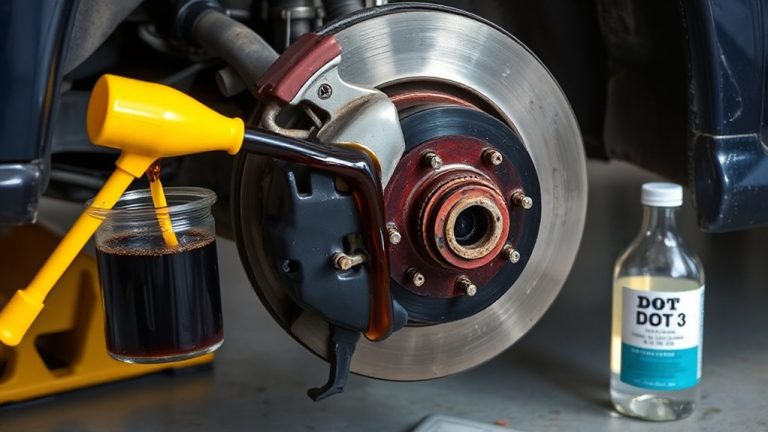
Why do your brakes feel spongy after replacing the hoses? Air trapped in the brake lines reduces hydraulic pressure, compromising stopping power. You must bleed the brakes to remove air and restore firm pedal feel. Always use the correct brake fluid type-DOT 3 or DOT 4, as specified in your Lexus ES350 owner’s manual. Incorrect fluid can damage seals and reduce performance. Start bleeding at the farthest wheel from the master cylinder: right rear, left rear, right front, then left front. Locate the bleeder valve position at each caliper-typically on the backside near the hose connection. Open the valve slightly while a helper presses the brake pedal. Close before releasing. Repeat until fluid flows clear and air bubbles stop. Maintain fluid level in the reservoir to prevent re-introducing air.
Avoid These Common Lexus ES350 Brake Hose Mistakes
One overlooked mistake during a Lexus ES350 brake hose replacement is failing to properly torque the banjo bolt at the caliper inlet. The correct torque is 23–29 ft-lbs; under-tightening causes leaks, while over-tightening risks damaging the caliper. Reusing old crush washers increases the chance of brake fluid contamination, which degrades performance and damages seals. Always install new copper washers on both sides of the banjo fitting. Hose routing errors are another common issue-misaligned hoses rub against suspension components or the frame, risking premature wear. Guarantee the hose follows the factory routing path, maintaining a minimum 1.2-inch clearance from moving or sharp parts. Secure clips tightly to prevent vibration. Avoid kinking the hose; a bent line restricts fluid flow, reducing braking efficiency. Double-check connections for leaks before test-driving.
On a final note
You’ve completed the front brake hose replacement on your Lexus ES350. Always use OEM or DOT-compliant hoses rated for 1,500 psi burst pressure. Proper torque specs are critical: tighten banjo bolts to 29 ft-lbs and flare-nut fittings to 14 ft-lbs. Confirm no leaks at connections. Bleed until fluid runs clear, using fresh DOT 3 or 4 fluid. Brake performance depends on a sealed, air-free system-treat it like a hydraulic circuit, not just a repair.