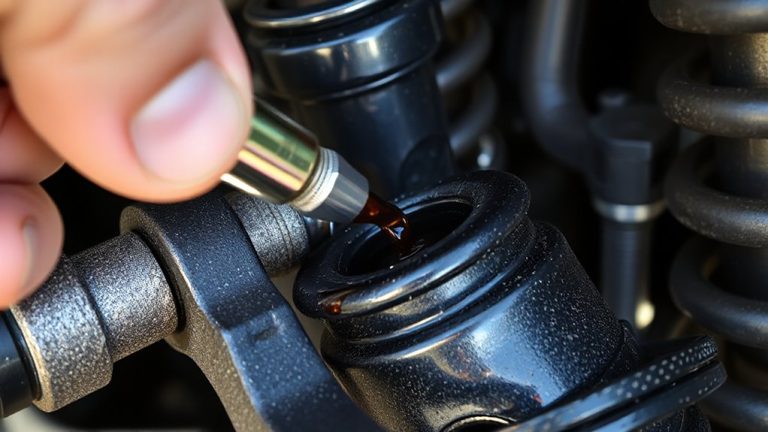
Grease Selection Criteria for High-Angle Articulating CV Joints in Lifted Jeeps
You need grease that handles extreme angles and shock loads in your lifted Jeep’s CV joints. Regular grease fails under high articulation, leading to metal-on-metal wear. Choose NLGI #2 synthetic grease with a dropping point above 500°F and molybdenum disulfide for film strength up to 200,000 psi. Calcium sulfonate or lithium complex thickeners withstand over 40,000 psi contact pressure. Proper grease resists shear, heat, and vibration-critical for sustained off-road performance. There’s more to optimizing joint longevity than just selection.
Notable Insights
- Use NLGI #2 grease for optimal consistency and mechanical stability under extreme joint articulation.
- Select synthetic grease with a dropping point above 500°F to resist thermal breakdown.
- Choose grease with molybdenum disulfide (MoS₂) for enhanced film strength up to 200,000 psi.
- Ensure thickener compatibility-calcium sulfonate or lithium complex for high-pressure and shear resistance.
- Avoid mixing grease types to prevent incompatibility and formation of ineffective, soapy residue.
Why Regular Grease Fails on Lifted Jeeps
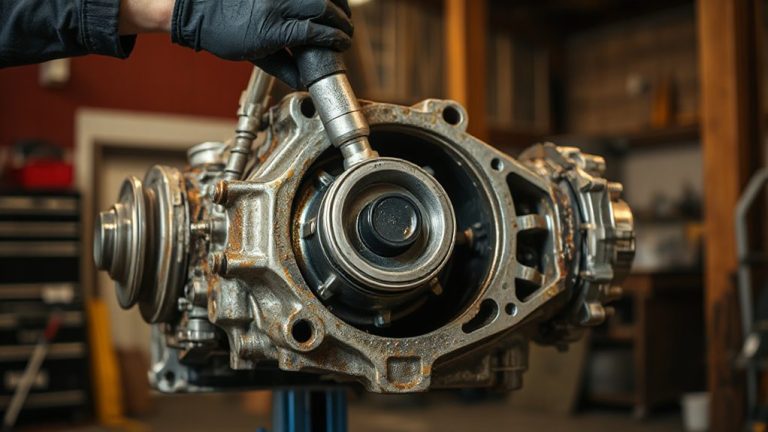
While standard all-purpose grease might work fine in everyday passenger vehicles, it quickly breaks down when subjected to the extreme angles and higher stress levels found in lifted Jeeps. You’re pushing components beyond OEM design limits. Regular grease lacks the vibration resistance needed to stay intact under constant off-road pounding. It separates under shear stress, losing its protective film. Standard formulations also offer poor misalignment tolerance-critical when your CV joints articulate at aggressive angles. Without this, metal-to-metal contact increases, accelerating wear. You need a grease that maintains consistency and adhesion under 30+ degree joint angles and sustained vibration. Look for NLGI #2 rating with high mechanical stability. Conventional lithium-based greases can’t handle these demands. Your setup requires superior film strength and elasticity to prevent extrusion. Don’t risk failure-every bump and twist exposes weak lubrication. Choose a high-performance grease engineered for off-road articulation, not just street driving.
What Makes a Grease Tough Enough for Articulating Cv Joints
You need grease that can handle extreme joint angles and constant movement without breaking down. A high-quality CV joint grease must provide reliable shock absorption to protect against sudden impacts from off-road terrain. This cushioning effect reduces metal fatigue and prevents micro-welding under load. It also guarantees consistent load distribution across the joint’s cage, balls, and raceways, minimizing wear at high articulation. Look for greases with a high dropping point-above 500°F-so they stay stable. A稠 consistency (NLGI #2) helps it cling to surfaces under stress. Greases fortified with molybdenum disulfide (MoS₂) offer superior film strength, up to 200,000 psi, enhancing both shock absorption and load distribution. These traits keep your CV joints running smoothly, even when crawling over rocks or flexing through deep ruts. For optimal performance, consider selecting grease formulated specifically for constant velocity joints, as best grease for u-joints recommendations often highlight key additives and稠 consistency critical for durability.
Heat and Pressure: What They Do to Your Cv Grease
When temperatures climb and pressure builds inside a CV joint, standard grease can’t keep up. You’ll see thermal breakdown fast, especially above 300°F, where conventional greases oxidize and lose lubricity. That leads to metal-on-metal contact, accelerated wear, and eventual joint failure. Modern high-angle CV joints in lifted Jeeps generate internal pressures exceeding 5,000 psi during articulation. Without proper pressure resistance, grease gets squeezed out of contact zones, leaving surfaces unprotected. Synthetic-based greases with high dropping points-over 500°F-and NLGI #2 consistency maintain stability under these extremes. They resist thermal breakdown through fortified additives like calcium sulfonate or lithium complex thickeners. These enhance film strength and pressure resistance, preventing collapse under load. You need a grease that won’t thin, separate, or burn out when pushed hard. Don’t rely on cheap multi-purpose grease-it fails when you need it most.
Top Greases for High-Angle Cv Joints
Synthetic greases built for extreme conditions are your best defense against CV joint failure in lifted Jeeps. These greases maintain consistent synthetic viscosity across wide temperature ranges, guaranteeing reliable lubrication during high-angle articulation. You need a grease rated NLGI #2, with a dropping point above 500°F to resist heat breakdown. Top performers include Mobil Mobilith SHC 220 and Amsoil Synthetic Grease, both engineered for high shock loads. They offer superior corrosion resistance, protecting internal joint surfaces from moisture and road salts. Look for ISO VG 220 viscosity ratings and excellent mechanical stability-these guarantee grease stays effective under constant articulation. Calcium-complex or lithium-complex thickeners provide structural integrity. Even under 40,000 psi contact pressures, proper synthetic grease won’t shear easily. Your CV joints depend on sustained lubricant film strength. Choose only greases with proven performance in off-highway or heavy-duty service.
Is Your Grease Ruining Your Cv Joints?
Could the grease you’re using actually accelerate CV joint wear? Yes, if it lacks proper grease compatibility with your joint’s materials and operating conditions. Using the wrong grease degrades lubrication, increasing friction and heat in high-angle applications. Joint misalignment in lifted Jeeps already stresses CV joints, and inadequate grease worsens metal-on-metal contact. Standard greases may bleed or separate under articulation, leaving critical zones unprotected. High-performance CV joints demand lithium-complex or polyurea-based greases with high dropping points-typically above 500°F-to resist thermal breakdown. Look for NLGI #2 consistency and excellent shear stability to maintain film strength. Molybdenum disulfide additives enhance load-carrying capacity, essential when angles exceed 30 degrees. Always verify manufacturer specs: mismatched grease compromises seals and accelerates wear. Proper grease compatibility guarantees long-term joint integrity under extreme articulation and stress, directly influencing drivetrain reliability.
When and How to Re-Grease for Maximum Joint Life
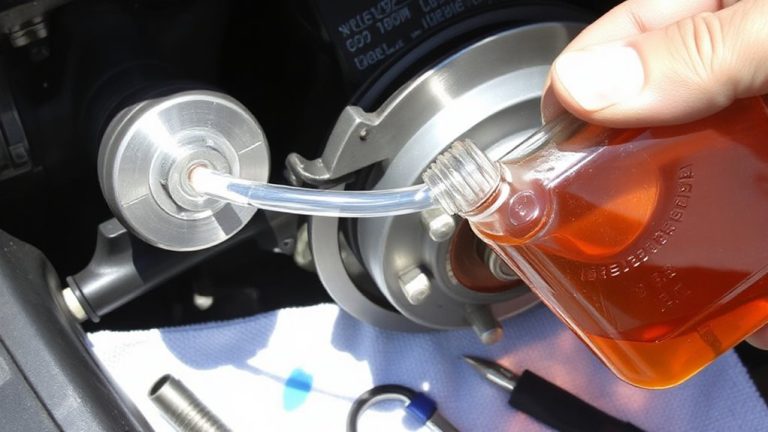
You’ve picked the right grease-now keep it working for you. Re-greasing every 6,00 relax miles or after heavy off-road use prevents premature wear caused by joint misalignment and seal degradation. Use a high-pressure grease gun to guarantee deep penetration into the CV joint boots. Grease compatibility is critical-mixing types can thin the lubricant, reducing film strength and accelerating failure.
| Condition | Result Without Re-Greasing |
|---|---|
| Joint misalignment | Metal-to-metal contact |
| Grease incompatibility | Soapy, ineffective lubricant |
| Extended intervals | Boot cracking, contamination |
| High-angle articulation | Spilled grease, dry lobes |
| Off-road stress | Catastrophic CV failure |
Apply only OEM-specified grease volume-over-greasing distorts boots. Inspect boots during each service. Maintain seals to retain lubricant and exclude debris. Proper maintenance extends joint life beyond 100,000 miles.
On a final note
You need grease that withstands extreme angles and shock loads. Standard NLGI #2 lithium grease fails under high articulation. Use a specialty CV grease rated for constant-velocity joints-NLGI #1 or #0-containing 5–8% molybdenum disulfide. It resists thermal degradation up to 300°F and maintains film strength under 50,000 psi. This prevents metal-to-metal contact. Re-grease every 6,000 miles or after deep water exposure. Correct lubrication extends joint life by 40%.