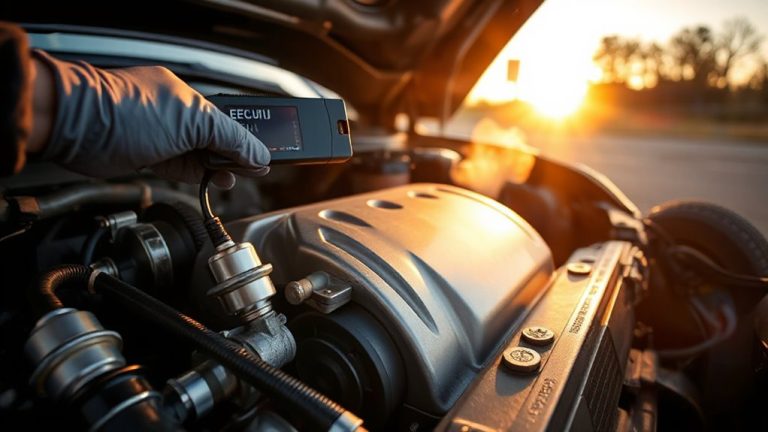
Lubricating Steering Stabilizer Bar Bushings on a 2014 Jeep Grand Cherokee
Your 2014 Jeep Grand Cherokee may develop steering wobble or clunking over bumps due to dry stabilizer bar bushings. If the bushings are intact but noisy, lubricate them with NLGI #2 lithium-based grease. Use a grease gun with a flexible hose and apply until grease seeps from the edges. Avoid over-greasing to prevent distortion. Torque bushing bolts to 55 ft-lbs and links to 35 ft-lbs. Further details on inspection and replacement follow.
Notable Insights
- Inspect stabilizer bar bushings every 15,000 miles for cracks, dryness, or excess play to determine if lubrication is sufficient.
- Lubricate bushings only if they are intact and not separated, as persistent noise indicates the need for replacement.
- Use NLGI #2 lithium-based or polyurea grease compatible with rubber to properly lubricate the bushings.
- Apply grease with a hand-operated grease gun until it slightly emerges at the bushing edges for full saturation.
- Torque bushing bolts to 55 ft-lbs and stabilizer links to 35 ft-lbs after lubrication to ensure correct reassembly and performance.
Signs Your Jeep Needs Stabilizer Bar Bushing Lubrication
Why might your Jeep feel less stable on rough roads than it used to? A failing stabil wan bar bushing often causes noticeable steering wobble, especially at low speeds or over bumps. You’ll feel the front end wander slightly, reducing control. This wobble stems from excess play in the stabilizer bar mounting points, where worn bushings fail to secure the bar. Another sign is diminished noise reduction. Cracked or dry bushings transmit more road vibration and clunking sounds through the frame. The 2014 Jeep Grand Cherokee’s front stabilizer bar uses 18mm mounting bolts and OE bushings made of polyurethane designed to dampen lateral movement. Lubricating them with silicone-based grease reduces friction and restores quiet operation. Ignoring these symptoms accelerates wear on related suspension components. Proper lubrication preserves bushing integrity, maintains ride stability, and guarantees consistent handling. Check them every 15,000 miles.
When to Replace or Lubricate Stabilizer Bar Bushings
You can often restore smooth handling by lubricating the stabilizer bar bushings before considering replacement. Lubrication works well when the bushing material remains intact and shows no cracking or tearing. If you hear intermittent clunking during slow turns or over bumps, that noise frequency usually means dry bushings, not failed ones. Polyurethane and rubber are the most common bushing materials; both degrade over time but respond to grease if caught early. Persistent squeaking or constant rattle, especially at higher noise frequency, suggests advanced wear. Once the bushing material compresses unevenly or separates from the metal sleeve, replacement is necessary. Inspect every 15,000 miles or when handling feels loose. Lubricate with silicone or lithium-based grease every 24 months to extend service life.
Access the Stabilizer Bar Bushings
Start by locating the stabilizer bar, a steel torsion spring connecting the left and right suspension systems, usually mounted beneath the front and rear axles. You’ll find the bushings at each end, where the bar attaches to the vehicle’s subframe. On your 2014 Jeep Grand Cherokee, these are accessible from underneath, near the control arms. Remove any mounting bolts or brackets blocking access. Factory bushings are typically made from rubber or polyurethane-each with different noise reduction techniques. Rubber offers softer dampening and quieter operation, while polyurethane resists wear better but may transmit more road vibration. Make certain the surrounding area is clean and free of debris before proceeding. Proper access allows full visibility and tools clearance, critical for effective maintenance. Different bushing material types affect both longevity and ride quality, so handle them according to OEM specifications.
Grease the Bushings Correctly
A well-lubricated stabilizer bar bushing operates smoothly and minimizes premature wear. You must guarantee proper bushing alignment before applying grease-misaligned bushings cause uneven friction and reduce suspension efficiency. Use only grease compatible with synthetic rubber compounds, such as a lithium-based or polyurea grease with NLGI #2 consistency. Grease compatibility is critical; improper formulations degrade rubber, leading to cracks and failure. Apply grease slowly using a hand-operated grease gun with a flexible hose to reach tight spaces. Force grease until it emerges slightly at the bushing’s outer edge, indicating full saturation. Avoid over-greasing, which can distort the bushing shape and compromise alignment. OEM specifications require high-droop point grease (above 260°F) to withstand underhood temperatures. Proper lubrication extends bushing life by up to 40% under normal driving conditions.
Essential Tools for Lubricating Stabilizer Bar Bushings
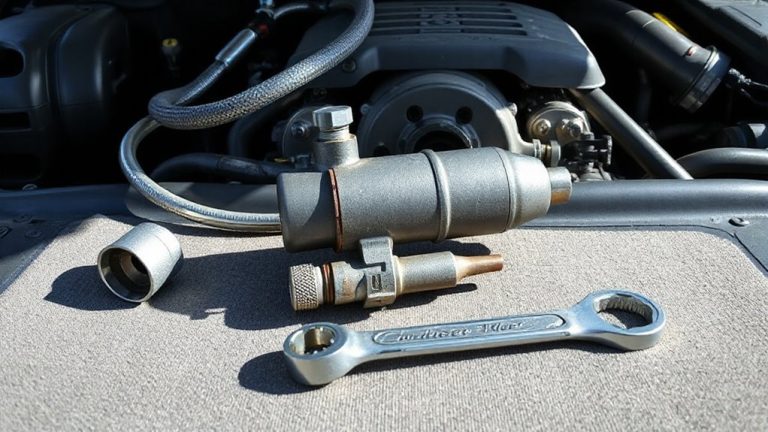
Proper lubrication of the stabilizer bar bushings starts with having the right tools on hand. You’ll need specific equipment to remove the stabilizer bar links and access the bushings efficiently. Using the correct socket size guarantees a secure fit and prevents slippage during removal. Most 2014 Jeep Grand Cherokees require a 15mm socket for the links and an 18mm for the bushing brackets. Always follow factory torque specs when reinstalling-typically 35 ft-lbs for links and 55 ft-lbs for bushing bolts-to maintain suspension alignment and prevent premature wear. A torque wrench is essential for accuracy. Refer to the table below for tool specifications.
| Tool | Socket Size | Use Case |
|---|---|---|
| Ratchet Wrench | 15mm | Remove stabilizer links |
| Breaker Bar | 18mm | Loosen tight bushing bolts |
| Torque Wrench | Adjustable | Apply correct torque specs |
| Grease Gun | N/A | Apply lubricant to bushings |
On a final note
You now know how to properly maintain your stabilizer bar bushings. Lubrication reduces friction and extends component life. Use synthetic grease with a consistency grade NLGI #2 and operating temperature range of -40°F to 350°F. Apply via zerks every 15,000 miles. Worn bushings measure over 0.060 inches of radial play-replace if beyond spec. Correct maintenance guarantees precise steering response and minimizes sway bar noise on uneven terrain.