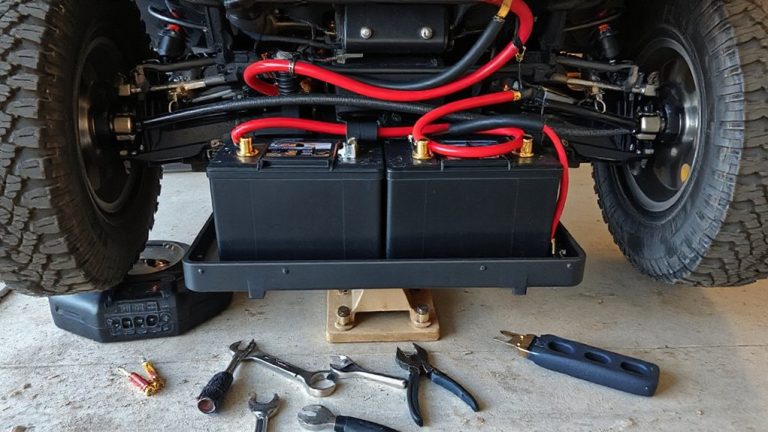
Hardwiring Emergency Exit Lights to Independent Backup Batteries
You can hardwire emergency exit lights to independent backup batteries for reliable power during outages. These systems use 120/277V AC input with automatic transfer switching that activates battery power within 10 seconds. Sealed lead-acid or lithium-ion batteries provide 90 minutes of illumination, meeting NFPA 101 and OSHA requirements. Fixtures include integrated LED arrays (5–10 watts) and NEMA 3R enclosures. Proper wiring uses 14- or 16-gauge copper conductors, polarity-matched connections, and UL 924–compliant components. Monthly tests and annual 90-minute duration checks guarantee performance. Further details clarify installation precision and long-term reliability.
Notable Insights
- Hardwired exit lights must connect to a dedicated circuit with independent backup batteries for code-compliant emergency power.
- Use sealed lead-acid or lithium-ion batteries rated for 90-minute operation to meet NFPA 101 and OSHA requirements.
- Ensure correct polarity when wiring battery terminals to the emergency light unit to prevent damage or failure.
- Install automatic transfer switches to engage backup power within 10 seconds of main power loss.
- Follow NEC Article 700 and UL 924 standards for wiring, component ratings, and system reliability.
Hardwired vs. Plug-In Emergency Exit Lights
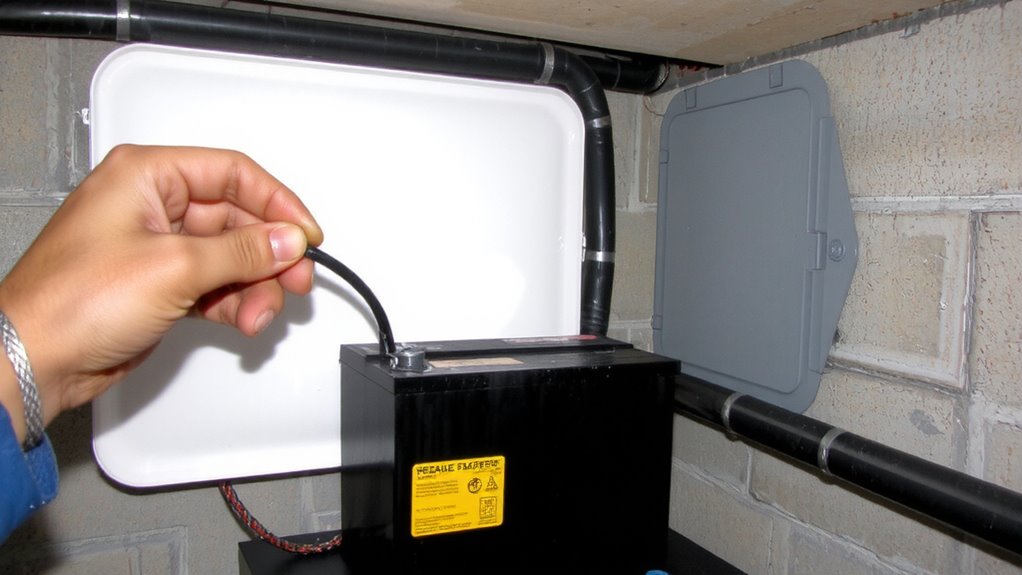
While both hardwired and plug-in emergency exit lights serve the same fundamental purpose-providing egress illumination during power failures-they differ markedly in installation, reliability, and compliance. Hardwired units integrate directly into a building’s electrical system, requiring professional installation but offering permanent, dependable operation. Plug-in models rely on standard electrical outlets, increasing accessibility but reducing reliability during displacement or accidental disconnection. Installation cost for hardwired systems is typically higher due to labor and wiring requirements, yet long-term compliance with NFPA 101 and IBC codes is more easily maintained. Aesthetic design varies: hardwired fixtures often have sleek, recessed or surface-mounted housings (typically 12–18 inches wide), blending into architectural elements, while plug-in units are bulkier and visible. You’ll find plug-in options suitable for temporary setups or leased spaces, but hardwired systems remain the standard for commercial safety and code enforcement.
How Backup Batteries Support Hardwired Exit Lights
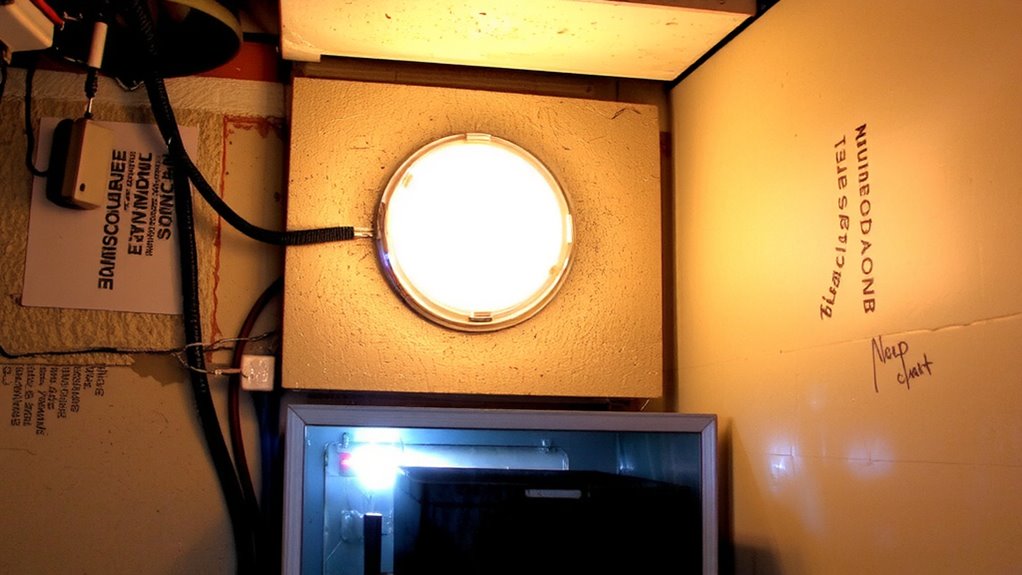
Hardwired emergency exit lights depend on backup batteries to function during power outages, ensuring continuous compliance with safety codes. These batteries provide critical power redundancy, automatically engaging within 10 seconds of main power loss. You’ll find most units use sealed lead-acid (SLA) or lithium-ion batteries, rated to deliver 90 minutes of illumination. This runtime meets NFPA 101 and OSHA requirements for emergency egress. Battery lifespan typically ranges from 3 to 5 years, depending on usage and environment. Units perform monthly self-tests, checking voltage and load performance to confirm readiness. Temperature extremes shorten battery life, so install fixtures in areas between 32°F and 104°F. The system’s built-in charger maintains battery charge at 100%, ensuring immediate response. Without this backup, hardwired lights would fail during outages, creating unsafe conditions and violating code.
Essential Parts for Hardwired Emergency Light Systems
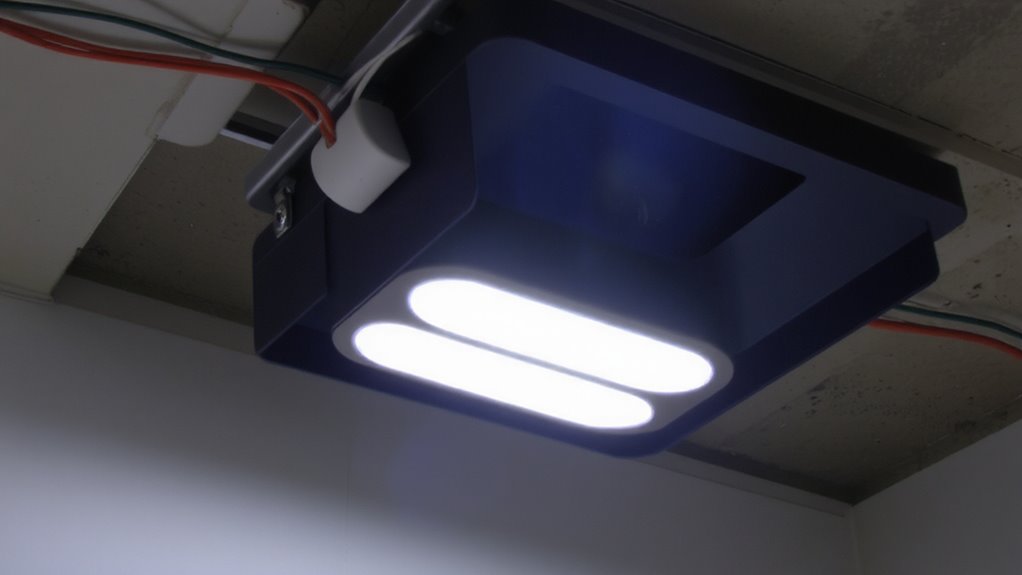
A reliable emergency light system starts with the right components working together seamlessly. You need hardwired emergency luminaires rated for 12游戏副本/277V AC input, compatible with standard electrical grids. These fixtures include integrated LED arrays, typically drawing 5–10 watts, providing at least 90 minutes of backup illumination. Critical to operation is the internal rechargeable battery-usually a 6V or 12V sealed lead-acid or lithium-ion type-maintained at full charge during normal power supply. Proper wiring configurations guarantee continuous power delivery and code compliance, typically involving parallel circuits for uniform performance across multiple units. Power redundancy is achieved through automatic transfer switching, which instantly engages the battery if line voltage fails. NEMA 3R-rated enclosures protect components from environmental damage. All parts must meet NFPA 101 and IBC standards for illumination levels-minimum 1 foot-candle along egress paths.
How to Wire Emergency Lights to Backup Batteries
When the main power fails, your emergency lights must activate instantly, and that reliability starts with proper wiring to the backup battery. You must connect the positive terminal of the battery to the positive input on the light unit, preserving proper battery polarity-reversing it can damage internal electronics. Use 14-gauge or 16-gauge wire for most installations, depending on current draw and manufacturer specs. A thicker wire gauge reduces resistance and prevents overheating during extended discharge. Strip exactly 3/8 inch of insulation to guarantee secure terminal contact. Secure connections with screw terminals or quick-connects rated for continuous use. The system should support automatic transfer to battery power within 10 seconds of outage. Test the circuit under load to confirm stable voltage output. Correct wiring guarantees compliance and life-saving performance when emergencies strike.
Building Codes for Hardwired Emergency Exit Lights
You’ve wired the emergency lights to the backup battery correctly-polarity observed, gauge matched to load, connections secure-and now it’s time to guarantee that installation meets legal and safety requirements. Compliance requirements follow NFPA 101 (Life Safety Code) and the International Building Code (IBC), mandating that emergency lights operate for at least 90 minutes during a power failure. Lights must provide an average illumination of 1 foot-candle along the path of egress, with no point below 0.1 foot-candle. Mounting height is typically 7.5 to 8 feet above the floor. Each unit must have a permanent label indicating compliance with UL 924 standards. Installation inspections verify proper circuit separation, battery autonomy, and photometric performance. Authorities often require third-party certification. Documentation, including wiring diagrams and equipment specs, must be submitted. Failure to meet code risks fines or failed inspections.
Mistakes to Avoid When Installing Emergency Lights
If improperly installed, even the most reliable emergency lighting system can fail when it’s needed most. You must avoid improper placement, which compromises visibility during evacuations. Lights installed too high-above 160 inches-reduce effectiveness; mounting them between 72 and 80 inches guarantees best sightlines. Avoid placing them near exit doors where swinging doors can block illumination. You also risk non-compliance if you ignore inadequate labeling requirements. Each unit must have a clearly visible “EXIT” legend, at least 6 inches high with 1-inch stroke width, legible from 100 feet. Units without proper labels confuse occupants during low-visibility emergencies. Wiring connections must meet NEC Article 700 standards-use #14 AWG copper conductors rated for 75°C. Poor electrical integration leads to operational failure. Guarantee all fixtures align with NFPA 101 egress paths.
Testing Hardwired Emergency Lights and Battery Maintenance
Regularly testing your hardwired emergency lights isn’t optional-it’s a code requirement and a critical part of life safety systems. You must perform functional tests monthly, verifying the lights illuminate within 10 seconds of power loss. Annual duration tests require 90 minutes of continuous operation on battery power at 1.8 foot-candles minimum. Your system’s frequency calibration guarantees test intervals align with NFPA 101 and NFPA 70 standards. Most manufacturers specify battery replacement schedules every 3–5 years, even if the unit appears operational. Sealed lead-acid batteries degrade over time; voltage drops below 10.5V under load signal failure. Use a digital multimeter for accurate readings during diagnostics. Automated test devices simplify frequency calibration and record compliance data. Manual logs must document each test and any battery replacements. Adhering to replacement schedules prevents unexpected outages during emergencies.
On a final note
You must hardwire emergency exit lights to independent backup batteries for reliable operation during power failures. These systems typically use 6-volt or 12-volt sealed lead-acid batteries with a minimum 90-minute runtime. NEC Article 700 requires automatic transfer to battery power within 10 seconds of outage. Guarantee proper polarity when connecting wires-reverse polarity damages circuitry. Test monthly and replace batteries every 3–5 years for code compliance and safety.