Why Regular Wheel Well Cleaning Prevents Undercarriage Corrosion
You need regular wheel well cleaning because road salt mixes with moisture to form an electrolytic solution that triggers pitting and galvanic corrosion on steel. Chloride ions penetrate microscopic paint flaws-just 0.001 inches-and accelerate oxidation. Cleaning removes chlorides, disrupting the corrosive reaction. A 1,800+ PSI pressure washer and long-reach, chemical-resistant brush effectively remove embedded contaminants. Staying proactive limits rust buildup in hidden seams-there’s more to protecting your undercarriage than surface care.
Notable Insights
- Road salt mixes with moisture to form an electrolytic solution that accelerates steel corrosion on undercarriage components.
- Wheel wells trap moisture and debris, creating confined environments where corrosion thrives undetected.
- Chloride ions from salt penetrate tiny paint flaws, initiating pitting and galvanic corrosion even in small damages.
- Regular cleaning removes salt, grime, and chlorides, disrupting the electrochemical reactions that cause rust.
- Monthly winter cleanings reduce corrosive contaminants and prevent moisture buildup, significantly slowing undercarriage degradation.
How Road Salt Causes Wheel Well Rust
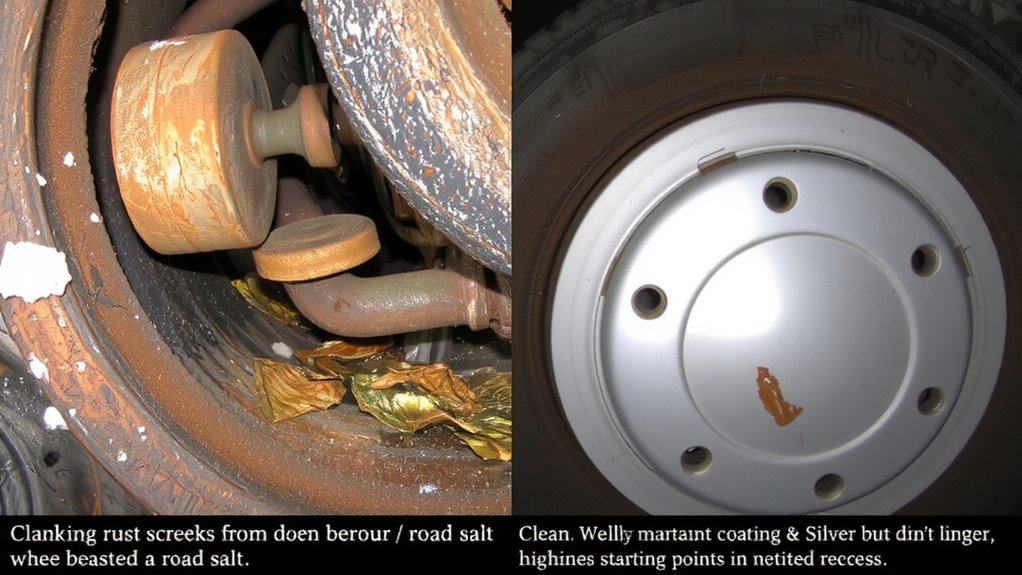
Though road salt keeps winter roads safe, it’s a leading cause of wheel well corrosion. You’re exposing your vehicle to a persistent chemical reaction every time you drive on treated roads. Road salt-primarily sodium chloride-dissolves in moisture buildup within wheel wells, forming an electrolytic solution that accelerates oxidation on steel components. This environment promotes galvanic corrosion, especially where protective coatings are compromised. Moisture buildup is trapped by confined spaces and shielded undercarriage panels, maintaining contact between salt and metal for extended periods. The chloride ions in salt penetrate microscopic flaws in paint or undercoatings, initiating pitting corrosion at just 0.001 inches deep-barely visible but structurally significant. Temperatures above freezing increase ion mobility, amplifying the reaction rate by up to 50%. Without intervention, corrosion spreads beneath surfaces, weakening structural integrity. You’re facing irreversible damage long before it becomes apparent. Regular cleaning with an effective undercarriage cleaner can significantly reduce salt accumulation and slow corrosion progression.
Why Cleaning Prevents Undercarriage Corrosion
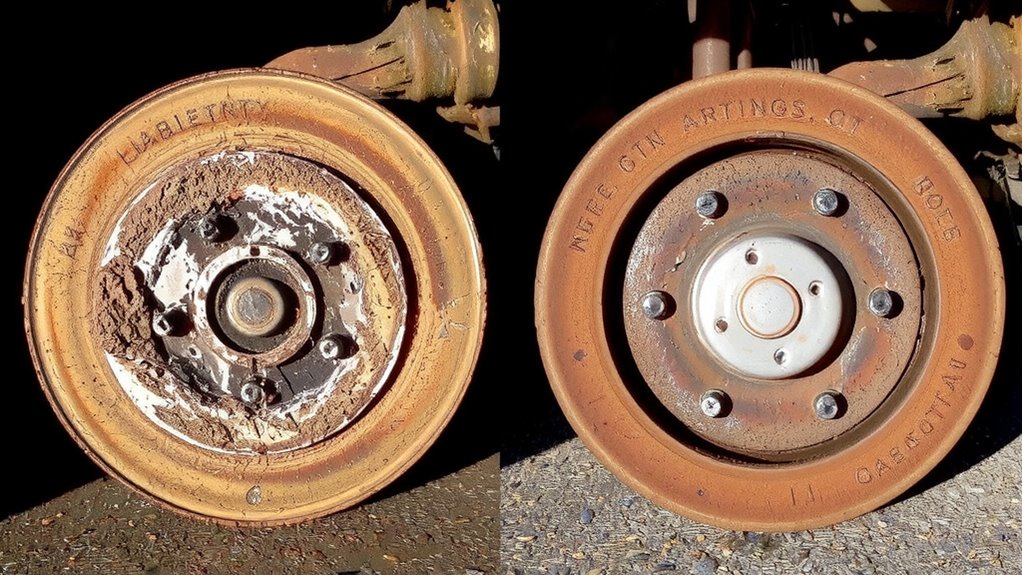
Because road salt and debris accumulate in hard-to-reach areas, regular cleaning isn’t just about appearance-it’s a critical defense against undercarriage corrosion. You remove chlorides that trigger destructive chemical reactions with metal surfaces. These reactions accelerate when moisture buildup occurs in wheel wells and frame seams. Trapped water creates an electrolytic environment, enabling rust to form even without visible damage. Cleaning disrupts this process by eliminating both contaminants and residual dampness. High-pressure rinsing at 1,500–2,000 psi effectively flushes out grime from seams and brackets. Doing this monthly during winter reduces salt concentration below corrosive thresholds. Removing organic debris also prevents acidic byproducts from forming. Without consistent cleaning, microscopic pits develop, progressing into structural corrosion. You’re not just washing-you’re halting electrochemical degradation. Proper maintenance extends undercarriage life by limiting oxidation. Preventive washing is the most cost-effective anti-corrosion measure available.
Best Tools to Clean Wheel Wells at Home
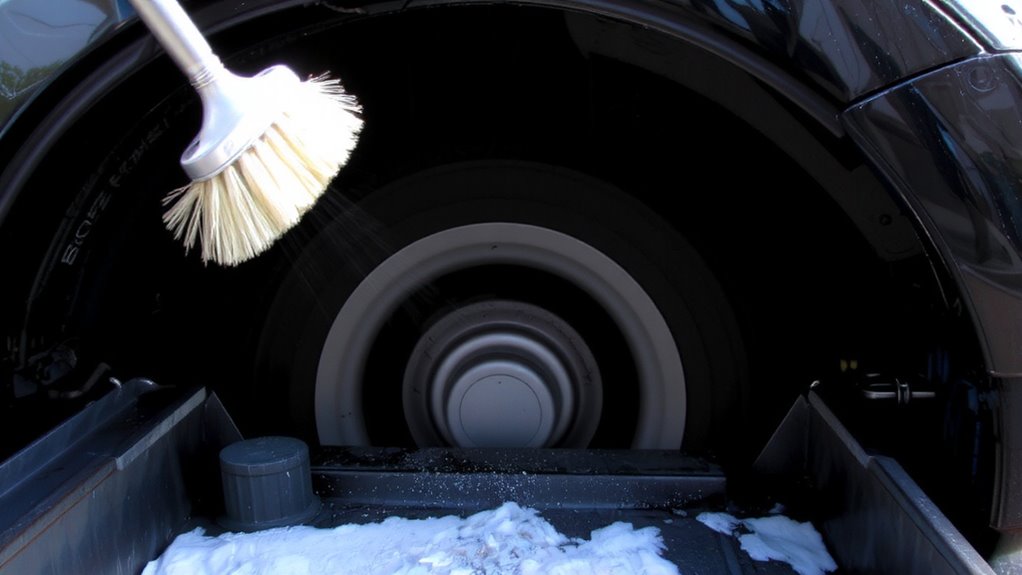
Keeping your wheel wells clean protects your vehicle from corrosion, and having the right tools makes all the difference. A pressure washer with at least 1,800 PSI effectively removes embedded grime and salt without damaging undercarriage materials. Models with adjustable nozzles let you control spray width and intensity, preserving sensitive components. Pair it with cleaning brushes featuring stiff, chemical-resistant bristles-specifically 3-inch to 6-inch diameter brushes with ergonomic handles for tight spaces. A long-reach brush, preferably 12 inches or more, accesses the upper wheel lining without disassembly. Use a degreaser formulated for automotive use to break down oil and road film before rinsing. These tools work together like a diagnostic and treatment system: the pressure washer acts as the flush, while cleaning brushes target residue in seams and joints, preventing moisture retention. Their combined use guarantees a thorough decontamination, critical in corrosion prevention. For optimal performance and ease of use, consider investing in one of the best car pressure washer kits available on the market.
Step-by-Step: Deep Clean Your Wheel Wells
How do you guarantee a deep, effective clean in your wheel wells without risking damage? Start by rinsing loose debris with low-pressure water to avoid forcing grime into sensitive areas. Apply a pH-balanced degreaser using a soft-bristle brush-never metal-to prevent scratching plastic liners or disturbing foam insulation. Focus on seams and crevices where moisture and salt accumulate. Use a narrow-angle wand to flush out hidden grime, ensuring you reach behind wheel arch liners. Plastic liners trap water if clogged; inspect and clean drain holes to maintain proper drainage. Avoid high-pressure sprays near foam insulation, which can degrade adhesion and reduce sound-dampening effectiveness. Rinse thoroughly at 40–60 psi to prevent chemical residue. Finish with a corrosion inhibitor spray for long-term protection. Clean wheel wells monthly in harsh climates to maintain undercarriage integrity.
When to Get a Pro Undercarriage Check
When should you trust a professional to inspect your undercarriage? A professional inspection is essential when you notice visible rust, hear unusual noises, or drive in harsh conditions. Early corrosion detection prevents structural damage and costly repairs.
| Scenario | Recommendation |
|---|---|
| Annual maintenance | Schedule a professional inspection |
| Frequent road salt exposure | Require corrosion detection every 6 months |
| After off-road driving | Inspect for impact damage and moisture traps |
You should also get an inspection if your vehicle is over five years old or has more than 50,000 miles. Technicians use borescopes and moisture meters for accurate corrosion detection. Undercarriage shields may hide issues, making expert assessment critical. Don’t wait until rust compromises safety. Regular professional inspection extends vehicle life and maintains resale value.
On a final note
You prevent undercarriage corrosion by removing corrosive agents like sodium chloride and magnesium chloride. These salts retain moisture and accelerate galvanic corrosion on steel components. Regular cleaning with a 1,500–2,000 psi pressure washer removes debris and salt residues. Use a degreaser with a pH of 8–10 to avoid damaging rubber or brake lines. Clean wheel wells every two weeks in winter. This maintenance extends the lifespan of suspension parts and brake systems by up to 30%.