How Crash Avoidance Technologies Prevent Frontal Collisions in Modern Vehicles
You’re traveling at 60 mph, and a vehicle ahead stops suddenly. Radar and cameras detect the hazard up to 200 meters away, tracking closing speed and distance 20 times per second. If you don’t react within 1.5 seconds, Forward Collision Warning alerts you. If still unresponsive, Automatic Emergency Braking applies full force, stopping the car at speeds up to 50 mph. These systems reduce frontal crashes by up to 50%. Real-world performance shows AEB and adaptive controls markedly cut collision rates when combined with attentive driving-discover how each component enhances safety in daily drives.
Notable Insights
- Radar and camera sensors detect approaching vehicles and obstacles up to 200 meters ahead, enabling early collision detection.
- Forward Collision Warning alerts drivers within 2–3 seconds of potential impact, prompting timely braking or evasive action.
- Automatic Emergency Braking engages within milliseconds to apply full braking when a frontal collision is imminent and the driver does not respond.
- Adaptive Cruise Control maintains a safe following distance by adjusting vehicle speed using sensor data from radar and cameras.
- Sensor fusion combines radar and camera inputs up to 20 times per second, reducing false alerts and improving crash avoidance accuracy.
What Triggers Frontal Collisions: And How Crash Avoidance Tech Helps
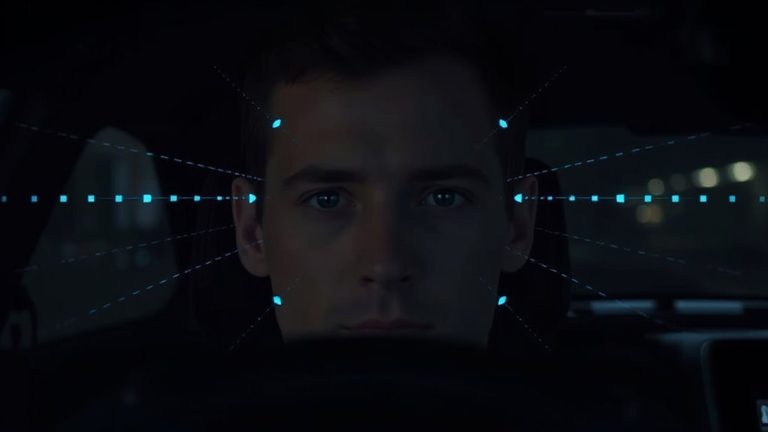
Why do so many frontal collisions happen despite clear roads and alert drivers? Driver fatigue severely impairs reaction time-after 18 hours awake, cognitive performance dips to levels equivalent to a 0.05% blood alcohol concentration. You may not realize how sluggish your responses become. Road rage exacerbates the danger; aggressive maneuvers like sudden lane changes or tailgating reduce stopping distance. The average human reaction time is 1.5 seconds-meaning at 60 mph, your vehicle travels 132 feet before you even hit the brakes. Modern crash avoidance systems monitor this in real time. Forward-facing radar with a 160-degree field of view and cameras detecting lane position and vehicle proximity operate continuously. When risks are detected, automated braking can engage in 0.2 seconds, reducing impact speed by up to 25 mph. These systems don’t replace alertness-but they compensate when fatigue or emotion dull your judgment.
How Radar and Cameras Detect Frontal Collision Risks
Your car’s ability to spot danger ahead starts with a pair of high-speed sensors working together-radar and cameras. Radar emits radio waves that bounce off objects, enabling precise distance measurement up to 200 meters ahead, even in poor visibility. It tracks closing speed and position of vehicles, barriers, or obstacles. Cameras provide high-resolution images for reliable object detection, identifying lane markings, tail lights, and pedestrian shapes. Together, they create a fused data model the system uses to assess risk. Radar operates effectively in rain, fog, or darkness, while cameras interpret visual context. The system updates scans up to 20 times per second. Advanced image recognition software classifies objects by size, movement, and proximity. Combined sensor input allows millisecond-level analysis of frontal threats. This dual-sensor approach boosts accuracy, reducing false alerts. Distance measurement and object detection work in tandem-ensuring your car sees trouble before you do.
How Automatic Emergency Braking Prevents Frontal Crashes
When frontal collision risks are detected, automatic emergency braking (AEB) activates within milliseconds to help prevent or reduce the severity of a crash. You rely on AEB most in urban driving, where sudden stops are common. Using radar and camera data, the system identifies vehicles, cyclists, or pedestrians ahead. Pedestrian detection works day or night, typically at speeds up to 50 mph. If you don’t respond to initial alerts, AEB applies brake pressure autonomously. Full braking force engages when a collision is imminent, reducing impact speed or stopping completely. Many systems operate from 5–65 mph in city conditions. Sensor fusion improves accuracy, minimizing false triggers. AEB isn’t perfect but reduces rear-end crashes by up to 50%, according to IIHS studies. It’s a critical layer of protection-like a co-pilot watching the road ahead-especially where traffic is dense and unpredictable.
How FCW and Adaptive Cruise Work Together to Avoid Crashes
Forward Collision Warning (FCW) and Adaptive Cruise Control (ACC) operate in tandem to reduce the likelihood of front-end crashes by combining real-time threat detection with automated speed management. FCW uses radar and camera sensors to monitor the vehicle ahead, triggering a visual or audible alert when a potential collision is detected within 2–3 seconds of impact. ACC maintains your set speed but automatically adjusts it by throttling down or applying light braking to maintain a safe following distance, typically 1–2 seconds behind the lead vehicle. System integration allows both technologies to share sensor data seamlessly, improving response accuracy. You remain in control, but the systems help correct risky driver behavior, such as delayed reactions or inattention. Together, they create a responsive safety buffer, especially during highway driving or stop-and-go traffic, reducing crash risk without taking full control of the vehicle.
Real-World Impact: Crash Avoidance Systems Save Lives Today
Every year, thousands of lives are preserved thanks to the silent vigilance of modern crash avoidance systems. You benefit from enhanced vehicle safety every time you drive a car equipped with automatic emergency braking (AEB) and forward collision warning (FCW). These systems reduce rear-end crashes by up to 50%, according to IIHS data. AEB typically activates at speeds between 5–50 mph, applying brakes when you don’t respond in time. Sensors like radar and cameras monitor distance and closing speed up to 200 meters ahead. While technology helps, driver behavior remains critical. Distraction or overreliance can weaken system effectiveness. Crash avoidance isn’t foolproof-it’s a safety net, not a replacement for attention. Real-world studies show cities with higher AEB adoption report 28% fewer front-end collisions. When properly used, these systems complement your decisions, turning near-misses into uneventful drives.
On a final note
You rely on crash avoidance systems to reduce frontal collision risks. Radar sensors detect objects up to 200 meters ahead, while forward-facing cameras identify lane markings and vehicles. Automatic Emergency Braking (AEB) activates when you don’t respond, reducing collision speed by up to 50 km/h. FCW alerts you 2–3 seconds before impact. Adaptive Cruise Control maintains safe distances using real-time speed adjustments. Together, these systems cut crash rates by 50%, according to IIHS data.