How to Choose Flush-Fit Wheels for a Stanced Vehicle Aesthetic
You need wheels that match your bolt pattern, like 5×114.3, and correct centerbore to fit the hub precisely. Choose width and diameter-commonly 18–20 inches-to suit your fender space. Use positive or negative offset, typically between +25 to –12 mm, to achieve flush fitment. Adjust ride height with lowering springs and set camber to –2.5° to –5°. Confirm clearance by test-fitting and checking steering lock. More fitment insights follow.
Notable Insights
- Match bolt pattern and centerbore to your hub for secure, vibration-free mounting.
- Select wheel width and diameter that fill fenders without compromising clearance.
- Calculate correct offset to achieve flush fit and avoid tuck or poke.
- Adjust camber and ride height to maintain tire clearance and aggressive stance.
- Test fit wheels and inspect for rubbing at full lock and under simulated load.
Know Your Fender Clearance and Bolt Pattern
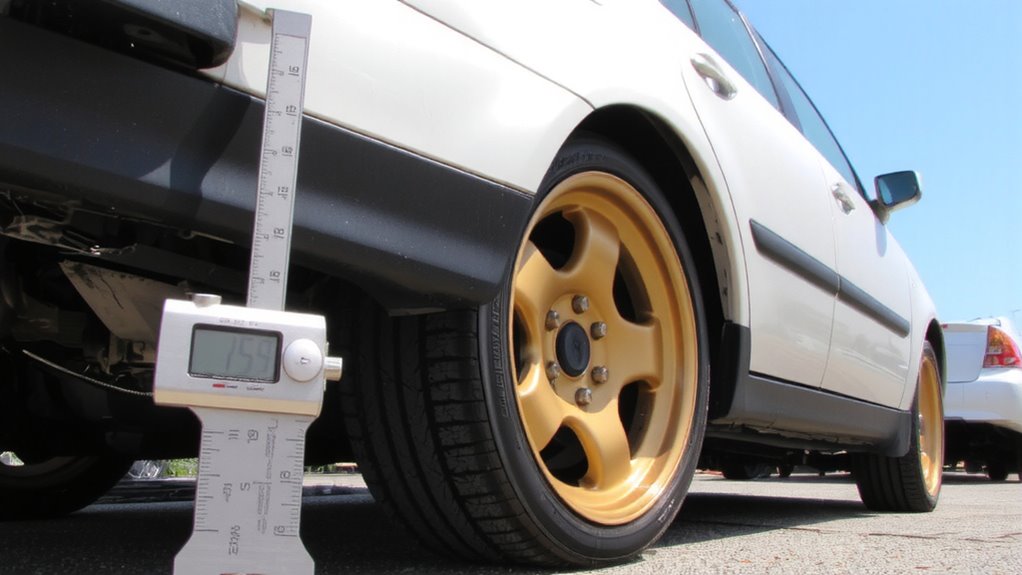
Your car’s fender clearance determines whether your flush-fit wheels will fit without rubbing or causing damage. Insufficient clearance leads to tire contact with inner fender liners during suspension compression or steering. Fender rolling modifies the inner edge of the fender to increase tire clearance, allowing wider or lower-offset wheels to fit. This process requires careful metal shaping to avoid compromising structural integrity. You must also verify bolt compatibility-matching your wheel’s bolt pattern (e.g., 5×114.3) and centerbore to your hub. Mismatched bolt patterns cause vibration, unsafe mounting, or wheel detachment. Use only certified adapters if needed, and always torque bolts to manufacturer specifications (typically 80–100 ft-lbs). Proper bolt compatibility guarantees load distribution and safety under stress. Measuring clearance with a test fit or spacer helps confirm fitment before final installation.
Choose the Right Wheel Width and Diameter
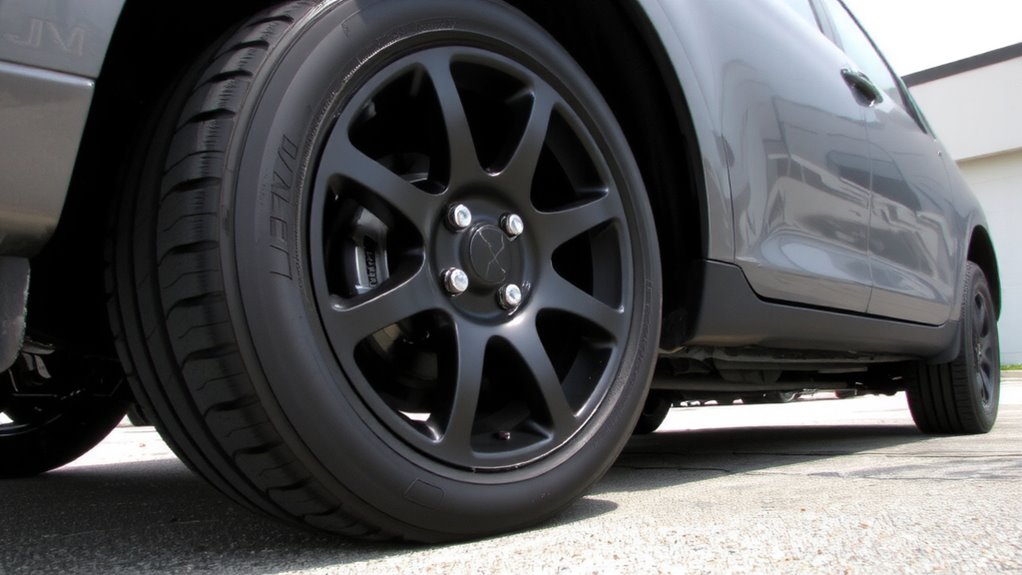
Wheel width and diameter define the foundation of your stanced look-but they also directly impact handling, clearance, and safety. Wider wheels fill fenders better but require careful fitment. Larger diameters improve visual presence, yet can reduce ride quality if not matched with proper tire quality. Always consider wheel material: forged alloys are lighter and stronger than cast, enhancing performance and durability. Enthusiasts often achieve optimal results by selecting OEM+ wheel designs, which blend factory precision with aftermarket styling for a cohesive flush-fit appearance. Below is a reference guide for common fitments:
| Diameter | Width | Ideal Tire Size |
|---|---|---|
| 18″ | 9.5″ | 255/40R18 |
| 19″ | 10″ | 265/35R19 |
| 20″ | 10.5″ | 275/30R20 |
| 21″ | 11″ | 285/25R21 |
| 22″ | 11.5″ | 295/25R22 |
Choose sizes that maintain adequate sidewall for your driving style while ensuring tire quality supports load and speed demands.
Calculate Offset for a Flush Fit
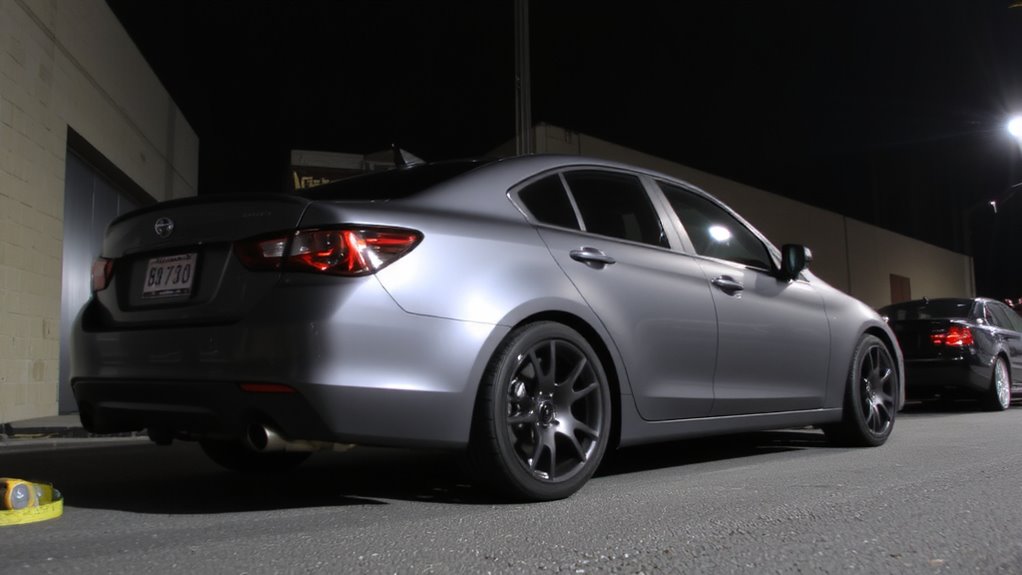
While diameter and width set the stage, getting the offset right is what truly determines whether your wheels sit flush with the fenders. Offset, measured in millimeters, is the distance from a wheel’s mounting surface to its central plane. Positive offset means the hub mounts closer to the street side; negative pushes it toward the suspension. Too much positive offset causes tuck, while excessive negative creates poke. You’ll need to reference your vehicle’s factory specs and compare them with your new setup. Proper offset guarantees correct clearance and prevents rubbing. Always pair offset adjustments with appropriate tire sizing-wider tires may require lower offset. Don’t overlook load rating; it must match or exceed your vehicle’s requirements to maintain safety and structural integrity. Using incorrect load ratings risks blowouts and handling failure. Calculate carefully-precision matters.
Adjust Camber and Ride Height
Even with the perfect offset, achieving a flush stance requires precise adjustments to camber and ride height, as these factors directly affect how the wheels align within the fender wells. You need to fine-tune negative camber and install lowering springs to get that aggressive, ground-hugging look. Too little adjustment and the wheels sit too upright; too much and you risk premature tire wear or handling issues. Lowering springs typically reduce ride height by 1 to 2 inches, altering suspension geometry. This change often necessitates increased negative camber-usually between -2.5 to -5 degrees-to keep the tire’s tread flat during cornering. Installing a leveling kit can also help achieve balanced fender gap reduction while maintaining ride quality and suspension performance.
| Adjustment | Typical Range |
|---|---|
| Ride Height Reduction | 1–2 in |
| Negative Camber | -2.5° to -5° |
| Spring Rate Increase | 20–50% |
| Handling Response | Sharper turn-in |
Test Fit to Prevent Rub
You’ve dialed in your camber and lowered the ride height, but that aggressive stance means nothing if your tires rub against the fender liner or suspension components. Test fitting wheels before final installation prevents damage and guarantees proper clearance. Mount the wheel and tire assembly, then turn the steering lock to lock to check for interference. Pay close attention to inner fender wells, control arms, and suspension mounts. Simulate real-world conditions by applying weight or using a jack to mimic tire flex under load. Tire flex increases sidewall deflection during cornering, which can lead to unexpected contact points. Perform an alignment check after test fitting to verify camber, toe, and caster settings match specifications. Even minor deviations can cause rubbing. Measure gaps between tire and chassis with a ruler-aim for at least 1/4 inch clearance. Adjust as needed to achieve a flush, rub-free fit.
On a final note
You must verify fender clearance and match your bolt pattern before selecting wheels. Wheel diameter typically ranges from 18 to 22 inches, while widths vary between 9 and 12 inches per side. Use offset values-often between -12 to -45 mm-to achieve a flush stance. Adjust camber to -2.5 to -5 degrees and lower ride height with coilovers. Always test fit to prevent rubbing under real-world conditions.