How to Clean Door Handles on PPF-Wrapped Vehicles Without Lifting Edges
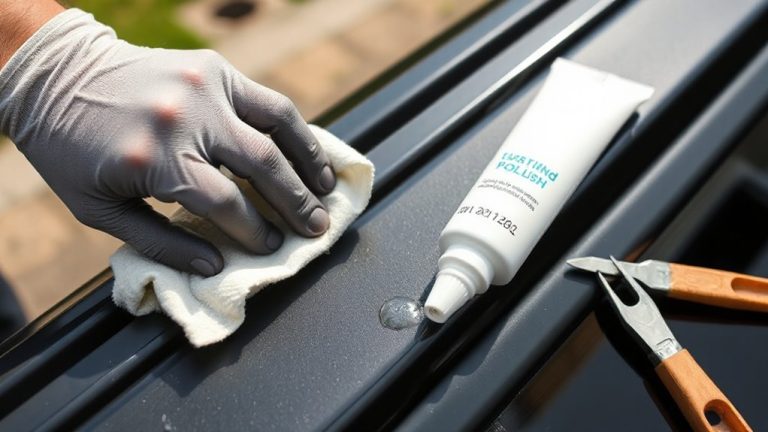
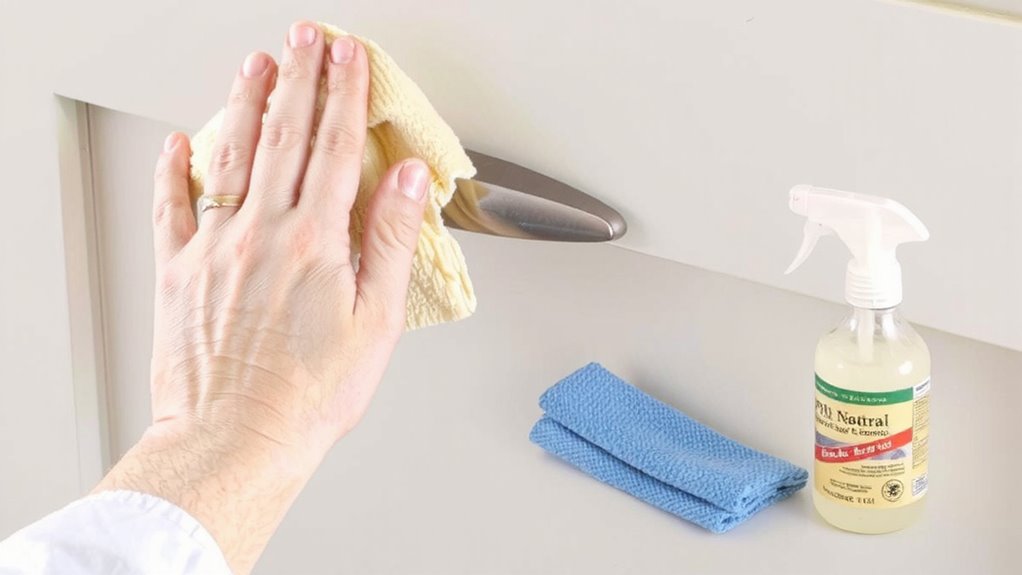
Wipe your PPF-wrapped door handles with a soft microfiber cloth dampened with a pH-neutral cleaner (pH 6.5–7.5) to avoid edge lifting. Never scrub aggressively or use ammonia- or alcohol-based cleaners, as they degrade the acrylic adhesive. Spray cleaner on the cloth, not the surface, to prevent seepage. Use straight wiping motions and dry immediately. For disinfecting, apply 70% isopropyl alcohol to the cloth first. You’ll find even more precise care steps that extend film life and keep protection intact.
Notable Insights
- Use a pH-neutral cleaner and soft microfiber cloth to gently wipe PPF-wrapped handles without damaging edges.
- Avoid direct spraying; apply cleaner to the cloth to prevent liquid seepage under film edges.
- Never use abrasive tools or harsh chemicals that can degrade adhesive and lift PPF edges.
- Disinfect with 70% isopropyl alcohol applied to a towel, not directly on the surface.
- Dry immediately with a low-lint microfiber towel and inspect for edge lifting after cleaning.
Why PPF Door Handles Need Special Cleaning
While most of your vehicle’s exterior benefits from the durability of paint protection film (PPF), the door handles present a unique challenge due to frequent physical contact and exposure to contaminants. These high-touch areas endure repeated stress, increasing the risk of edge adhesion failure over time. PPF relies on strong adhesive bonds, especially along the edges, to resist lifting or peeling. Contaminants like dirt, oils, and sweat accelerate degradation, particularly when combined with improper cleaning methods. The film also exhibits chemical sensitivity, meaning exposure to harsh solvents or abrasive cleaners can weaken both adhesive performance and topcoat integrity. Most PPFs use a pressure-sensitive acrylic adhesive designed for smooth, vertical surfaces-not the complex curves of door handles. Even minor edge separation exposes the bond to moisture and debris, compromising long-term performance. Proper technique guarantees edge adhesion remains intact, preserving protection and appearance.
Use Safe Cleaners for PPF-Wrapped Handles
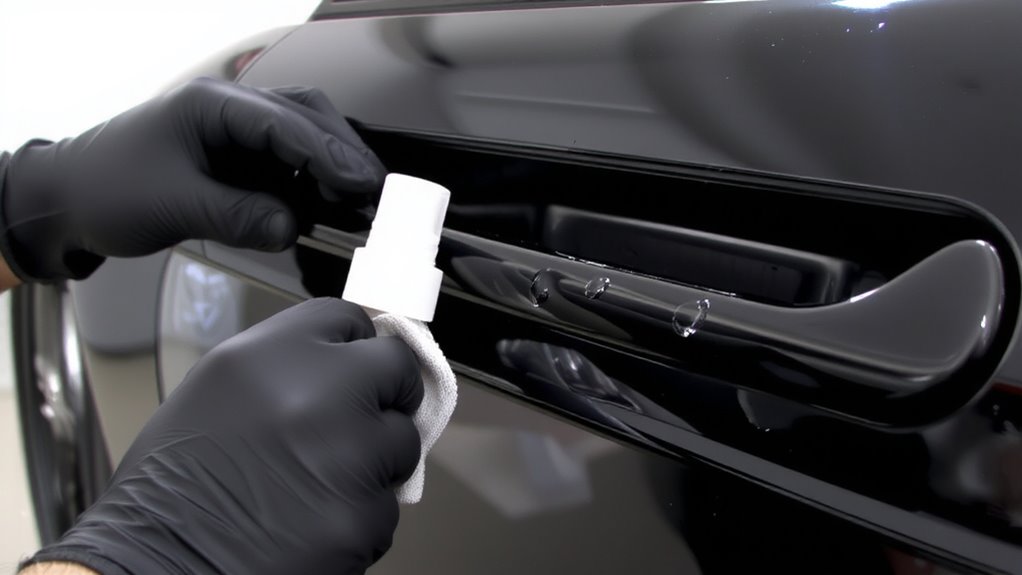
Choose cleaners specifically formulated for PPF to protect both the film’s surface and its bonded edges. These products maintain the PPF’s integrity without degrading the adhesive. Avoid household cleaners with alcohol or ammonia-they can compromise UV protection and reduce scratch resistance. Instead, use pH-neutral formulas (pH 6.5–7.5) that won’t cloud or etch the film. Cleaners with added polymers enhance hydrophobic properties and preserve gloss. Most high-quality PPF cleaners include UV inhibitors to prevent yellowing and keep the film elastic. A 10% concentration of isopropyl alcohol is acceptable if labeled PPF-safe. Always follow manufacturer guidelines. Improper cleaners strip protective layers, reducing the film’s self-healing capability. For best results, apply with a microfiber cloth using light pressure. Proper cleaning maintains optical clarity and extends PPF life beyond seven years. Using the right cleaner guarantees long-term performance and appearance.
Clean Door Handles Without Lifting Edges
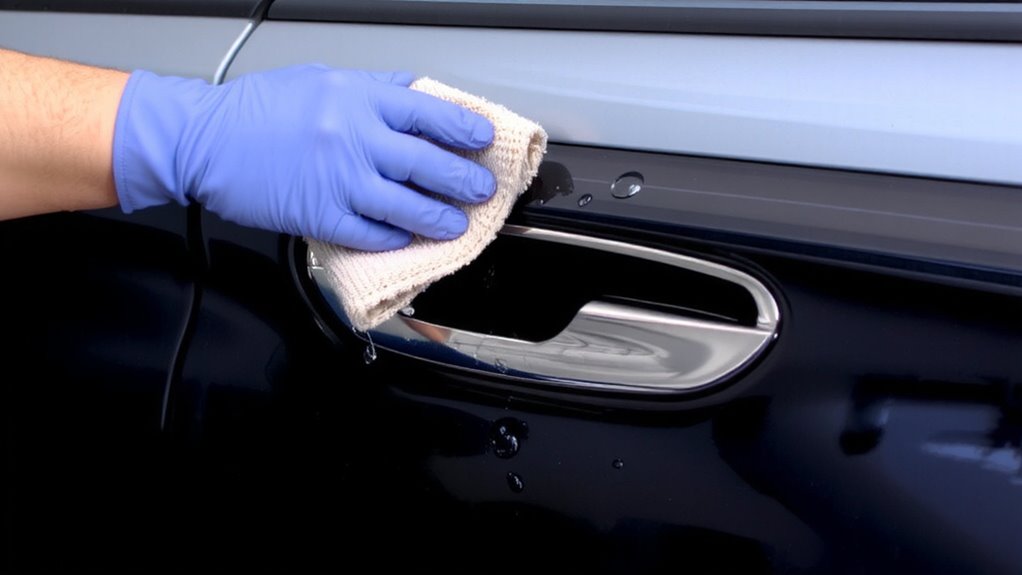
With proper technique, you won’t lift the edges of your PPF when cleaning door handles. Use a soft microfiber cloth dampened with a pH-neutral cleaner to gently wipe the surface. Avoid aggressive scrubbing or high-pressure sprays near the edges, as these can compromise edge sealing. Most premium PPFs have strong adhesive bonds and UV resistance, preventing yellowing and maintaining clarity over time. Confirm the film’s edges are fully bonded and free of debris before cleaning. If edge lifting is already present, address it professionally instead of attempting DIY reattachment. Clean regularly to prevent buildup that might tempt harsh methods. Proper maintenance preserves both the film’s structural integrity and appearance. UV resistance ensures long-term durability, while intact edge sealing blocks moisture and contaminants. Treat the area like a sealed system-disturb it minimally, maintain it consistently. For long-lasting results, choose from top-rated Best Car Paint Protection Film products known for their durability and clear finish.
Avoid These PPF Cleaning Mistakes
| Mistake | Consequence |
|---|---|
| Harsh chemicals | Film discoloration, adhesive failure |
| Abrasive tools | Surface marring, edge lifting |
Always rinse with deionized water to prevent mineral deposits. Avoid steam cleaners exceeding 80°C-they can soften adhesive edges near handle crevices. Proper care guarantees PPF performs as engineered: self-healing, stain-resistant, and optically clear for years.
Disinfect PPF Door Handles Safely
You’ve already avoided the common errors that compromise PPF integrity-no harsh solvents, no stiff brushes, no high-heat steam near fragile edges. Now, disinfect safely using isopropyl alcohol at 70% concentration, which kills 99.9% of bacteria and viruses without damaging urethane films. Spray lightly on a microfiber towel, not directly on the surface, then wipe in straight motions. This prevents pooling, which can seep under edges. The PPF’s topcoat includes UV protection, shielding the adhesive from degradation caused by sunlight exposure. Repeated disinfection can lead to odor control issues due to microbial buildup; a 1:10 diluted hydrogen peroxide solution neutralizes odors without film compromise. Avoid quaternary ammonium compounds-they may cloud the finish. Most PPFs withstand routine disinfecting if performed correctly. Wipe gently, limit frequency to once daily in high-use scenarios, and guarantee complete chemical evaporation between applications to maintain long-term performance.
Dry and Check for Lifting Immediately
After disinfecting, drying the door handle area immediately minimizes the risk of moisture intrusion under the PPF edges. Use a microfiber towel with low lint and soft surface texture to avoid micro-abrasions. Gently pat-don’t rub-to preserve edge adhesion. Inspect each corner closely; even minor lifting can compromise protection. For best results, use a high-quality car microfiber towel kit that ensures superior absorbency and lint-free performance.
| Inspection Point | Tool Suggested | Action Required |
|---|---|---|
| Edge alignment | Bright LED light | Check for gaps or flaring |
| Surface texture match | Fingertip comparison | Confirm no wrinkling or peeling |
| Adhesion integrity | Plastic squeegee (soft) | Press down if slight lift found |
Residual moisture weakens adhesive bonds. Immediate drying guarantees consistent edge adhesion and prevents long-term delamination. Always verify the film lies flush against the original contour.
Maintain Door Handle Protection Long-Term
Keeping door handles protected over time starts with consistent maintenance that preserves both the PPF’s structural integrity and its defensive capabilities. Inspect the area monthly for wear, bubbling, or edge lifting. Apply a polymer-based sealant every 90 days to reinforce edge sealing, preventing moisture intrusion that compromises adhesion. Use only PPF-safe cleaners with verified material compatibility-avoid alcohol, acetone, or ammonia-based solutions above 5% concentration. Maintain pH levels between 6.5 and 8.5 during cleaning to prevent film degradation. PPF lasts 5–7 years when properly maintained, but high-touch areas like door handles may degrade faster due to friction. Reapply protective coatings after deep cleaning. Avoid abrasive tools; opt for microfiber applicators rated below 3 microns in fiber thickness. Proper edge sealing and compatible products guarantee lasting clarity, impact resistance, and self-healing functionality.
On a final note
You must clean PPF-wrapped door handles carefully to prevent edge lifting. Use pH-neutral cleaners below 9.0 pH to avoid degrading the thermoplastic urethane. Wipe with microfiber cloths exerting light pressure-under 3 psi-to remove contaminants without stress. Never use ammonia-based or abrasive products. Dry immediately with a clean, lint-free towel. Inspect seams under 5x magnification monthly. Proper maintenance preserves PPF integrity and extends protection lifespan beyond 7 years.