How to Match Mud-Terrain Tires With Appropriate Wheel Width and Offset
Choose a wheel width between 8 and 10 inches for most 35-inch mud-terrain tires to prevent excessive sidewall flex or stretch. A 12.5-inch-wide tire works best on rims from 8.5 to 10 inches wide, keeping tread contact even and wear predictable. Use an offset between -12mm and -24mm on lifted trucks to maintain fender clearance and minimize suspension stress. Proper backspacing-around 4.5 to 5 inches-keeps scrub radius stable. Pair these specs with correct inflation and alignment for ideal performance, and you’ll uncover even more refinement in how your setup handles tough terrain.
Notable Insights
- Match wheel width to 70–80% of the tire’s section width for optimal tread contact and wear.
- Use a rim width between 8 to 10 inches for most 35-inch mud-terrain tires to prevent sidewall damage.
- Choose negative offset (-12mm to -24mm) on lifted trucks to improve fender clearance and stance.
- Avoid excessive negative offset to reduce suspension stress, uneven wear, and steering strain.
- Maintain proper inflation and rotate tires every 5,000 miles to ensure even wear and longevity.
How Wheel Width Affects Mud-Terrain Tire Wear
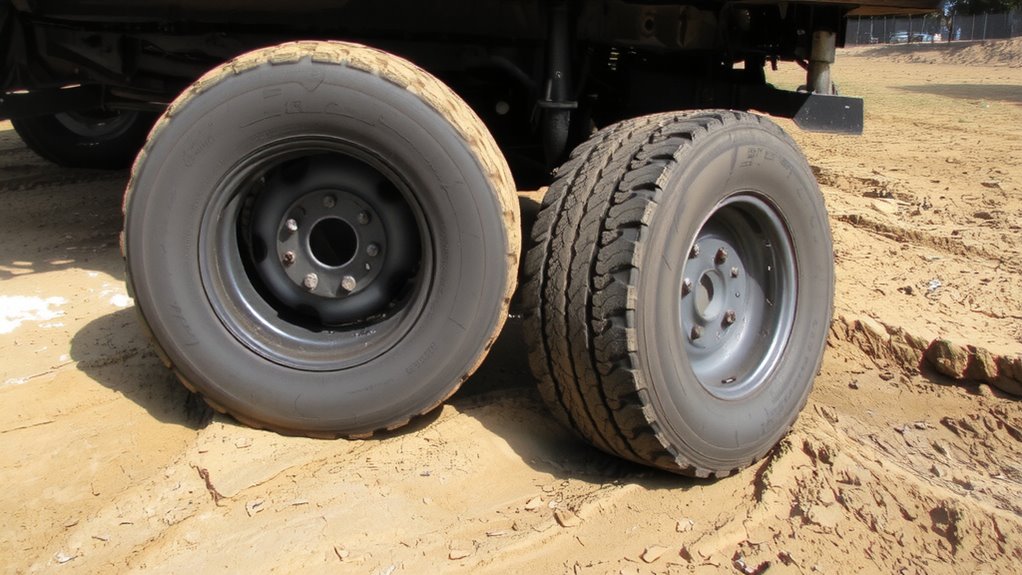
While your mud-terrain tires may look tough, running them on an incompatible wheel width can accelerate wear and compromise performance. Too narrow a wheel forces excessive sidewall flex, distorting the tread and reducing stability. This motion degrades tread siping-those small slits in the tread blocks designed to enhance wet and soft-surface grip-causing uneven wear. Too wide a wheel stretches the tire, thinning the sidewall and over-stressing the shoulder blocks. Recommended rim widths for most 35-inch mud-terrrain tires range from 8 to 10 inches. A proper fit maintains the tire’s designed footprint, ensuring even pressure distribution. Correct width preserves tread siping integrity and minimizes harmful sidewall flex. You’ll get longer tire life, better traction, and more predictable handling. Always consult the tire manufacturer’s specifications-deviating even 0.5 inches outside the recommended width affects performance. Match width precisely to maximize durability and capability.
What Offset Changes Your Tire’s Fender Clearance?
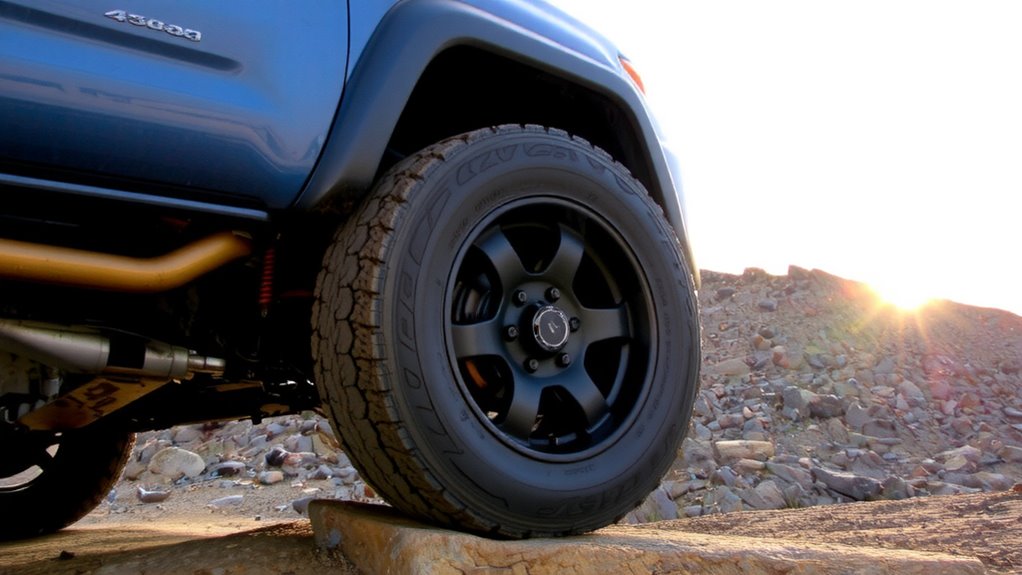
Offset directly affects how far your mud-terrain tires tuck in or stick out from the fender. A positive offset pulls the tire inward, reducing the chance of rubbing against the fender but increasing sidewall distortion under load. Negative offset pushes the tire outward, improving stance and clearance but amplifying tire bulge during cornering. Excessive bulge can compromise handling and accelerate wear. Too much negative offset may also stress wheel bearings and suspension components. Ideal offset maintains a balanced scrub radius while minimizing fender contact. Most off-road builds aim for minimal to moderate negative offset-typically between -12mm and -24mm-depending on suspension setup. This range limits sidewall distortion and preserves steering response. Always verify clearance during full articulation. Even small offset changes profoundly affect fender interaction, especially with lifted trucks and oversized mud-terrain tires.
What Wheel Width Fits Your Mud-Terrain Tires?
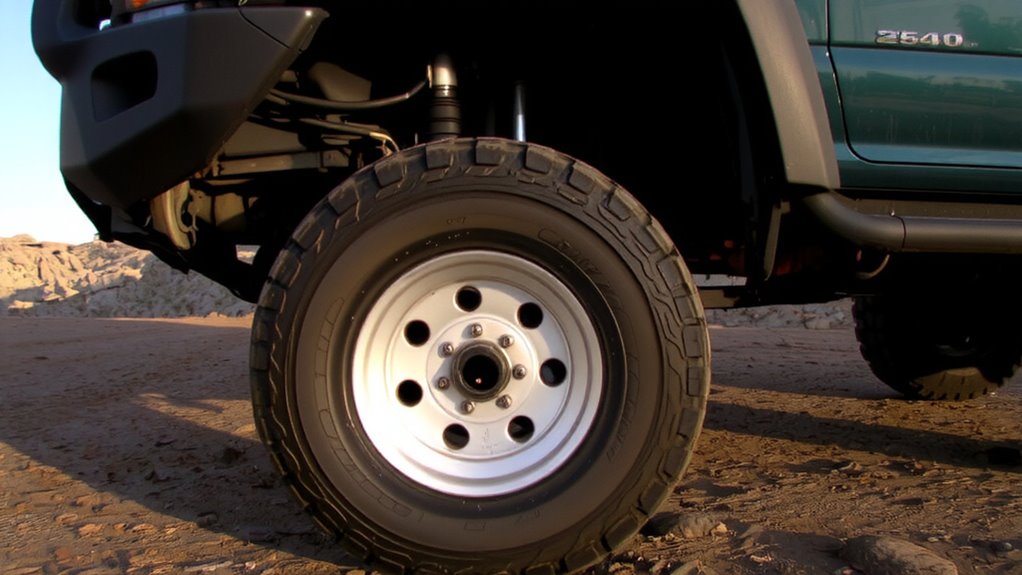
Tire width and wheel width must match within a precise range to guarantee peak performance, safety, and wear. You risk poor handling and uneven tread wear if you ignore this. For most mud-terrain tires, the wheel width should be within 70–80% of the tire’s section width. For example, a 12.5” wide tire fits best on a 8.5” to 10” wheel. This range supports proper tread design function, guaranteeing full lugs contact the ground. It also stabilizes sidewalls during aggressive cornering. Proper tire inflation is critical-underinflation on a too-narrow wheel increases sidewall stress and blowout risk. Overinflation on a wide wheel creates a bulging center tread wear. Always follow the manufacturer’s recommended wheel width range marked on the tire. Matching specs guarantees maximum footprint, traction, and longevity in rugged conditions. Trusted experts recommend reviewing the top mud tire picks when selecting the best option for your truck’s wheel setup.
Best Offset for Lifted Trucks and Wide Fenders
Most lifted trucks with wide fenders need at least one major adjustment to look right and perform well-getting the wheel offset dialed in. Your lift height directly affects how far your tires sit from the wheelwell. A higher lift usually requires less backspacing and a more negative offset to prevent scrubbing. For every inch of lift, you may need up to 0.75 inches of additional offset change to maintain alignment geometry. Wide fenders often pair with extended fender flare systems, allowing you to run as low as -12 to -24 mm offset. This pushes tires outward, improving stance and maximizing articulation. Use a 4.5 to 5-inch wheel backspacing with a 15- to 17-inch wheel width for most 35- to 37-inch tires. Matching offset to your specific lift height and fender flare width guarantees peak handling, durability, and tire clearance.
Stop Tire Rub and Uneven Wear
While your lift kit and wide fenders give you room to run aggressive tires, improper wheel and tire setup can still lead to constant rubbing and premature wear. You must match rim width to tire section width-typically within ±0.5 inch-to prevent sidewall deformation. Excessive negative offset pushes tires outward, increasing stress on suspension and causing fender contact. Maintain stock or manufacturer-recommended offset ranges after lift installation. Perform an alignment adjustment post-installation; target camber within ±0.5 degrees and toe within 0.1–0.3 degrees for even tread wear. You should conduct tire rotation every 5,000 miles using the cross-rotation pattern for directional mud-terrain tires. Irregular rotation accelerates shoulder wear and reduces traction. Regular inspection ensures no liner contact during full articulation. Proper setup guarantees maximum lifespan and performance, minimizing drag and improving fuel efficiency. Choosing the right tire for your terrain enhances durability and traction, especially when selecting from the best mud tires for tough terrain.
On a final note
You must match mud-terrain tires to the correct wheel width to guarantee even tread wear and maximum sidewall support. A 10- to 12-inch wide wheel suits most 35-inch tires, maintaining shape under load. Proper offset dictates clearance: +15 to –12 mm works for lifted trucks with wide fenders. Too little offset causes rubbing; too much stresses wheel bearings. Choose wisely to maximize tire life, performance, and safety.