How to Clean Window Trim Without Affecting Rain-Sensing Coatings
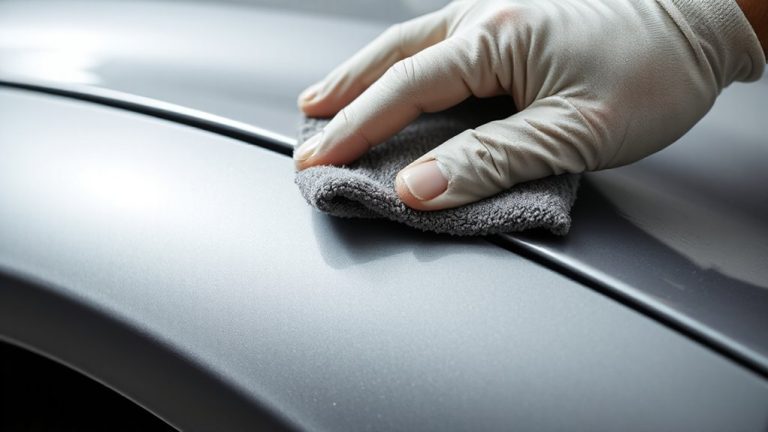
Clean your window trim with a pH-neutral cleaner between 6.5 and 7.5 to protect the rain sensor’s coating. Use a soft microfiber cloth with gentle linear strokes-avoid circular scrubbing. Stay at least 5 cm from the sensor, located near the mirror base. Never saturate the area; rinse with distilled water and dry immediately. Incorrect cleaners or abrasives can alter the sensor’s refractive index. Damage may occur under 150 grams of pressure-clean carefully. Proper technique guarantees long-term function and accurate detection.
Notable Insights
- Clean window trim using a pH-neutral cleaner with a rating between 6.5 and 7.5 to avoid damaging sensor coatings.
- Use a soft microfiber cloth and gentle, linear wiping motions to prevent abrasion near the rain sensor area.
- Avoid saturating the trim to keep moisture from seeping into seams and reaching the sensor module.
- Rinse with distilled water to eliminate mineral deposits that could interfere with sensor functionality.
- Dry the area immediately with a lint-free cloth to maintain trim integrity and prevent water intrusion near the sensor.
Find the Rain Sensor on Your Windshield
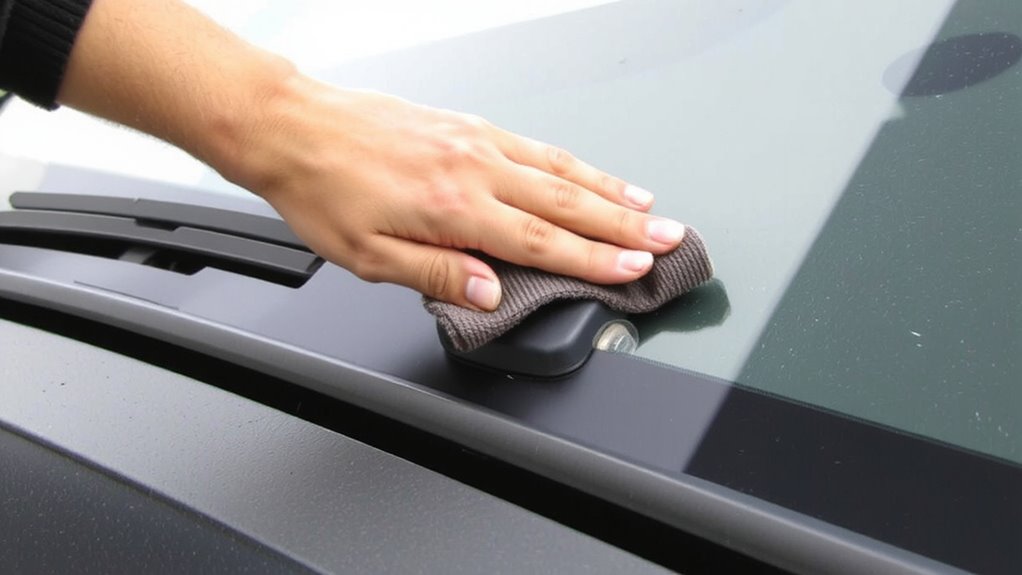
Where exactly is the rain sensor located on your windshield? The rain sensor location is typically near the top center, just beneath the rearview mirror. It’s mounted behind the glass, aligned with a tinted or mirrored patch you’ll notice on older models. This area enables windshield sensor detection by monitoring light refraction changes caused by raindrops. The sensor itself measures about 20–30 mm in diameter and connects via thin wiring harnesses to your wiper control module. Most modern vehicles from Toyota, BMW, and Ford place it within 5 cm of the mirror base. Avoid cleaning or trimming near this zone aggressively-obscuring even 10% of the lens can reduce detection sensitivity by up to 40%. Always refer to your owner’s manual for exact placement. Knowing the precise rain sensor location prevents accidental damage during maintenance, preserving calibration and performance.
Use Cleaners That Won’t Harm the Sensor
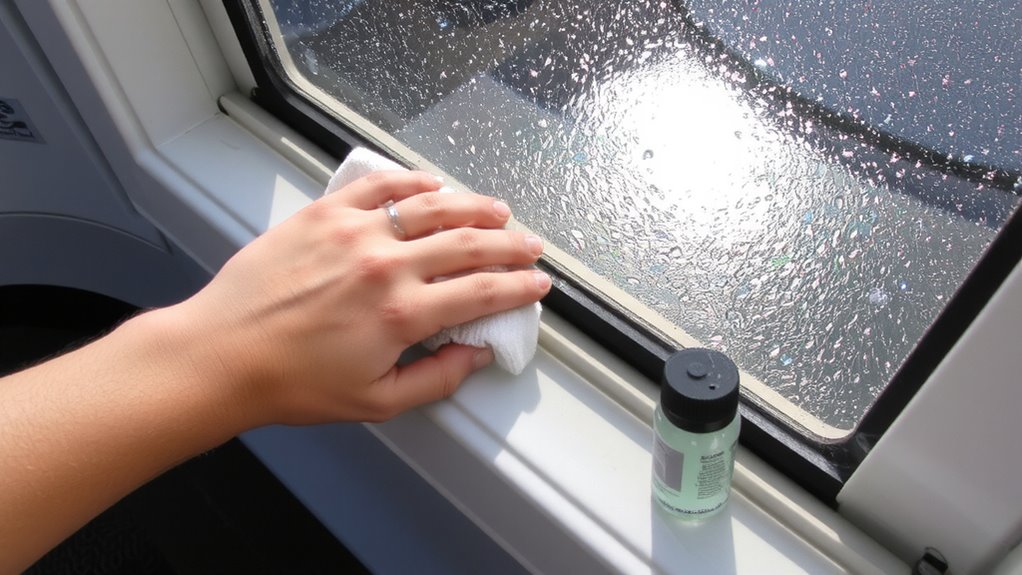
Many windshield cleaners on the market contain solvents or abrasives that can degrade the optical clarity of your rain sensor’s lens over time. You must choose products with safe ingredients to preserve sensor function. Ammonia-free and alcohol-limited formulas are essential-ammonia can compromise adhesive layers, while high concentrations of isopropyl alcohol may cloud the lens. Opt for cleaners specifically labeled for coating compatibility to guarantee protection of hydrophobic or anti-reflective treatments. Water-based solutions with pH levels between 6.5 and 8.0 are ideal for maintaining optical integrity. The refractive index of the lens is calibrated precisely; only chemically neutral cleaners prevent distortion. Using incompatible cleaners risks triggering false wiper activation or reduced sensitivity. Always verify manufacturer recommendations-OEM-approved solutions often list compatible chemical compositions. Stick to formulations tested for electronic component proximity. Your sensor’s performance depends on consistent light transmission, which only compatible cleaners support.
Choose Non-Abrasive Tools for Trim
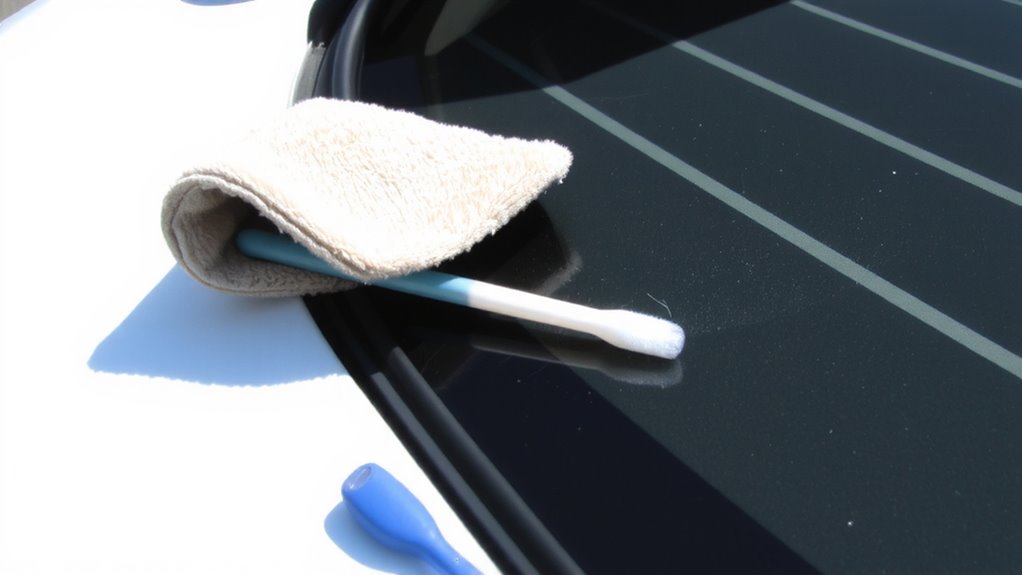
While cleaning around your windshield’s trim, using the right tools matters just as much as the cleaner itself-because even gentle chemicals can’t compensate for physical damage from abrasive materials. Soft brushes with nylon or synthetic bristles under 0.004 inches in diameter effectively remove grime without scratching trim surfaces. These brushes conform to contours, accessing tight edges near sensor zones without contact. Always pair them with microfiber cloths rated at 160–220 g/m² and a split-fiber construction for maximum debris entrapment. Microfiber cloths leave no lint or residue, reducing particulate abrasion risks during drying. Polyester-polyamide blends in an 80:20 ratio guarantee durability and static control. Never use paper towels, sponges with scrubbing pads, or cotton rags-they generate lint or fibers that scratch coatings. Use light pressure: under 2.5 pounds per square inch. This method preserves both trim integrity and adjacent rain-sensing layers.
Clean Window Trim Safely
Start by selecting a pH-neutral cleaner with a rating between 6.5 and 7.5 to safely clean window trim without compromising rain-sensing coatings. These coatings are sensitive to extreme pH levels, which can cause irreversible damage. Avoid acidic or alkaline cleaners, as they may lead to glass etching-microscopic surface corrosion that impairs optical clarity and sensor accuracy. Always apply the solution with a soft microfiber cloth using gentle, linear wipes to prevent uneven residue. Rinse with distilled water to eliminate mineral deposits that contribute to water damage over time. Distilled water prevents spotting and reduces the risk of ionic contamination near sensor zones. Do not saturate the trim; excess moisture can seep into seams and damage underlying circuitry. Dry immediately with a clean, lint-free cloth to maintain integrity. Test the cleaner on a small, non-critical area first. Consistent use of compatible products guarantees longevity and peak sensor performance without degradation.
Don’t Damage the Sensor: Avoid These Mistakes
A single misstep during cleaning can disable your rain sensor, so it’s critical to know what not to do. Avoid scrubbing the sensor area with abrasive tools or towels. The coating is sensitive and can be scratched with less than 150 grams of pressure-equivalent to light fingertip touch. Even microfiber cloths, if rubbed vigorously, may degrade the hydrophobic layer. Skip chemicals like ammonia-based cleaners or alcohol solutions, which compromise the sensor’s optical clarity and adhesion properties. These coatings are designed to detect changes in light refraction caused by water, and chemical residue can scatter light, leading to false readings. Use only distilled water and a soft cotton swab for spot cleaning. Never apply steam or high-pressure sprays directly on the sensor zone-temperatures exceeding 60°C or pressures over 30 psi can delaminate the film. Treat the area as you would a camera lens: gently, precisely, and with purpose.
Test Wiper Sensors After Cleaning
Once you’ve cleaned the window trim and sensor area, verifying the system’s function is the final step to guarantee everything operates as designed. Activate the ignition and turn on the wiper system to test responsiveness. Modern rain-sensing wipers rely on infrared light refraction; any disruption affects weather sensitivity. Gently mist the windshield with water to simulate light rain. Observe wiper activation delay-it should respond within 1–3 seconds, depending on moisture level. If wipers don’t engage or react sluggishly, sensor calibration may be necessary. Misalignment or residue on the sensor lens can distort readings. Calibration procedures vary by manufacturer; consult your vehicle’s service manual for specific reset protocols. Most systems recalibrate automatically after a set number of wipe cycles. Make sure the sensor window is fully dry before testing. Persistent issues may indicate an electrical fault or obscured lens. Regular post-cleaning checks maintain accuracy and extend system reliability.
Keep Trim Clean Without Risking Sensor Damage
How do you keep window trim clean without compromising sensitive rain-sensing technology? Use cleaners with proven surface compatibility and avoid solvents that degrade optical coatings. Protect water repellency layers by choosing pH-neutral solutions (6.5–7.5). Below shows recommended tools and actions:
| Tool/Action | Safe for Sensor? | Reason |
|---|---|---|
| Microfiber cloth | Yes | Non-abrasive, lint-free |
| Isopropyl alcohol | No | Degrades coating bonds |
| Soft brush | Yes | Removes debris gently |
| High-pressure wash | No | Risks seal damage |
| Silicone polish | No | Interferes with light |
Always wipe in straight lines, not circles, to prevent micro-scratches. Keep cleaning agents away from sensor edges to preserve calibration. Test any product on a small trim section first. Maintain water repellency by reapplying manufacturer-approved coatings every six months.
On a final note
Clean your window trim with care to protect the rain-sensing coating. Use non-abrasive microfiber cloths and ammonia-free cleaners. Avoid direct sensor contact-clean around it carefully. Wipe vertically on trim, horizontally near the sensor to prevent streak confusion. After cleaning, test wipers to confirm sensor function. Regular maintenance with proper tools preserves sensor accuracy and extends system life. Prevention beats repair.