How to Prevent Undercarriage Corrosion With Oil-Based Rust Blockers
You can prevent undercarriage corrosion by applying an oil-based rust blocker with at least 70% oil content and 100–150 cSt viscosity. It forms a hydrophobic, flexible film (8–10 mils thick) that blocks moisture and oxygen from reaching metal. Spray it on frame joints, suspension mounts, and inside boxed sections using a precision wand. Apply every 3–6 months, especially before winter, to maintain a minimum 2-mil protective layer. Critical degradation starts below 1.2 mm metal thickness-consistent treatment helps avoid structural risks. Further details reveal how precise application maximizes long-term durability.
Notable Insights
- Clean and dry the undercarriage thoroughly to ensure maximum adhesion of the oil-based rust blocker.
- Use a rust blocker with at least 70% oil content and 100–150 cSt viscosity for optimal cling and protection.
- Spray frame joints, suspension mounts, and boxed sections using a precision wand for complete coverage.
- Apply at 6–8 inches distance to achieve an even 2–3 mil film thickness without puddling.
- Reapply every 3 to 6 months, especially in high-salt areas, to maintain a protective barrier above 2 mils.
Why Rust Under Your Car Is Dangerous
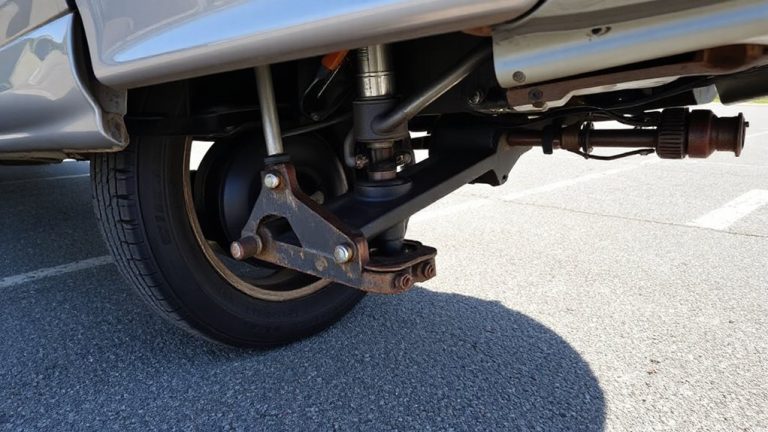
While it might seem hidden and harmless, rust under your car can compromise critical structural and mechanical components over time. You’re risking structural integrity when corrosion eats through floor pans, frame rails, or suspension mounting points. These areas support your vehicle’s weight and absorb road stress. Once rust weakens them, the chassis may flex abnormally, leading to alignment issues or part failure. Safety risks increase markedly-rotted brake lines can burst, and corroded steering components may fail without warning. Exhaust systems weakened by rust can detach, creating drag hazards. Even minor surface rust, if left untreated, spreads rapidly in moisture-rich environments. Studies show untreated undercarriage rust can reduce a vehicle’s load-bearing capacity by up to 30% within five years in icy, salted regions. Metal thickness below 1.2 mm indicates critical degradation. Early detection and protection are essential to maintain performance, longevity, and occupant safety. Applying a high-quality oil-based undercoating can significantly slow corrosion by displacing moisture and creating a durable barrier against road salts and debris.
How Oil-Based Rust Blocker Stops Corrosion
Oil-based rust blockers create a protective barrier that stops moisture and corrosive agents from reaching metal surfaces. This moisture barrier prevents the electrochemical process that leads to rust. You see, corrosion begins when water, oxygen, and metal trigger a chemical reaction-specifically, the oxidation of iron. The oil-based formula adheres tightly to steel and iron, forming a continuous, hydrophobic film. This film resists wash-off, with some products maintaining integrity for up to six months under normal driving conditions. Unlike water-based coatings, oil penetrates small crevices and seams, ensuring complete coverage. The blocker’s viscosity-typically between 100–300 cSt at 40°C-allows deep dispersion without dripping. It remains flexible across temperatures, from -30°C to 90°C, avoiding cracking or flaking. By isolating the metal from environmental triggers, the product effectively halts the chemical reaction responsible for corrosion. You’re not just coating; you’re sealing out decay at the molecular level.
Where to Spray Rust Blocker on Your Frame
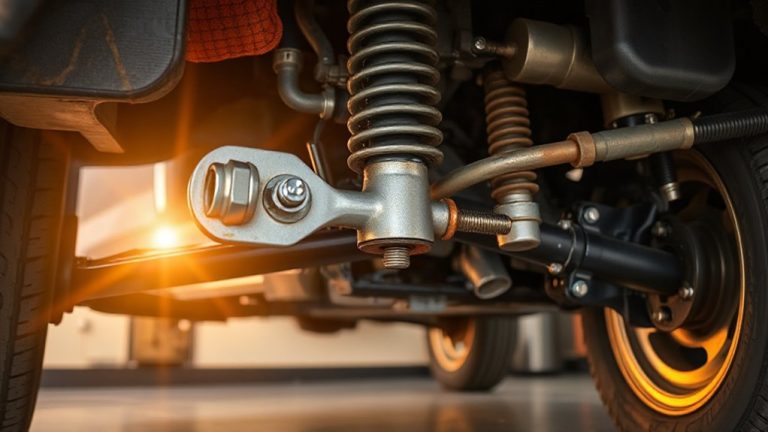
Your vehicle’s frame is the backbone of its structural integrity, and protecting it from corrosion starts with precise application of rust blocker in high-risk zones. Target frame joints first-these seams and weld points trap moisture and debris, accelerating rust formation. Oil-based rust blockers penetrate these tight spaces, displacing water and forming a protective, self-healing film up to 8–10 mils thick. Next, spray directly onto suspension mounts; these load-bearing areas endure constant vibration and stress, making them prone to cracking and corrosion. Guarantee full coverage around bushings, brackets, and attachment points, where metal meets metal. Use a precision wand to reach behind brackets and inside boxed frame sections. Apply evenly, avoiding runs, to maintain adhesion and performance. Proper coverage in these critical zones extends frame life by up to 15 years, even in high-salt environments.
How to Apply Rust Blocker Spray Step by Step
Since thorough preparation determines the effectiveness of rust protection, start by washing the undercarriage with a degreaser to remove dirt, salt, and old oil residues. Let the surface dry completely-moisture trapped under oil can accelerate corrosion. Use a rust blocker with at least 70% oil content and a viscosity of 100–150 cSt for maximum cling. Apply in temperatures above 40°F (4°C) to guarantee proper adhesion. Your spray technique matters: hold the nozzle 6–8 inches from the surface and use overlapping passes for even layers. Avoid puddling, which leads to uneven drying. Coverage tips include angling the spray upward for frame rails and seams, and using an extension wand for tight spots. Focus on joints, welds, and boxed sections-common corrosion sites. The oil should form a continuous, amber-tinged film 2–3 mils thick. Allow 24 hours for full curing before exposure to moisture.
How Often to Reapply for Lasting Protection
A properly applied oil-based rust blocker won’t last forever, no matter how well you spray it. Application frequency depends on climate, road conditions, and the specific product’s formulation. Most manufacturers recommend a reapplication every 3 to 6 months for maximum protection. In regions with heavy snowfall or frequent road salting, you should lean toward the shorter end of that range. Seasonal reapplication-especially before winter and after spring thaw-ensures continuous coverage. Each treatment should use 8 to 12 ounces of product per wheel well, applied at 30–50 psi for even dispersion. The oil must penetrate seams, frame rails, and suspension components to form a hydrophobic barrier. Over time, driving exposure degrades the coating through abrasion and washing. Reapplying maintains film thickness above the critical 2-mil threshold needed for effective corrosion resistance.
On a final note
You need undercarriage protection to prevent structural damage. Oil-based rust blockers form a self-healing, 5–10 mil barrier that resists wash-off and penetrates seams. They contain rust inhibitors like calcium sulfonate and displace moisture. Reapply every 6–12 months, or after 50+ hours of wet driving. Coverage includes frame rails, rocker panels, and suspension points. Properly applied, these treatments reduce corrosion by up to 90% versus untreated steel.