How to Prevent Paint Fading on Two-Tone Vehicles With Zoned Protection
You should apply zoned protection to prevent uneven fading on your two-tone vehicle. Lighter panels degrade up to 30% faster due to higher UV absorption, so use ceramic coatings with 99% UV block and 8H hardness on high-exposure areas like hoods and roofs. Match finishes-use silica-free sealants on matte surfaces. Apply flexible polymer sealants to vertical panels, and maintain contrast with pH-balanced, 3% SiO₂ wax every 90 days. Precision application preserves clear coat integrity across color boundaries. Best protection starts with understanding material-specific responses to environmental stress.
Notable Insights
- Apply high-UV-resistant ceramic coatings to sun-exposed zones like hoods and roofs for maximum protection.
- Use flexible polymer sealants on vertical panels to prevent cracking from thermal expansion and stress.
- Match protectants to paint type-avoid solvent-based products on water-based paints to prevent degradation.
- Maintain color contrast by cleaning each paint zone separately with non-abrasive, dedicated microfiber towels.
- Ensure edge blending during application to seal color boundaries and prevent moisture ingress and uneven fading.
Why Two-Tone Vehicles Fade Faster in Some Areas
While both paint layers on a two-tone vehicle are exposed to the same environmental sector conditions, the more vibrant or lighter of the two hues often shows signs of fading sooner due to increased pigment sensitivity. You see this because pigments in lighter colors absorb more UV radiation, accelerating degradation. This creates a visible color mismatch over time. UV disparity-the difference in ultraviolet energy absorption between the two paints-drives uneven fading. Even with identical clear coat thickness (typically 50–70 microns), spectral reflectance varies by hue. Darker paints reflect less UV but absorb more heat, while lighter shades reflect visible light but suffer higher photochemical breakdown. The result is accelerated oxidation in the top layer of lighter paint, reducing gloss by up to 30% within two years in high-sun climates. This differential aging is unavoidable without zoned protection strategies.
Identify High-Risk Zones for Paint Exposure
Sun exposure hits your two-tone vehicle like a spotlight, concentrating damage on predictable surfaces. Heat buildup accelerates paint degradation, especially on horizontal and reflective areas. The roof and hood absorb the most sun exposure due to direct overhead incidence, increasing surface temperatures up to 30°F above ambient. This thermal stress breaks down clear coat polymers, causing fading. Upper doors and fenders face similar risks due to angle and surface area. Pillars and lower body panels, while less exposed, suffer secondary radiation from ground reflection, increasing UV load. Chrome or dark trim intensifies heat buildup, raising adjacent paint temperature. Front bumpers and A-pillars endure prolonged exposure during daily commutes, worsening discoloration. Identifying these zones lets you prioritize protection where chemical and thermal stress are highest. Targeting these areas improves long-term finish integrity and color retention across both paint finishes.
Match Protection Products to Each Paint Type
You’ve mapped the high-risk zones where sunlight and heat hit hardest-now it’s time to choose protection that matches your vehicle’s specific paint chemistry. Modern two-tone vehicles often combine clear-coated metallic, matte, or pearl finishes, each with unique chemical compositions. Product compatibility is critical-using the wrong sealant can cause hazing, lifting, or accelerated fading. For example, ceramic coatings with >90% SiO₂ content adhere best to glossy clear coats, offering 5–7 years of UV resistance. However, matte surfaces require silica-free polymer sealants to avoid altering their low-sheen finish. Always verify manufacturer specifications: solvent-based protectants may degrade water-based paints. Testing pH levels (ideal range: 6.5–8.0) guarantees gentle yet effective bonding. Think of it like skincare-formulations must match the underlying chemistry. Mismatched products compromise durability and appearance. Matching protection to paint chemistry preserves color fidelity and extends finish life reliably. A top-tier best car clear coat can significantly enhance long-term gloss retention and resistance to environmental damage.
Apply Zoned Defense Strategies for Maximum Coverage
Since UV exposure and thermal stress aren’t evenly distributed across your vehicle, a uniform protection approach won’t deliver ideal results. You need zoned defense strategies that match protection levels to each panel’s sun exposure and paint type. Apply high-UV-resistant ceramic coatings (8H hardness, 99% UV block) on horizontal surfaces like hoods and roofs, where solar intensity peaks. Use slightly flexible polymer sealants on vertical panels to resist thermal expansion cracks. Focus on edge blending during application-this guarantees seamless adhesion across the color shift zone, preventing moisture ingress and micro-peeling. Don’t ignore the thermal gradient shift along the color shift; it creates differential expansion that stresses clear coats. Precision masking and staged curing maintain boundary integrity. Proper zoned coverage extends paint life by up to 40% compared to full-vehicle uniform treatments.
Maintain Contrast With Targeted Long-Term Care
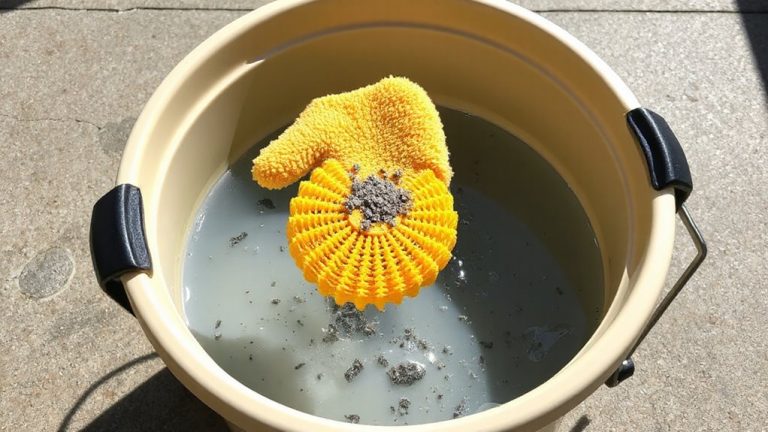
While paint degradation affects all vehicles over time, two-tone models demand targeted care to preserve the sharp contrast between color zones. You must address differing paint chemistry in each color, as pigments fade at unique rates. Lighter shades typically resist color degradation longer, while darker or metallic finishes absorb more UV radiation, accelerating breakdown. Apply a pH-balanced, UV-blocking wax every 90 days-preferably one with 3% SiO₂ content for long-term protection. Ceramic coatings (e.g., 9H hardness, 10-micron thickness) offer superior resistance, lasting up to five years. Clean zones separately using non-abrasive microfiber towels to prevent cross-contamination. Rinse at 40–60 psi to remove contaminants without stripping protective layers. Regular spectral analysis shows coated panels retain 98% gloss versus 76% for untreated surfaces. Consistent, zoned maintenance halts contrast loss before it’s visible.
On a final note
You protect two-tone vehicles by applying zoned protection matched to each paint’s chemistry. Use UV-resistant ceramic coatings (rated 9H hardness, 5-year durability) on glossy sections. Apply flexible synthetic sealants (18-month lifespan, 120-nm film thickness) on matte zones to prevent cracking. Target high-exposure areas-hood edges, roof lines, side mirrors-with reinforced layers. This method maintains color contrast, prevents differential fading, and aligns defense with environmental stress exposure.