How to Prevent Rust on Differential Housings in Wet Climates
Keep your differential housing clean and dry within two hours of exposure to moisture. Use compressed air to remove trapped water and a pH-neutral solvent for cleaning-avoid high-pressure washers. Inspect monthly for orange specks or cracks, especially near welds. Apply ceramic coating (0.5–2.0 mils thick) or nano sealant for long-term protection. Verify breather valves are clear and drain holes unobstructed. Upgrading to sealed IP67 bearings and Grade 316 stainless fasteners cuts maintenance by 50%. Proper care prevents oxidation, pitting, and costly repairs down the line.
Notable Insights
- Clean and dry the differential housing within two hours of exposure to moisture to prevent corrosion.
- Inspect monthly for early rust signs, such as orange specks or surface cracks near welds and fasteners.
- Apply ceramic or nano sealant coatings on properly prepared surfaces to block moisture and salt.
- Ensure breather valves and drain holes are clear and correctly routed to prevent moisture buildup.
- Upgrade to sealed IP67 bearings and 316 stainless steel fasteners for superior wet-weather resistance.
Clean and Dry to Prevent Differential Rust
Moisture is the enemy. It accelerates corrosion on differential housings, especially in wet climates. You must clean and dry the housing after exposure to rain, mud, or road spray. Use compressed air to remove trapped water from seams and vents. Even small amounts of standing moisture cause surface abrasion over time, weakening protective coatings. A compromised coating exposes bare metal, inviting rust. Dry thoroughly within two hours of exposure to prevent early oxidation. Residual dampness leads to component warping due to uneven thermal expansion during operation. Aluminum and cast iron housings react differently to heat stress-cast iron resists warping better but rusts faster. Clean with a pH-neutral solvent to preserve factory-applied coatings. Avoid high-pressure washers that force water into seals. Inspect gasket interfaces and breather tubes. Proper drying and cleaning reduce failure risk by up to 60%. Consistent maintenance prevents structural degradation and costly repairs.
Inspect for Early Rust Signs Immediately
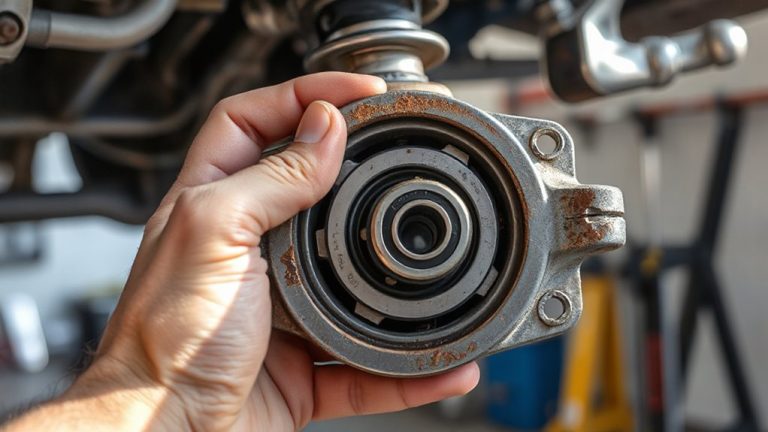
How quickly can a small orange speck become a major failure point? Immediately. That speck is early rust, and it demands your attention. You must inspect your differential housing monthly in wet climates. Look closely for surface cracks-hairline fractures where moisture seeps and accelerates corrosion. These often start near weld zones or stress points, compromising structural integrity. Check all fasteners too; fastener corrosion weakens critical clamping force. A rusted 12.9-grade bolt loses up to 30% of its tensile strength. Use a 10x magnifier to identify pitting or discoloration others miss. Standard inspection includes probing seams with a dent gauge set to ±0.05mm tolerance. Any anomaly beyond 0.1mm depth requires immediate intervention. Don’t wait. Early detection stops spread. Catch it now, or repair costs triple. Surface flaws aren’t cosmetic-they’re warnings. Act before micro-damage becomes macro-failure. When active rust is found, applying a best rust remover for cars can halt degradation and prepare the surface for protective coating.
Apply Proven Rust-Inhibiting Coatings
You can stop rust before it starts-just make sure you choose the right coating. Ceramic coatings form a hard, heat-resistant barrier that withstands temperatures up to 1,200°F and resist salt, moisture, and UV exposure. They bond molecularly with metal, creating a non-porous layer typically 0.5 to 2.0 mils thick-ideal for differential housings exposed to constant weather changes. Apply in thin, even layers using a spray gun or brush for complete surface saturation. Nano sealants penetrate microscopic pores in metal, filling gaps where moisture hides. Their particles measure less than 100 nanometers, allowing deep intrusion without adding thickness. Once cured, they repel water with contact angles exceeding 110°, reducing surface wetness by up to 95%. Both options require clean, grit-blasted surfaces for maximum adhesion-oil or debris ruins bonding. Reapply nano sealants every 24 months; ceramic coatings last five years or more.
Keep It Ventilated and Drained
Proper ventilation and drainage are just as important as protective coatings when safeguarding differential housings against rust. You need consistent air flow to prevent condensation buildup inside the housing. Modern differentials include breather valves, typically 1/8-inch NPT fittings, positioned at the highest point to allow moisture escape. If the breather becomes clogged, internal pressure changes can draw in water and contaminants. Check it monthly in wet climates. Use a hose extension kit to route the breather above the water line, especially on off-road vehicles. Make sure drain holes at the housing base remain unobstructäted-these 3–5 mm ports let trapped moisture escape during operation. Limited air flow accelerates corrosion, so inspect seals and covers for blockages. Properly vented housings maintain internal dryness, reducing rust risk markedly, even in constant damp conditions.
Upgrade to Wet-Weather Differential Components
When conditions turn wet, standard differential components can struggle to keep moisture out, so upgrading to wet-weather-specific parts makes a measurable difference in long-term durability. Sealed bearings are essential-they feature double-lip rubber seals that block water and debris while retaining lubricant. These bearings typically have an IP67 rating, meaning they’re protected against temporary submersion. Standard bearings lack this protection, leading to early failure. You should also replace mild steel fasteners with stainless fasteners, specifically Grade 316 stainless steel. These resist chloride-induced corrosion, critical in coastal or salted-road environments. They maintain tensile strength up to 70,000 psi even after extended exposure. Together, sealed bearings and stainless fasteners form a robust defense at critical joints and rotating points. The upgrade costs slightly more upfront but reduces maintenance intervals by up to 50%. You’ll see fewer seal breaches and less housing pitting over time.
Why Moisture Causes Differential Rust
Although steel provides exceptional strength and wear resistance in differential housings, it’s inherently vulnerable to oxidation when exposed to moisture. When water contacts the housing’s surface, it initiates electrochemical reactions that convert iron into iron oxide-commonly known as rust. You’ll see accelerated corrosion in coastal areas or regions using road salt, where salt exposure lowers the electrical resistance of water, speeding up ion transfer and rust formation. Temperature fluctuations worsen this: as the housing heats during operation and cools when parked, condensation forms inside and out, perpetuating moisture contact. Even small breathers can draw in humid air that condenses internally. Without protective coatings or adequate drainage, rust compromises structural integrity and seal surfaces. High-manganese steel alloys resist this better, with oxidation rates reduced by up to 60% in tested environments.
On a final note
You must maintain a clean, dry differential housing to prevent rust in wet climates. Moisture accelerates corrosion, especially on cast iron or steel housings with porosity. Apply rust-inhibiting coatings like epoxy-based sprays-rated for 1,000+ hours in salt spray tests. Verify vents are positioned upward to prevent water ingress. Upgrade to aluminum or powder-coated housings for superior corrosion resistance. Regular inspection prevents minor oxidation from becoming structural damage.