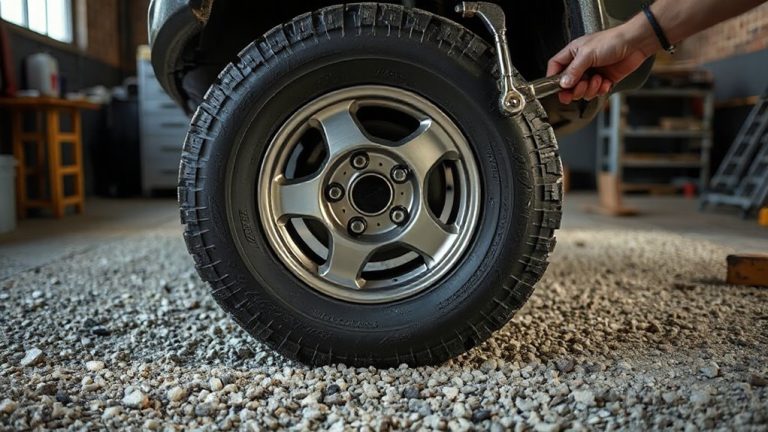
Inspecting Strut Bearings for Binding During Suspension Overhaul on a BMW 5 Series
You must inspect strut bearings for binding during a BMW 5 Series suspension overhaul to prevent steering lag and alignment shifts. Remove the strut assembly only after securing the coil spring with certified compressors. Rotate the outer race by hand while holding the inner shaft steady-smooth motion is critical; grit or resistance means failure. Check for rust, play over 0.5 mm, or cracked boots. Replace if compromised. Torque new mounts to 50–60 lb-ft and align within ±0.1° camber. A proper setup guarantees precision no quick test can fake-next steps reveal how to verify every detail.
Notable Insights
- Disconnect the sway bar link and steering knuckle to remove the strut assembly safely on a BMW 5 Series.
- Use certified spring compression tools before disassembling the strut to control high coil spring tension.
- Manually rotate the bearing’s outer race while holding the inner shaft steady to check for binding.
- Look for notchiness, grittiness, or resistance during rotation, which indicate internal bearing damage or contamination.
- Replace the bearing if there is more than 0.5 mm of play or any sign of seized movement.
Why BMW 5 Series Handling Suffers With Bad Strut Bearings
A failing strut bearing can quietly wreck your BMW 5 Series’ handling, and you might not notice until it’s too late. When the strut bearing binds, it restricts the strut’s ability to rotate freely during turns. This directly interferes with steering alignment, causing delayed response and uneven tire wear. The ideal suspension geometry depends on smooth articulation of all components, and a seized or worn bearing distorts this balance. Misaligned suspension angles increase understeer and reduce cornering stability. You’ll feel vague steering feedback and a slight shudder through the wheel when turning. Over time, this adds stress to other suspension parts, including control arms and bushings. Factory specs allow only 0.5 degrees of variance in camber and toe; a bad bearing can push values beyond tolerance. Precision alignment requires every suspension component, especially the strut bearing, to operate within exact technical parameters. Neglect it, and you sacrifice handling integrity.
How to Safely Remove the Strut Assembly
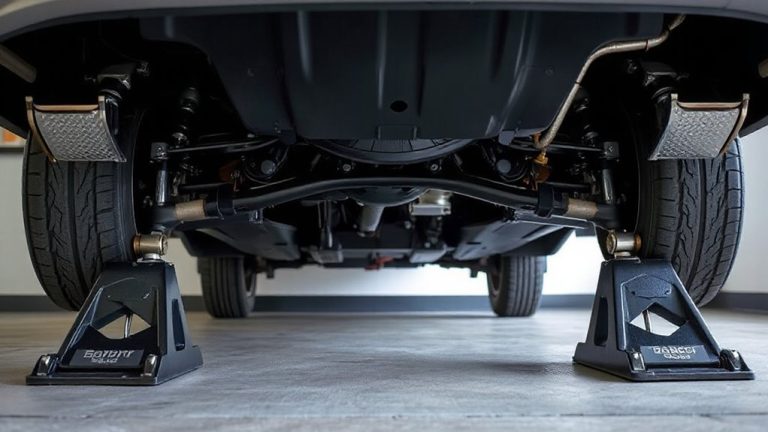
Before you begin dismantling the front suspension, make certain the vehicle is securely raised and supported on jack stands at the factory lift points-never rely on a hydraulic jack alone. Start by removing the wheel to access the strut assembly. Disconnect the sway bar link and unbolt the steering knuckle from the strut. You’ll then need to remove the three strut mounting bolts at the top of the strut tower in the engine compartment. Support the knuckle to avoid stressing brake lines. Carefully lower the strut assembly from the vehicle. Never attempt disassembly without proper spring compression tools-coil springs remain under high tension. Use a certified spring compressor to safely compress the spring before any strut disassembly. This guarantees safety during handling and prevents uncontrolled release of stored energy. Always wear protective gear.
Check for Strut Bearing Binding by Hand
With the strut assembly safely disassembled and the coil spring secured using a certified compressor, inspect the strut bearing for binding by hand. Begin with manual rotation of the bearing’s outer race while holding the inner shaft steady. You should feel smooth, consistent movement. Any notchiness, grittiness, or resistance indicates internal damage or contamination. Tactile feedback is critical-your fingers detect subtle irregularities that visual inspection might miss. A properly functioning strut bearing rotates freely with minimal drag, typically requiring less than 2 inch-pounds of torque. If rotation feels stiff or inconsistent, the bearing may compromise steering response and suspension travel. Do not confuse normal spring tension with binding; the coil spring should remain compressed and inactive during this test. Focus solely on the bearing’s center pivot. Perform this check multiple times to confirm findings.
Signs of Worn or Seized Strut Bearings
Why does your BMW 5 Series hesitate when turning the steering wheel? That resistance often points to worn or seized strut bearings. These components enable smooth steering by allowing the strut assembly to rotate with the steering knuckle. When they wear out, you’ll notice tightness or binding, especially at full lock. Rust accumulation between the bearing race and mount restricts movement and accelerates deterioration. Look for uneven tire wear or a clunking sound during suspension travel-key clues in noise diagnosis. A seized bearing may prevent full range of motion, increasing steering effort. Inspect for cracked rubber boots or visible corrosion. Typical failure signs include grinding sensations or audible creaks when turning. The OEM specification allows less than 0.5 mm of play; beyond that, performance degrades. Consistent symptoms mean the bearing isn’t functioning within design parameters.
Replace or Reuse: Making the Call After Inspection
A seized strut bearing won’t wait for second chances-once inspection reveals excessive play or binding, you’re left with a clear decision: replace or reuse. If you detect grinding, stiff rotation, or more than 1–2 mm of lateral movement, replacement is necessary. Reusing a compromised bearing risks improper suspension articulation and accelerated wear. Always check the torque specification when installing a new bearing-typically 50–60 lb-ft for BMW 5 Series models-to guarantee the strut mount fastener is secure without damaging threads. A missing or incorrect torque setting can cause misalignment and premature failure. After installation, perform an alignment check; even slight deviations in camber or toe can result from a faulty bearing. Factory specs allow only ±0.1 to ±0.3 degrees tolerance. Replacing the bearing restores precision, maintaining steering response and tire wear at peak levels. Don’t gamble with performance-when in doubt, replace.
Reassemble Without Binding: Key Installation Tips
You’ve confirmed the strut bearing is in spec or swapped it out for a new one-now the focus shifts to putting it all back together without introducing binding. Proper alignment is critical: guarantee the bearing’s inner race sits flush with the strut shaft and rotates freely before tightening the center nut to 65 Nm. Misalignment causes premature wear and handling issues. Always work with clean surfaces-wipe the strut tower, bearing seat, and mounting flange with isopropyl alcohol to remove dirt and old sealant. Contaminants as small as 0.2 mm can disrupt seating and lead to binding. Install the dust boot correctly to shield internal components from moisture and debris. Torque the mounting bolts in a star pattern to 22 Nm to maintain even pressure. Double-check rotational smoothness after assembly. Any resistance means disassembly and inspection. For optimal long-term performance, choose a top-tier strut brand known for precision engineering and durability.
On a final note
You now know how critical strut bearings are to your BMW 5 Series’ steering response. A binding bearing restricts suspension travel and increases steering effort by up to 30%. Always inspect the bearing’s rotational smoothness by hand-zero resistance is ideal. Replace it if scoring, rust, or stiffness is present. Install with correct torque: 37 lb-ft on the center nut. Align components precisely to prevent premature wear. Reassembly accuracy guarantees peak handling and longevity.