How to Rotate All-Season Tires on Alloy Wheels for Even Wear
Rotate your all-season tires every 5,000 to 7,500 miles to guarantee even tread wear and protect your alloy wheels. Use the forward cross pattern for front-wheel drive: move front tires straight back and rears diagonally forward. Check tread depth regularly with a gauge, aiming for no more than 2/32-inch difference between axles. Torque lug nuts to 80–100 ft-lbs in a star pattern using a calibrated wrench. Keep alloy wheels clean with pH-balanced cleaners to prevent brake dust corrosion-proper care reveals more benefits over time.
Notable Insights
- Rotate tires every 5,000 to 7,500 miles using the correct pattern for your drivetrain to ensure even tread wear.
- Use the forward cross pattern for front-wheel-drive vehicles: move front tires straight back and rear tires diagonally forward.
- Torque lug nuts to 80–100 ft-lbs in a star pattern to protect alloy wheels and ensure secure mounting.
- Inspect tread depth regularly and maintain no more than 2/32-inch difference between axles for optimal performance.
- Clean alloy wheels with pH-balanced cleaners and soft pads to prevent corrosion and damage during rotation.
Why Rotating All-Season Tires Extends Wheel Life
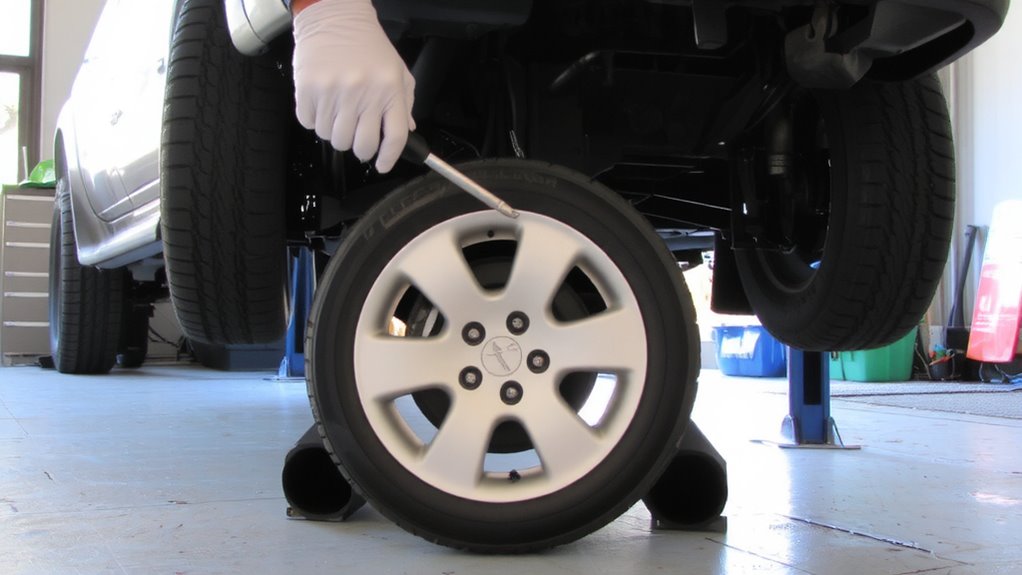
Tire wear isn’t random-it follows predictable patterns driven by weight distribution, drive type, and suspension design. Front tires on front-wheel-drive vehicles bear more load, accelerating tread depth loss. Uneven wear reduces grip and shortens tire life. Rotating your all-season tires every 5,000 to 7,500 miles guarantees even tread depth across all positions. This balanced wear helps maintain handling precision and extends wheel life. Proper tire alignment is critical-misaligned wheels cause feathering or camber wear, undermining rotation benefits. Tires with misalignment wear unevenly, reducing tread depth prematurely on one shoulder. Alloy wheels, while lightweight and strong, aren’t immune to damage from uneven forces. Maintaining correct rotation patterns-front-to-rear, side-to-side, or X-pattern-depends on tire type and drivetrain. Rotation balances stress, preserves tread depth uniformly, and supports maximum contact with the road.
When to Rotate: Ideal Mileage and Warning Signs
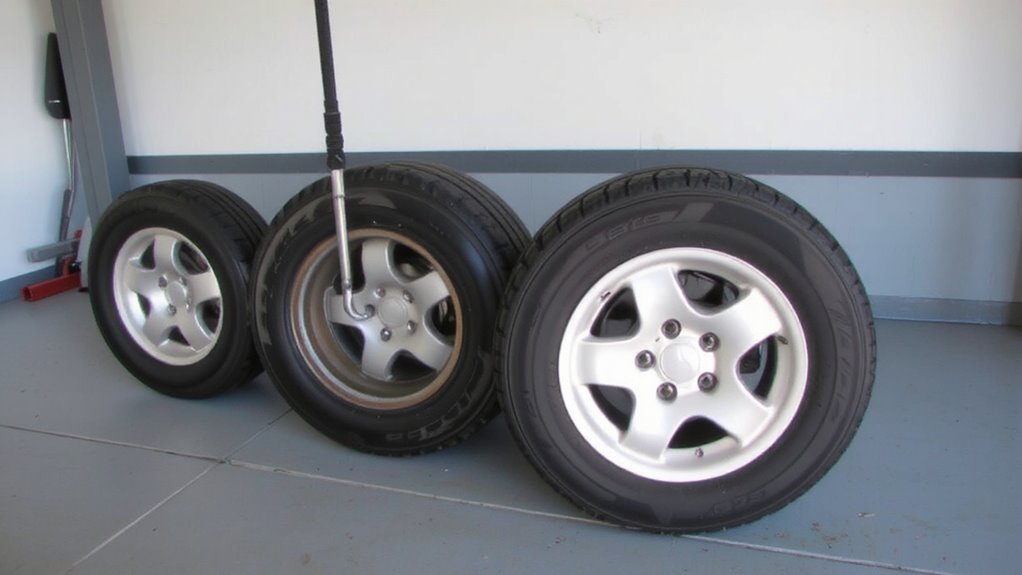
Every 5,000 to 7,500 miles is the sweet spot for rotating your all-season tires, aligning with most automakers’ recommendations and guaranteeing even tread wear across all four wheels. This interval maximizes tread life and maintains balanced handling. If you notice persistent tire vibration, especially at highway speeds, it’s a sign uneven wear has already begun. Vibration often indicates advanced tread depth variation, which rotation can help prevent. Check tread depth every few months using a gauge; legal minimums are 2/32″, but performance degrades well before then. Ideal tread depth for all-season tires starts at 10/32″ and declines with use. Uneven tread depth between axles affects traction, braking, and hydroplaning resistance. Rotating on schedule prevents this imbalance. Even if your vehicle shows no symptoms, sticking to the mileage interval guarantees consistent performance, particularly on alloy wheels where weight distribution is critical.
Pick the Right Pattern: FWD, RWD, and AWD Guidelines
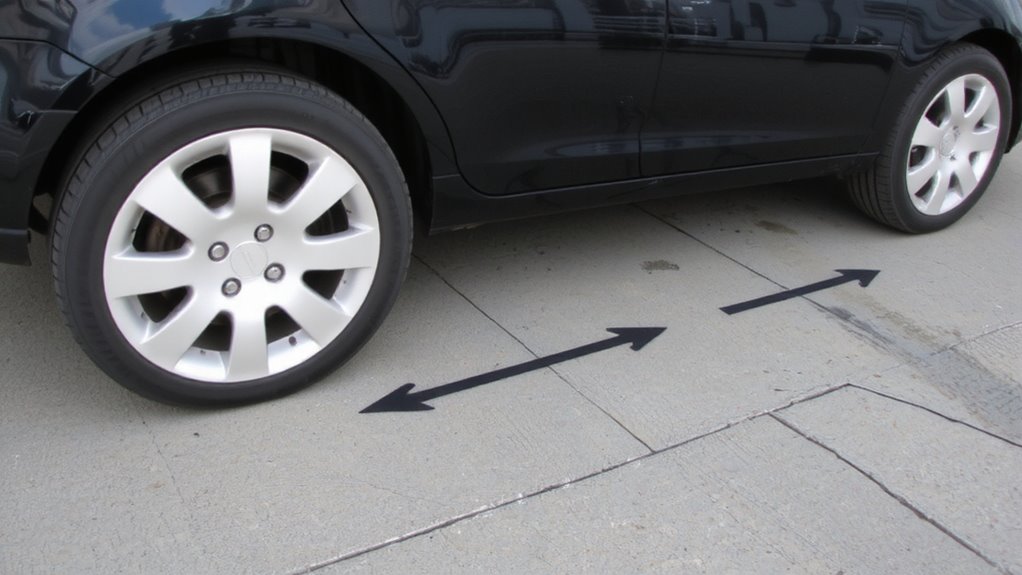
Balance is key when it comes to maximizing tire life and maintaining vehicle performance. For front-wheel-drive (FWD) vehicles, use the forward cross pattern: move front tires straight back and rear tires diagonally forward. This counters uneven tread depth wear caused by engine weight and driving forces. If your car is rear-wheel-drive (RWD), rotate front tires straight to the rear, and rear tires cross to the front. This accounts for rear traction stress and prolongs tread life. All-wheel-drive (AWD) vehicles require a rearward cross pattern-rears move straight forward, fronts cross to the rear-to maintain consistent grip. Always check tire pressure and tread depth before rotating. Tires should have no more than 2/32-inch difference in tread depth between axles. Proper rotation preserves handling and prevents premature replacement.
Tools and Safety Tips for Alloy Wheel Care
Alloy wheels demand careful handling-both during tire rotation and routine maintenance-to avoid damage and guarantee long-term performance. Always use torque-rated impact tools or a calibrated torque wrench set to the manufacturer’s specification, typically 80–100 ft-lbs, to prevent over-tightening and warping. Protect the alloy finish by avoiding steel-bristle brushes or abrasive cleaners that scratch the surface. Instead, use pH-balanced wheel cleaners and soft microfiber pads. Brake dust buildup is corrosive, especially to polished or painted finishes, so clean wheels frequently-every two weeks under normal driving conditions. Inspect lug nuts and studs for galling or cross-threading, replacing any damaged hardware immediately. Never heat-treat or hammer bent wheels; they compromise structural integrity. Store wheels flat in a dry, cool area to prevent distortion and oxidation. Proper care preserves both appearance and safety.
Step-by-Step Rotation for All-Season Tires
Now that you’ve made certain your alloy wheels are clean, undamaged, and properly maintained, you’re ready to rotate your all-season tires to maximize tread life and performance. Begin by lifting the vehicle with a floor jack and securing it on jack stands-never rely solely on the jack. Follow the manufacturer’s recommended rotation pattern: for most front-wheel-drive vehicles, use the forward cross pattern. Remove each tire and reinstall in the specified position. Torque lug nuts to the manufacturer’s spec, usually 80–100 ft-lbs, in a star pattern. After rotation, perform pressure checking: inflate tires to the PSI listed on the driver’s door jamb. Then schedule tire balancing to prevent vibration and uneven wear. Balanced tires improve fuel efficiency by up to 3% and extend tread life by distributing wear evenly. This process guarantees peak handling, traction, and safety in varied weather conditions.
On a final note
You extend tire life by rotating every 6,000 to 8,000 miles. Proper rotation prevents uneven tread wear and maintains traction. Use the correct pattern-front-to-rear for RWD, side-to-side for FWD, or X-pattern for AWD. Alloy wheels require torque specifications of 80–100 lb-ft to prevent warping. Always use a torque wrench. Balanced rotation guarantees peak handling, fuel efficiency, and safety in varied conditions.