How to Select Wheels for Lowered Vehicles Without Rubbing
You need exact fitment to avoid rubbing on a lowered car. Suspension and fender clearance shrink when lowered, so measure your current gaps at ride height. Choose wheels within 1 inch of stock width and use 18- to 20-inch diameters. Match offset precisely-typically +15mm to +25mm-and confirm bolt pattern and centerbore. Use safe tire stretch with reinforced sidewalls and set camber between -1.5 and -3.0 degrees. Clearance checks now prevent failures later. More details follow.
Notable Insights
- Measure fender and suspension clearance at ride height to determine maximum wheel and tire dimensions.
- Choose wheel width within 1 inch of stock to minimize rubbing in lowered fender wells.
- Select correct offset to align wheels properly within the fender without protruding or contacting suspension parts.
- Ensure bolt pattern, centerbore, and spoke design match your vehicle for secure fitment and brake clearance.
- Apply safe tire stretch and camber settings, avoiding excessive stretch or negative camber beyond -3.0 degrees.
Know Your Limits: Suspension and Fender Clearance First
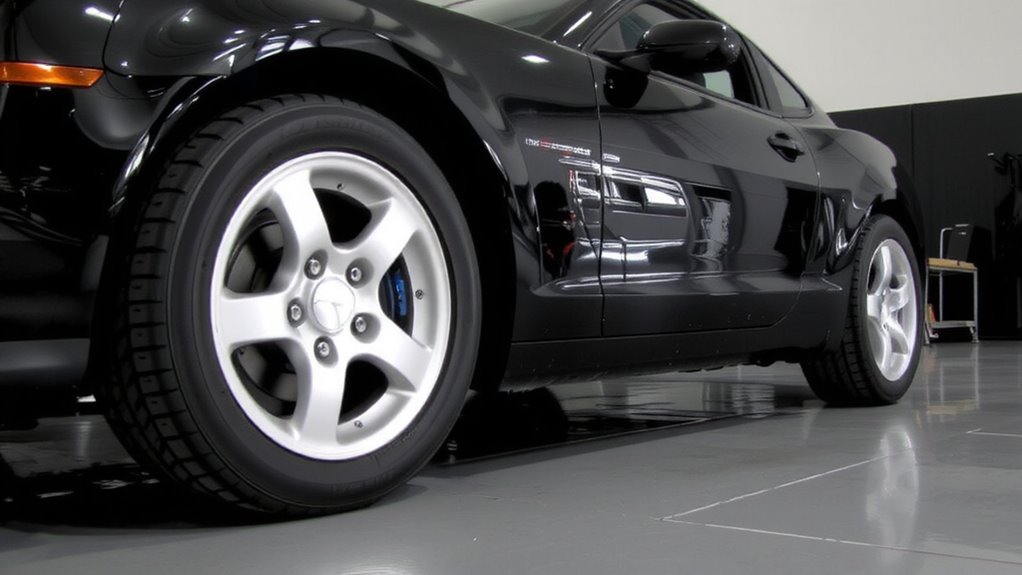
Start by understanding how much suspension travel and fender clearance you actually have-this determines everything. Your lowered stance reduces both, limiting wheel and tire options. Axle track affects stability and must stay within OEM or compatible aftermarket specs to avoid handling issues. Wider tracks increase grip but risk rubbing inside the fender wells. Brake clearance is equally critical-aftermarket wheels must accommodate larger calipers and rotors without interference. Check the inner barrel design and spoke profile; even a 3mm deficit causes fitment failure. Measure the spacing between the hub mounting surface and inner wheel edge to verify compatibility. Don’t assume fitment based on bolt pattern alone. Incorrect axle track or inadequate brake clearance leads to premature wear, vibration, or component damage. Always cross-reference specifications before purchasing. Your wheel’s structural clearance defines safe performance limits.
Measure Your Current Setup to Prevent Rub
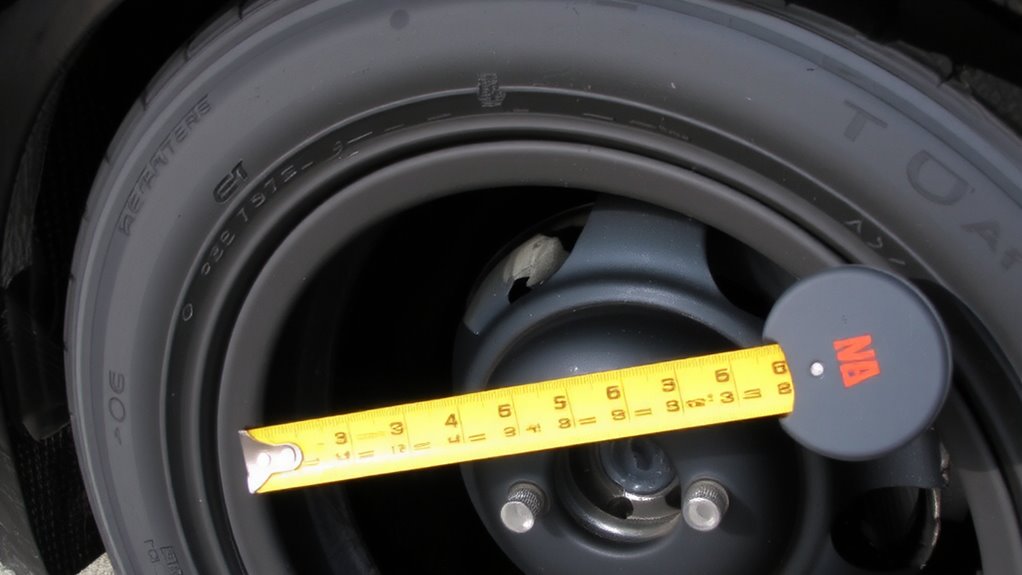
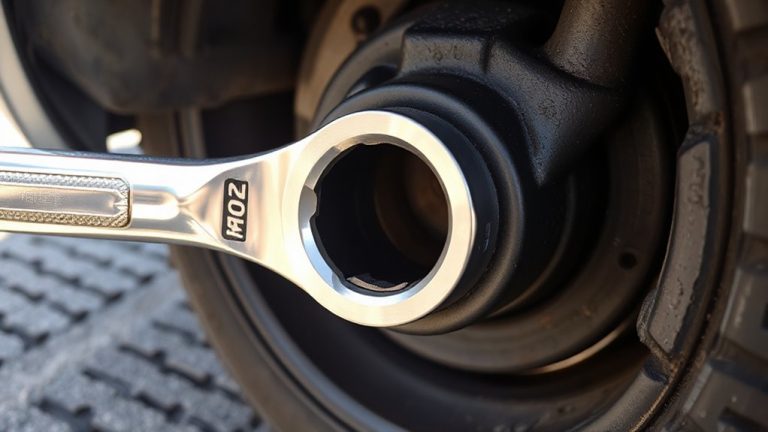
Precision begins with measurement-your existing wheel and tire package holds the key to a rub-free fit. Measure the gap between your current tires and the fender arches at ride height; this baseline determines how much you can lower without rubbing. Use a tape measure to record clearance at the front, rear, and top of the tire. Note your wheel’s width, offset, and tire dimensions exactly. Check brake clearance too-especially if upgrading calipers or rotors. Aftermarket brakes often require wheels with specific inner barrel designs to avoid interference. If you’re using fender flares, measure their added coverage to determine usable tire width. These flares extend your legal and physical fender line, but won’t fix clearance inside the wheel well. Document every measurement. This data guarantees your next setup performs safely and fits precisely-no guesswork.
Pick the Right Wheel Width and Diameter for a Slam
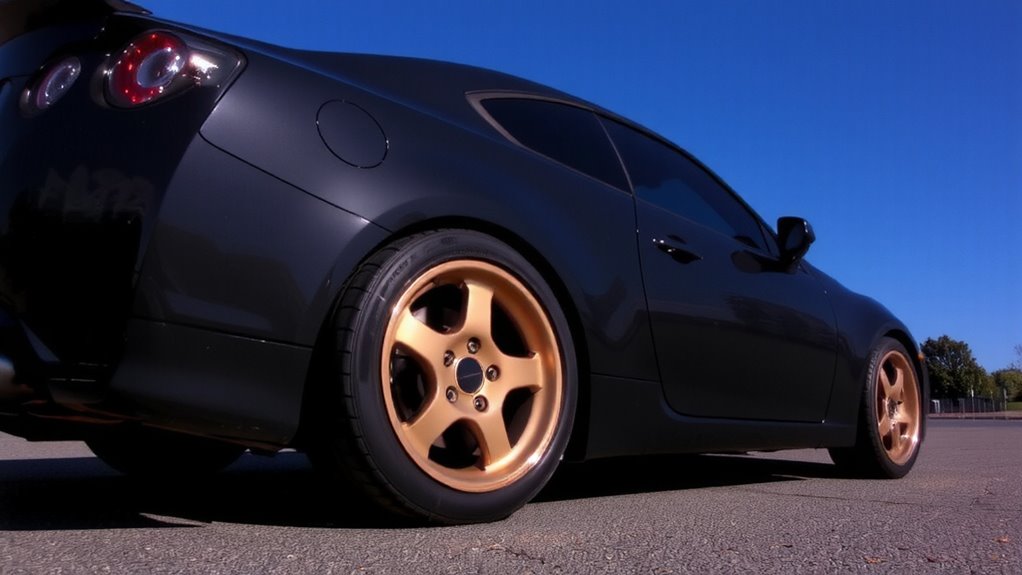
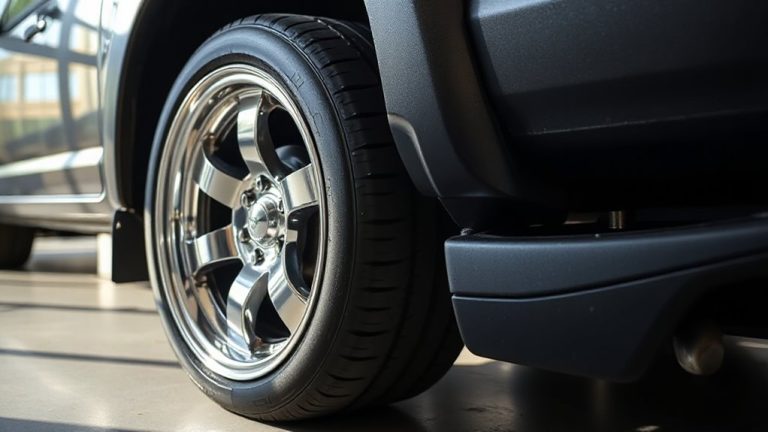
You’ve measured your current setup-now it’s time to use that data to choose wheel width and diameter that work with your lowered stance. Wider wheels fill fenders but risk rubbing; stay within 1 inch of stock width to minimize issues. A 18- to 20-inch diameter is ideal for slammed builds, balancing stance and clearance. Larger diameters reduce sidewall height, increasing steering response but transferring more road shock. Wheel aesthetics matter, but never sacrifice fitment for looks. Prioritize forged or flow-formed wheels for superior material strength-these handle stress better than cast alloys. A 9 to 10-inch width suits most low-profile tires, maintaining grip without straining suspension. Match diameter to brake size: at least 1-inch clearance between spokes and calipers. Incorrect sizing degrades handling. Use your measurements to guide choices. Precision guarantees fit, function, and long-term reliability.
Get Offset Right: No Guessing
Every millimeter of offset matters when your vehicle rides low. Getting it wrong means rubbing-right leads to smooth performance. You must match your wheel’s bolt pattern and centerbore size exactly to your hub. Mismatched specs cause vibration, unsafe fitment, or wheel failure. Use precise offset calculations based on your suspension drop and fender clearance. Don’t guess; use fitment data from reputable sources. Adding the right wheel spacers can fine-tune your offset and prevent rubbing without compromising safety.
| Wheel Diameter | Offset (mm) | Fitment Risk |
|---|---|---|
| 18×9.5 | +15 | Low |
| 18×10 | +12 | Medium |
| 19×10 | +18 | High |
| 19×11 | +10 | Medium |
| 20×10 | +20 | High |
Always verify bolt pattern compatibility (e.g., 5×112) and centerbore size (e.g., 66.6mm) before purchase. Precision guarantees clearance and safety.
Use Tire Stretch Without Sacrificing Safety
A properly stretched tire can enhance both the look and performance of a lowered vehicle, but it must be done within strict safety margins. You should never exceed the manufacturer’s recommended minimum width for your tire size. Stretching too far compromises tire sidewall integrity, increasing the risk of sidewall collapse or bead unseating. Always verify that the tire’s load rating isn’t negatively affected by excessive stretch-altering sidewall shape can reduce effective load rating impact. Use only tires with reinforced sidewalls and confirm they’re rated for your vehicle’s weight. A typical safe stretch allows 10–20mm of wheel width beyond the tire’s intended fitment, depending on construction. Check for uniform tread wear and avoid any bulging. When done correctly, stretch improves grip and reduces sidewall roll during cornering-like a stiffer sprung component-without sacrificing critical safety thresholds.
Adjust Camber for Flush Fitment
While achieving a flush wheel fitment often requires more than just the right wheel size, adjusting camber is one of the most effective ways to fine-tune clearance without rubbing. Camber geometry directly affects how your tires contact the road and interact with fender wells. Negative camber tilts the top of the wheel inward, reducing outer tire scrub during aggressive cornering and creating a flush stance. You’ll typically need -1.5 to -3.0 degrees of camber for a lowered car, depending on ride height and wheel offset. Always reference factory alignment specs before making adjustments. Excessive camber beyond recommended alignment specs accelerates inner tread wear and compromises straight-line grip. Use a digital camber gauge or visit a alignment shop for precision. Proper camber balances aesthetics, tire clearance, and handling. It’s not just about looks-it’s about optimizing suspension dynamics for both form and function.
Test Drive and Fine-Tune for Real-World Fit
How does your lowered car handle in the real world? Real-world conditions expose fitment flaws that static tests miss. You need alignment checks to confirm camber, toe, and caster are within spec. Load testing simulates normal driving-passengers, cargo, bumps-to reveal hidden rubbing. Always test at full compression and during aggressive cornering.
| Condition | Action Required |
|---|---|
| Full lock turn | Check inner fender clearance |
| Heavy cornering | Verify tire sidewall clearance |
| Speed bumps | Inspect camber arm contact |
| Loaded trunk | Perform load testing |
| Post-test alignment | Recheck alignment checks |
Even minor flex can cause rubbing. Use precise measurements-down to the millimeter-when evaluating gaps. Adjust camber or spacer thickness if needed. Fine-tuning guarantees your wheels stay flush without compromising function. Consistent validation leads to best performance and safety.
On a final note
You must prioritize clearance and geometry when choosing wheels for a lowered car. Measure fender gaps and suspension travel first-typically 1–2 inches of tire-to-fender clearance is safe. Select wheel widths matching your fender track; 8.5–10 inches is common for flush fitment. Use correct offset: +25 to +45 for most lowered sedans. Stretching tires beyond manufacturer specs risks failure. Camber adjustments--1.5 to -3.0 degrees-can aid fitment but accelerate wear.