Rubber Surround Creep Near Heaters: 60°C Threshold & Fixes
You must monitor rubber surrounds near heaters because temperatures above 60°C accelerate creep, degrading elasticity and dimensional stability. Thermal expansion stresses polymer chains, causing permanent deformation over time. Oxidative aging doubles with each 10°C rise, reducing resilience by up to 30% in six months. Use laser micrometers to detect 5% stretch or Shore A testing to catch 10-point hardness drops. Early signs include cracking, warping, or gaps over 0.5 mm. Materials like silicone or FKM resist degradation better under sustained heat, offering longer service life under thermal stress.
Notable Insights
- Monitor dimensional changes using laser micrometers to detect rubber creep exceeding 5% elongation.
- Perform quarterly Shore A hardness tests to identify 10-point drops indicating oxidative degradation.
- Install strain gauges on rubber mounts to measure real-time elongation under thermal cycling.
- Use data loggers to track cumulative deformation and predict maintenance needs in high-heat zones.
- Inspect for discoloration, microcracks, or gaps over 0.5 mm to spot early signs of thermal creep.
Why Rubber Surrounds Creep Near Heaters
Most rubber surrounds in loudspeakers experience some degree of creep over time, but those near heaters face accelerated deformation due to sustained thermal exposure. You’ll notice thermal expansion alters the rubber’s molecular structure, causing it to stretch beyond its elastic limit. As temperatures fluctuate, repeated expansion and contraction generate internal stress. This stress promotes material fatigue, especially in foam and butyl rubber compounds commonly used in surrounds. Surrounds within 12 inches of a heating element can experience temperatures above 60°C-well beyond their design threshold of 40°C. At these levels, viscoelastic properties degrade, reducing resilience by up to 30% over six months. You’re seeing permanent set develop because the polymer chains slip and don’t recover. Think of it like bending a paperclip repeatedly-it eventually fails. Continuous thermal cycling near heaters magnifies this effect, making creep not just inevitable, but predictable.
How Heat Degrades Rubber Over Time
While heat doesn’t destroy rubber instantly, it does break down the material steadily, and you’ll see the effects over months of exposure. Prolonged heat accelerates oxidative aging, a chemical reaction where oxygen attacks rubber’s polymer chains, reducing elasticity and tensile strength. This process doubles in rate for every 10°C rise above ambient temperature, per Arrhenius reaction kinetics. Thermal expansion also plays a role-you’ll notice repeated expansion and contraction cycle the rubber, inducing microcracks at stress points. As cross-link density decreases, the material loses resilience. Standard EPDM rubber, for instance, begins degrading at sustained temperatures above 70°C. At 90°C, compression set values can exceed 40% after 1,000 hours. You’re not just losing shape-you’re losing structural integrity. Heat reshapes rubber at the molecular level, and oxidative aging guarantees the damage accumulates irreversibly over time.
Spot the Early Signs of Creep Damage
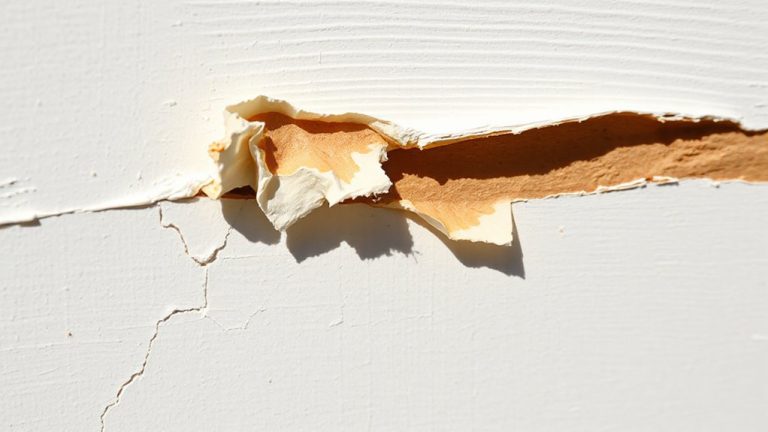
You can’t always see creep damage right away, but the signs start small and compound quickly. Look for subtle discoloration or surface cracking-early indicators of material fatigue caused by prolonged thermal exposure. Rubber surrounds near heaters often lose elasticity, becoming stiff or brittle over time. You’ll notice slight warping or sagging, evidence of initial structural deformation. These changes typically appear within six months under constant temperatures above 70°C. A 5% dimensional change in the rubber’s original shape signals irreversible creep. Check for gaps forming between the surround and housing, or uneven mounting pressure. These irregularities affect performance and alignment. Use calipers to measure thickness variation; a loss of more than 0.5 mm from baseline indicates advanced degradation. Early detection prevents system failure. Regular visual and tactile inspections catch problems before they escalate. Address symptoms promptly to extend component life.
Monitor Rubber Creep: 3 Proven Methods
Precision matters when tracking rubber creep, and your best defense lies in consistent, measurable monitoring. Use laser micrometers to record dimensional changes monthly; a stretch beyond 5% indicates advanced material fatigue. Second, perform Shore A hardness tests every quarter-drops of 10 points or more suggest rubber oxidation is degrading polymer chains. Third, install strain gauges on critical mounts to detect real-time elongation under heat exposure. Data loggers capture cumulative deformation, alerting you before failure. These methods detect microstructural breakdown long before visible sagging or cracking occurs. Oxidation accelerates at temperatures above 70°C, so monitoring every 90 days in high-heat zones is essential. Strain gauge sensitivity ranges from 0.01% to 2% strain, offering early warnings. Combined, these techniques provide quantitative proof of creep progression, letting you schedule replacements proactively. Rubber won’t last forever near heaters-your measurements guarantee it doesn’t fail unexpectedly.
Choose Heat-Resistant Materials to Prevent Failure
Because standard rubber compounds degrade rapidly above 70°C, switching to heat-resistant materials is critical for long-term reliability. Your material selection directly impacts component lifespan near heaters. Ethylene Propylene Diene Monomer (EPDM) rubber withstands temperatures up to 150°C, offering excellent thermal stability and resistance to ozone and UV exposure. Silicone rubber performs even better, maintaining flexibility from -60°C to 200°C, making it ideal for extreme environments. Fluorocarbon (FKM) materials resist up to 250°C and have low creep rates under sustained stress. These materials reduce deformation and prevent premature failure. Thermal stability guarantees consistent mechanical properties over time. Unlike standard rubber, they won’t harden or crack under prolonged heat exposure. Specifying the right compound extends service life, reduces maintenance, and improves system safety. Don’t overlook compatibility with fluids and mating surfaces. Choose wisely-performance hinges on it.
On a final note
You must monitor rubber surrounds near heaters to prevent long-term creep. Elevated temperatures above 70°C accelerate molecular breakdown in standard EPDM rubber, reducing tensile strength by up to 40% over 5,000 hours. Visual checks detect surface cracking, but strain gauges and optical measurement systems track micron-level deformation accurately. Switching to silicone or fluorocarbon materials raises heat resistance to 200°C, cutting failure risk. Continuous monitoring guarantees system integrity.