How to Store Classic Cars With Silica Gel in Interior Compartments
Keep your classic car’s interior safe by placing silica gel in key areas like under seats, in door pockets, and the glove compartment. Use at least four 100g packs in sedans-one per cabin quadrant-to maintain humidity below 50%. Opt for rechargeable 500g canisters that absorb 500–700 ml of moisture per cycle and regenerate up to 10,000 times at 250°F. Position them where airflow is limited, and seal the storage space to minimize moisture entry. Monitor with a digital hygrometer and recharge packs every 2–3 hours at 200°F when color indicators shift. Proper placement and maintenance guarantee long-term protection against mold and material degradation, with advanced strategies available to further optimize results.
Notable Insights
- Place silica gel packs under seats, in door pockets, and the glove compartment to target moisture-prone areas.
- Use at least four 100g breathable sachets in sedans, positioning one in each cabin quadrant.
- Opt for rechargeable silica gel to maintain 30–40% humidity and reduce long-term costs.
- Recharge saturated packs at 200°F for 2–3 hours, avoiding overheating beyond 250°F to prevent damage.
- Seal the car’s interior and monitor with a hygrometer to keep humidity below 50% during storage.
Why Moisture Ruins Classic Car Interiors
Why does moisture wreak havoc on classic car interiors? Because prolonged exposure to humidity damages materials at a molecular level. You see, when relative humidity exceeds 60%, it triggers leather cracking. This happens as water molecules break down collagen fibers, reducing tensile strength by up to 30%. Constant expansion and contraction from moisture absorption and drying weaken the hide, leading to permanent fissures. Simultaneously, mold growth begins within 48 hours in damp, dark spaces. Mold spores-ubiquitous in ambient air-germinate at 70% RH or higher, feeding on organic residues and upholstery adhesives. A single square inch can harbor over 10,000 spores, degrading surfaces and emitting musty odors. These biological colonies compromise both aesthetics and air quality. Without moisture control, vinyl becomes brittle and carpets retain mildew. Silica gel, with its 35% moisture retention capacity by weight, acts as a sacrificial hygroscopic buffer, preserving interior integrity during storage.
Where to Place Silica Gel for Maximum Effect
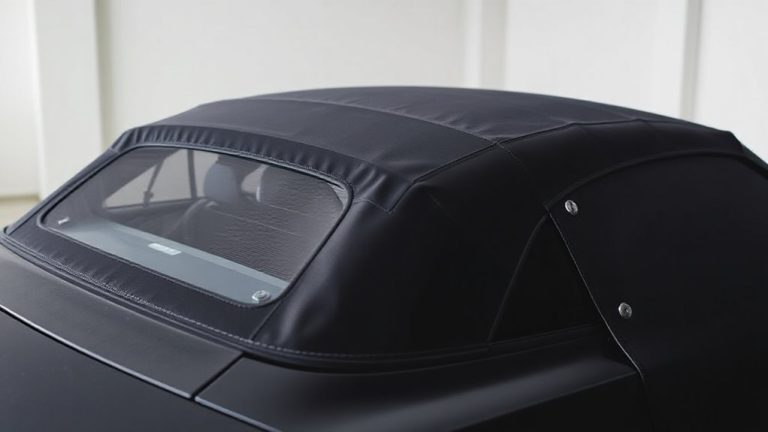
Your classic car’s storage environment determines how effectively silica gel performs. Position silica gel packs in areas with consistent airflow direction to maximize moisture absorption. Place them under seats, inside door pockets, and in the glove compartment-spaces where humidity accumulates and airflow is restricted. Guarantee material compatibility by avoiding direct contact with leather or painted surfaces; use breathable fabric sachets or vented plastic housings. For sedans, deploy at least four 100g packs-one per quadrant of the cabin. In convertibles, add extra units near the folded roof mechanism, a high-risk zone for condensation. Mount units at or below cabin level, as cold air and moisture sink. Avoid enclosures without ventilation, as trapped air reduces silica gel efficiency. Proper placement maintains dew points below 40%, preventing mold and corrosion. Strategic positioning guarantees uniform dryness across all interior materials.
Choose Rechargeable Silica Gel for Long-Term Use
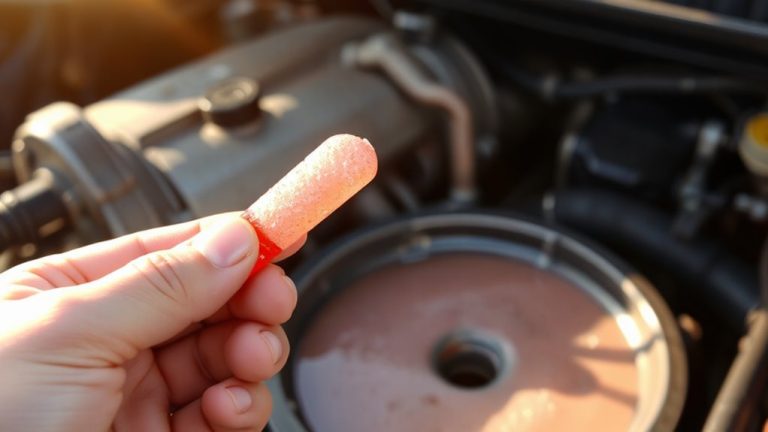
A single reusable silica gel canister often outperforms dozens of disposable packs over five years of storage. You’ll achieve better cost efficiency with a rechargeable unit, which can regenerate up to 10,000 times when heated to 250°F. Each recharge cycle restores 95%+ of its moisture-absorbing capacity, maintaining a stable 30–40% relative humidity inside enclosed spaces. Standard disposable packs last only until saturation, typically 30–60 days in a 200-liter compartment. By contrast, a 500-gram reusable canister manages 500–700 ml of absorbed moisture per cycle. This dramatically reduces environmental impact, cutting landfill waste and plastic packaging. Rechargeable models use food-grade silica beads in durable polypropylene casings, resistant to UV and chemical degradation. You’ll save approximately $150 over a decade compared to buying disposables. Choose a canister with a humidity indicator card for real-time monitoring.
When to Recharge or Replace Your Gel Packs
Silica gel canisters give you reliable moisture control, but only when maintained properly. You must perform regular pack inspection to catch gel saturation early. Most rechargeable silica gels change color when saturated-typically from blue to pink or orange to green-indicating it’s time for regeneration. If your packs no longer change color or lose 30% or more of their moisture capacity, replace them. Saturation occurs faster in high-humidity environments-especially above 70% RH. Recharge packs in an oven at 200°F (93°C) for 2–3 hours, ensuring complete moisture release. Overheating beyond 250°F damages the silica beads. Check packs every 30–45 days during storage. Units with humidity indicators simplify monitoring. Replacing saturated packs promptly maintains a dry interior and prevents condensation damage. Don’t wait for visible moisture. Preventive maintenance beats component failure.
Keep Interiors Dry With Silica Gel and Sealed Storage
Every cubic foot of air inside a classic car’s interior holds the potential to introduce damaging moisture over time. Sealing the storage environment while using silica gel prevents humidity buildup caused by climate fluctuations. Close all doors, windows, and ventilation gaps to limit air exchange. Use desiccant packs rated for at least 50 cubic feet of space, placing them in the cabin, trunk, and under seats. Regularly monitor humidity levels with a digital hygrometer to maintain levels below 50%.
| Location | Pack Quantity | Coverage |
|---|---|---|
| Cabin | 2 | 30 cu ft |
| Trunk | 1 | 15 cu ft |
| Under Seats | 1 | 15 cu ft |
| Glove Compartment | 1 | 10 cu ft |
Proper sealing combined with strategic gel placement guarantees long-term interior protection.
On a final note
You protect your classic car’s interior by controlling moisture with silica gel. Place packs in enclosed spaces like glove boxes and under seats. Use rechargeable silica gel canisters, such as those with 30–50g capacity, which last up to 12 months. Recharge them at 120°C (250°F) for 2–3 hours. Properly maintained, they maintain humidity below 40% RH. Combine with sealed storage for best protection.