How to Upgrade From Steel to Alloy Wheels Without Voiding Warranty
Upgrading to alloy wheels won’t void your warranty if you follow the rules. Match OEM specs: use the exact diameter, width, bolt pattern, and offset. Make certain load and speed ratings meet or exceed factory standards-check your door jamb sticker. Install with a torque wrench at 80–100 lb-ft to prevent lug damage. Save all receipts and alignment records. Improper fitment or aftermarket modifications can trigger warranty denials. There’s more to know about maintaining full protection.
Notable Insights
- Upgrading to alloy wheels does not void warranty if the installation follows OEM specifications and doesn’t cause mechanical damage.
- Match OEM bolt pattern, offset, diameter, and hub bore to ensure compatibility and maintain warranty protection.
- Use wheels with load and speed ratings equal to or higher than factory specs to preserve safety and warranty eligibility.
- Have wheels professionally installed with proper torque settings to prevent issues that could void coverage.
- Keep installation records and receipts to prove compliance if warranty claims are disputed due to modifications.
Will Upgrading to Alloy Wheels Void My Warranty?
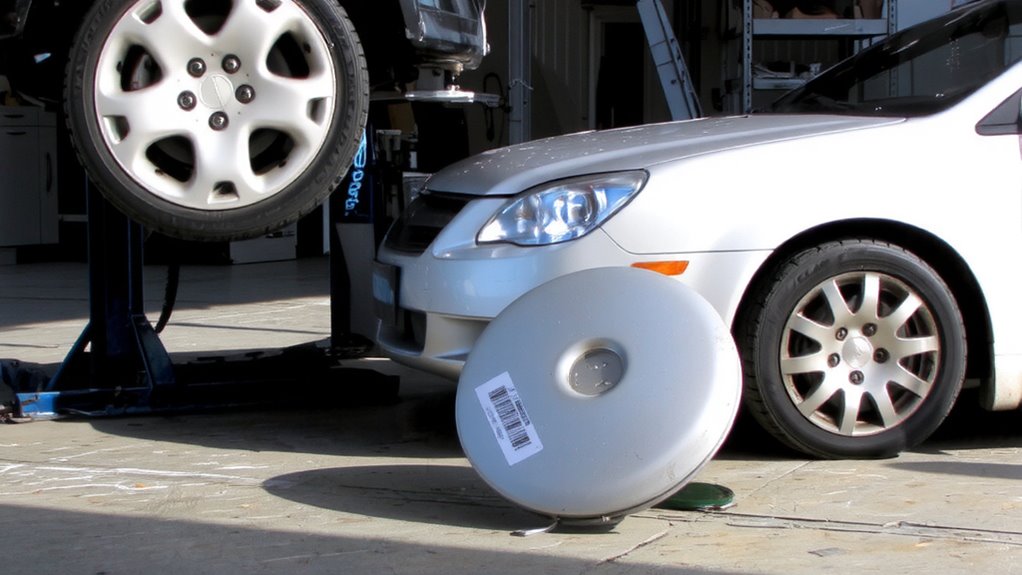
Could modifying your vehicle’s wheels really jeopardize your warranty? Generally, no-upgrading to alloy wheels won’t automatically void your warranty. Federal law, specifically the Magnuson-Moss Warranty Act, prohibits manufacturers from denying warranty coverage just because aftermarket parts are installed-unless those parts directly cause the failure. Warranty coverage applies to defects unrelated to the modification. Manufacturer policies vary, but most recognize that wheel upgrades don’t impact engine, transmission, or electrical systems. As long as the alloy wheels meet load ratings, hub bore specifications, and torque requirements, they’re considered a cosmetic upgrade. The key is ensuring proper fitment and installation quality. Damage from improperly mounted wheels may not be covered. Always retain documentation proving professional installation. Your warranty remains intact for components unaffected by the change-just don’t expect coverage for issues stemming from poor aftermarket choices.
Check Your OEM Size, Bolt Pattern, and Offset
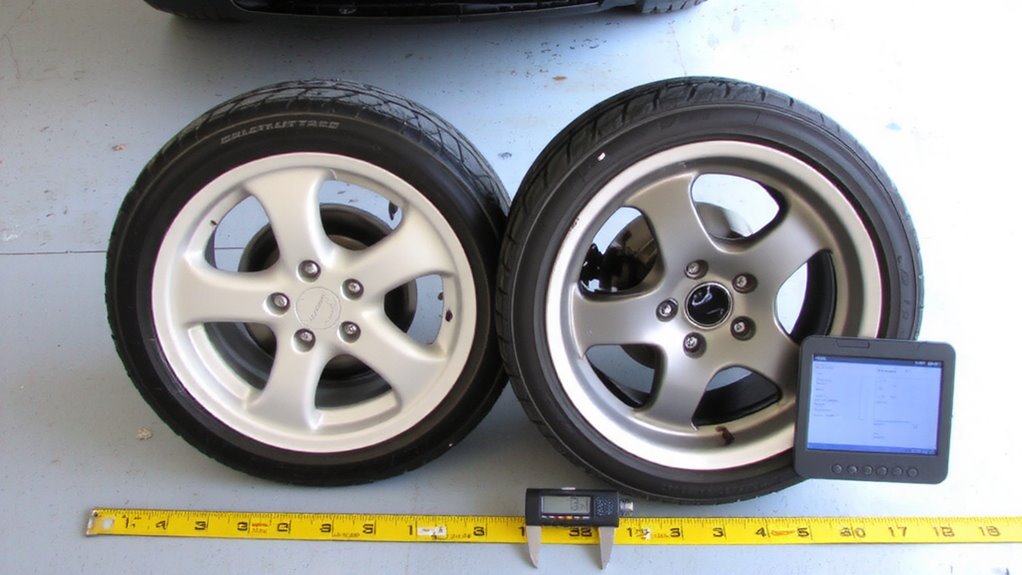
While upgrading to alloy wheels can enhance both performance and aesthetics, getting the fitment right starts with matching your vehicle’s OEM specifications. Begin by confirming your OEM wheel size, bolt pattern, and offset-these values guarantee proper installation and function. The bolt pattern, measured as the number of lug holes and the diameter of the circle they form, must match exactly. A mismatch prevents secure mounting. Offset, the distance between the wheel’s mounting surface and its centerline, affects handling and fender clearance. Incorrect offset can cause rubbing or reduce stability. Wheel size impacts tire clearance and brake compatibility. Larger or wider wheels may interfere with suspension or brake components. Always verify that the new wheel’s inside diameter and spoke design allow adequate space around the calipers. Matching OEM specs maintains safety, alignment, and system integrity. Many pre-assembled wheel and tire packages are designed to match OEM specifications for hassle-free upgrades.
Pick Alloy Wheels That Match OEM Specs Exactly
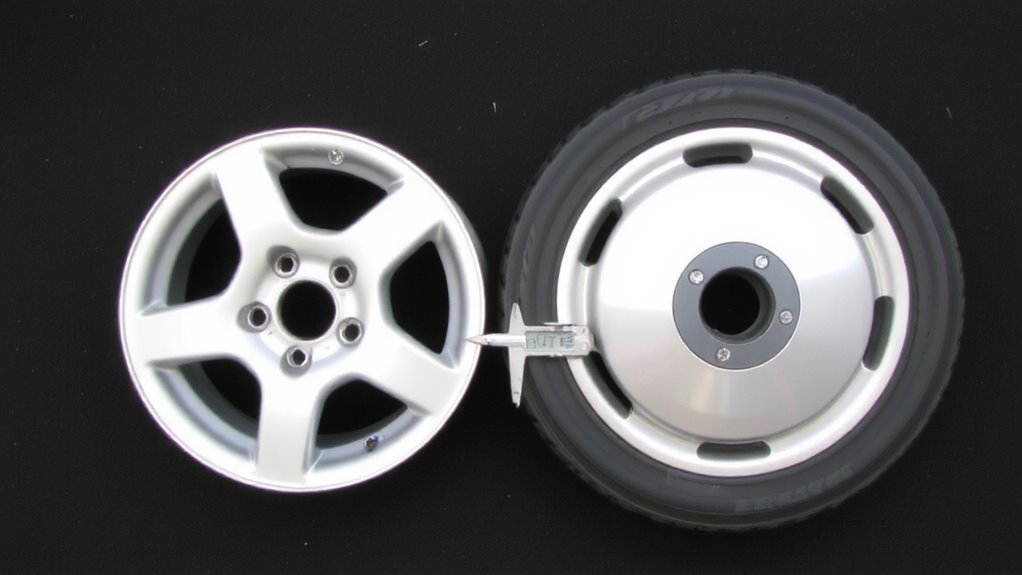
One surefire way to upgrade your vehicle safely is to choose alloy wheels that match your OEM specifications exactly. This guarantees compatibility and preserves your warranty. Match the OEM diameter, width, and bolt pattern precisely. Your new wheels must also maintain the factory tire width to prevent speedometer errors and maintain traction control accuracy. Wheel color should complement factory specs if you want a seamless, OEM+ appearance. Incorrect offset or backspacing alters handling and causes rubbing. Stick to OEM-rated load and hub bore dimensions. Even visual upgrades need engineering precision-treat this like a mechanical fit, not just a style choice. Using OEM-matched alloys keeps suspension, ABS, and stability systems functioning correctly. Think of it as a direct swap with better materials-not modified, just upgraded. Stick to specs, and your ride stays safe, legal, and warranty-protected.
Don’t Skimp on Load and Speed Ratings
You matched your alloy wheels to OEM specs-now don’t undermine that precision by cutting corners on load and speed ratings. Load capacity isn’t just a number-it’s the maximum weight your wheels safely support. Every vehicle has a minimum load index, typically listed in the door jamb or owner’s manual. Installing wheels below this index risks structural failure. Speed limits are equally critical. The speed rating, like “H” (130 mph) or “V” (149 mph), must meet or exceed your car’s top speed capability. Even if you don’t drive fast, sudden maneuvers or highway cruising demand compliance. Underrated wheels can overheat, deform, or fail. Manufacturers set these standards for safety and performance-not suggestions. Match or exceed your OEM load capacity and speed limits exactly. This guarantees durability, maintains warranty eligibility, and keeps your upgrades both legal and safe under real-world conditions.
Don’t Modify Suspension or Camber for Fitment
If your goal is to maintain warranty coverage and guarantee long-term reliability, altering suspension geometry or adjusting camber settings for wheel fitment isn’t worth the risk. Automakers design suspension systems with precise alignment specifications. Deviating from factory camber angles accelerates uneven tire wear and compromises handling. Even slight changes affect tire pressure distribution across the tread, reducing grip and fuel efficiency. It can also disrupt wheel balance, increasing vibration at highway speeds. These modifications may trigger dealer inspections that flag non-compliance, jeopardizing warranty protection. Stick to OEM-recommended fitment specs-measured in millimeters for offset and degrees for camber. Properly sized wheels mounted with quality tires maintain correct suspension kinematics. Wheel balance must be within 0.5 ounce tolerance to prevent premature bearing wear. Avoid aftermarket spacers or camber kits. They alter load paths and stress components not designed for extra strain. Stay within factory parameters-your warranty depends on it.
Use a Trusted Mechanic for Installation
Choosing the right mechanic for alloy wheel installation can make the difference between a seamless upgrade and hidden long-term damage. A trusted professional guarantees proper fitment and avoids compromising your warranty. They perform a professional inspection of your hub, studs, and braking system before installation. Incorrectly sized wheels or off-center bores can cause vibrations, uneven wear, or failure. The mechanic must use a torque wrench for precise torque calibration-typically 80–100 lb-ft, depending on your vehicle. Over-tightening stretches lug bolts; under-tightening risks wheel detachment. Alloy wheels are more sensitive than steel to improper handling. A qualified technician follows OEM torque patterns and recalibrates after 50 miles. They know exact specifications for your make and model. Proper installation protects bearings, rotors, and suspension. It also maintains factory safety standards and keeps modifications warranty-compliant. Trust matters.
Save Receipts and Watch for Warning Signs
Proper installation by a qualified mechanic sets the foundation, but safeguarding your warranty requires ongoing diligence. Save all receipts as part of your warranty documentation-proof of professional work protects your coverage. Keep records of alignment specs, torque settings (typically 80–100 lb-ft for most alloys), and hardware used. Monitor tire pressure monthly; incorrect pressure causes uneven wear and can trigger warranty denials. Use your vehicle’s recommended PSI, usually listed on the driver’s door jamb. Sudden vibration, pulling to one side, or rapid tread wear are red flags. These may indicate wheel imbalance or suspension strain from improper fitment. Address them immediately. Manufacturers track failure patterns. If recurring issues stem from aftermarket parts, they can void coverage. Stay proactive-document everything, maintain factory specs, and treat warning signs as urgent diagnostics. That’s how you protect both performance and warranty. Upgrading with high-quality best wheel spacers ensures proper clearance and reduces strain on hub components.
On a final note
You can upgrade safely without voiding your warranty. Match OEM specs exactly: size, bolt pattern (e.g., 5×112), and offset (e.g., +45 mm). Use wheels rated for your vehicle’s load (e.g., 1,500 lbs per wheel) and speed (e.g., Y-rated for 186 mph). Avoid suspension changes. Install with a calibrated torque wrench (88–100 lb-ft typical). Keep receipts. Proper fitment preserves warranty and guarantees safety.