Drainage Slope Guidelines for Preventing Water Pooling Beneath Stored Vehicles
You need a 1% to 2% drainage slope-1/8 to 1/4 inch drop per foot-to prevent water pooling under stored vehicles. This gradient guarantees runoff flows away quickly, reducing corrosion risk to frames, tanks, and brake lines. Use a 4-foot level on a straight 2×4 to verify. Install 4–6 inches of compacted ¾-inch crushed gravel over geotextile fabric for maximum infiltration and stability. Maintaining this slope protects vehicle integrity and extends service life with proper long-term planning.
Notable Insights
- Maintain a 1% to 2% slope (1/8″ to 1/4″ per foot) to ensure water drains away from stored vehicles.
- Use compacted gravel, 4–6 inches deep, over geotextile fabric to enhance drainage and prevent soil erosion.
- Measure slope accuracy with a 4-foot level on a straight 2×4 to verify consistent grading.
- Inspect drainage gradients every six months and repair low spots or erosion promptly.
- Avoid flat or reverse slopes, as pooled water accelerates rust on frames, tanks, and brake lines.
Why Your Vehicle Needs a Proper Drainage Slope
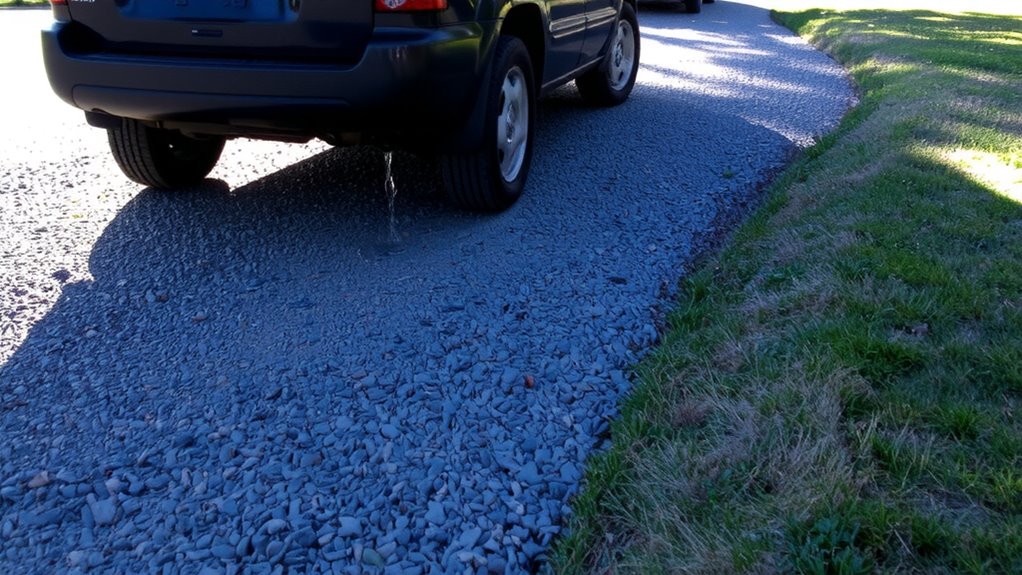
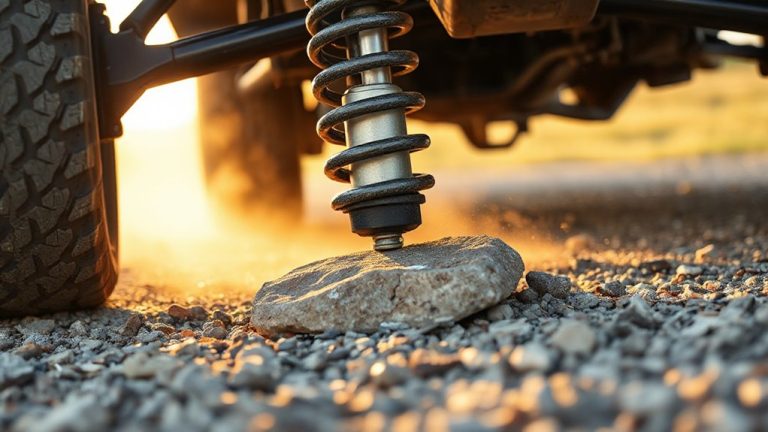
Ever wonder why water pooling near your stored vehicle spells trouble? Standing water accelerates vehicle corrosion by promoting rust on undercarriage components like frames, fuel tanks, and brake lines. Moisture trapped against metal surfaces initiates electrochemical reactions, degrading structural integrity over time. Prolonged exposure increases repair costs and shortens vehicle lifespan. Additionally, pooled water seeps into the ground, causing foundation erosion beneath storage surfaces. This undermines stability, especially on soil or gravel pads, leading to uneven settling that misaligns chassis and suspension. A proper drainage slope prevents accumulation, directing runoff away efficiently. Without it, even minor rainfall collects, creating persistent moisture zones. You need consistent grading to mitigate both material decay and ground instability. Controlling water flow isn’t just about surface dryness-it’s about preserving your vehicle’s structural health and the load-bearing capacity of its storage base. Protect against both vehicle corrosion and foundation erosion with proactive grading.
The Right Drainage Slope: 1% to 2% for Vehicles
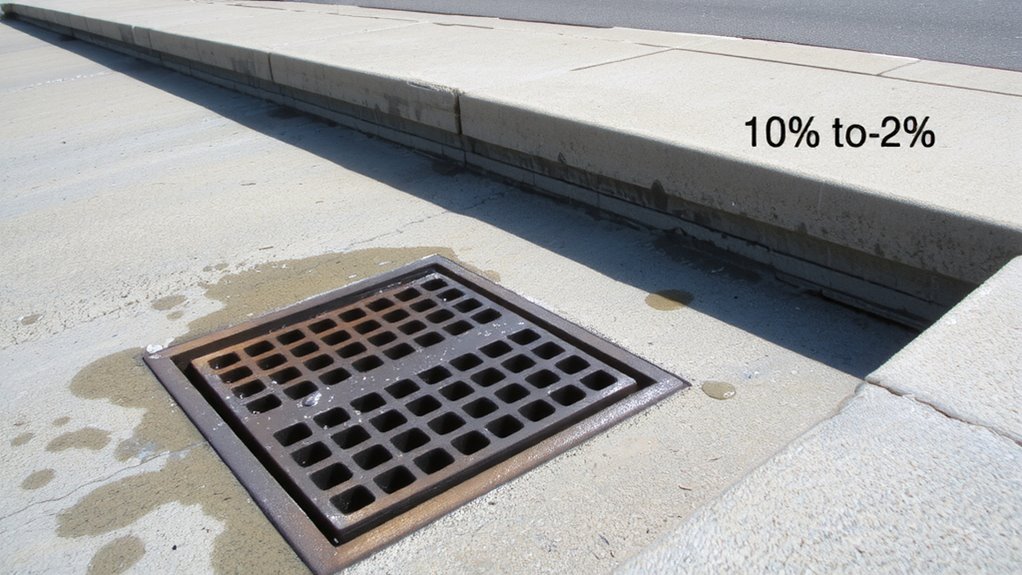
A 1% to 2% slope is the standard for effective drainage around stored vehicles. This slight incline guarantees water flows away efficiently, preventing water accumulation beneath the vehicle. Without it, rainwater and runoff collect, creating pooling that promotes rust and corrosion on undercarriages. Over time, prolonged exposure weakens structural components and degrades finishes. The 1% minimum-equivalent to a 1/8-inch drop per foot-provides adequate runoff without making the surface feel uneven. At 2%, or 1/4 inch per foot, drainage improves further, especially in high-rainfall areas. Proper grading within this range also reduces hydrostatic pressure under slabs, minimizing concrete cracking. Cracks develop when water saturates the substrate, freezes, and expands. A correctly sloped surface mitigates freeze-thaw damage and maintains pavement integrity. Always guarantee the fall direction leads to a drainage point. This simple measure protects both vehicle and foundation.
How to Measure and Level Your Parking Surface
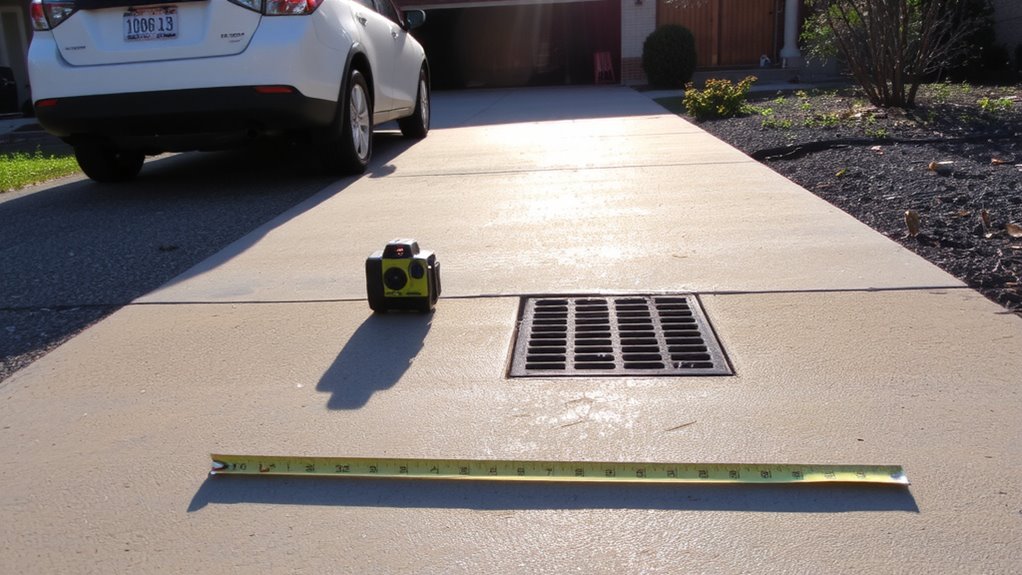
When preparing a surface for stored vehicles, start by verifying the slope with a reliable level and measuring tool. Verify your surface has a 1% to 2% grade to prevent pooling. Use a four-foot bubble level on a straight 2×4, raising one end until level; every 1/8 inch of lift per foot equals about 1% slope. Adjust the grade as needed with fill material. Achieve proper soil compaction-95% Proctor density is ideal-to prevent settling. Add 4 to 6 inches of compacted gravel for durability and drainage. Maintain consistent gravel depth across the area to support load distribution. Check low spots after rainfall; they indicate poor compaction or insufficient slope.
| Measurement | Recommended Value |
|---|---|
| Drainage slope | 1%–2% |
| Gravel depth | 4–6 in |
| Soil compaction | ≥95% Proctor |
| Level tool | 4-ft bubble |
| Slope check interval | Every 10 ft |
Best Surfaces for Drainage Slope Performance
Performance starts with the right surface material, and gravel is your best bet for effective drainage on a 1%–2% slope. Gravel surfaces, composed of ¾-inch crushed stone with angular edges, lock together to stabilize the grade while allowing water to infiltrate at rates exceeding 20 inches per hour. This permeability prevents pooling beneath stored vehicles. A 6-inch compacted base layer over geotextile fabric guarantees load support and inhibits soil migration. You’ll need edge restraints to prevent lateral displacement over time. In contrast, concrete finishes offer durability but require precise slope grading during pour. Smooth broom finishes on concrete provide slip resistance, yet any cracking or settlement can disrupt drainage. Impervious concrete forces runoff to follow the surface plane exactly-so minor slope deviations cause ponding. While concrete finishes suit high-traffic zones, gravel surfaces deliver superior, maintenance-friendly drainage performance on modest slopes where water management is critical.
How to Maintain Your Drainage Slope Over Time
Keep your drainage slope working as intended by scheduling regular inspections and prompt corrections. Check the slope gradient every six months using a level and straightedge-maintain a minimum 2% incline (1/4 inch per foot) to guarantee proper runoff. Address erosion control immediately; replace compacted or displaced soil to preserve slope integrity. Install riprap or geotextile fabric in high-flow areas to prevent washouts and stabilize the surface. Practice routine vegetation management-remove weeds, grass, or tree roots that compromise drainage performance. Overgrown roots can uplift pavement, while dense foliage impedes water flow. Trim plants within 3 feet of the slope’s edge to reduce organic debris accumulation. Use mulch barriers to limit soil displacement during heavy rain. Re-grade as needed to restore original contour specifications. Consistent maintenance prevents pooling beneath stored vehicles, extending both surface life and undercarriage protection.
On a final note
You need a 1% to 2% drainage slope under stored vehicles to prevent water pooling. This angle-equivalent to a 1/8- to 1/4-inch drop per foot-ensures efficient runoff without compromising stability. Use a level and tape measure to verify gradient accuracy across paved or gravel surfaces. Maintain this slope by inspecting for erosion, settling, or debris buildup annually. Proper grading preserves vehicle integrity like a foundation protects a house.