Maintaining Clean Work Area When Handling Open Brake Fluid Containers to Limit Moisture
Keep your work area dry and climate-controlled when handling open brake fluid. Humidity above 50% accelerates moisture absorption, and brake fluid starts pulling in water within 15 minutes of air exposure. Use only clean, dedicated tools wiped with isopropyl alcohol to prevent contamination. Reseal containers immediately with factory-approved caps to maintain integrity. Store in cool, dark places below 77°F. Unsealed fluid can absorb over 2% water in 24 hours. You’ll discover how small moisture increases drastically lower boiling performance next.
Notable Insights
- Work in a dry, climate-controlled area with humidity below 50% to minimize moisture absorption from the air.
- Seal brake fluid containers immediately after use with the original cap to maintain an airtight closure.
- Use only clean, dedicated tools wiped with isopropyl alcohol to prevent contamination during handling.
- Store brake fluid in a cool, dark cabinet away from concrete floors and UV light exposure.
- Limit open container time to less than 15 minutes to reduce immediate moisture uptake from the environment.
How Fast Does Brake Fluid Absorb Moisture?
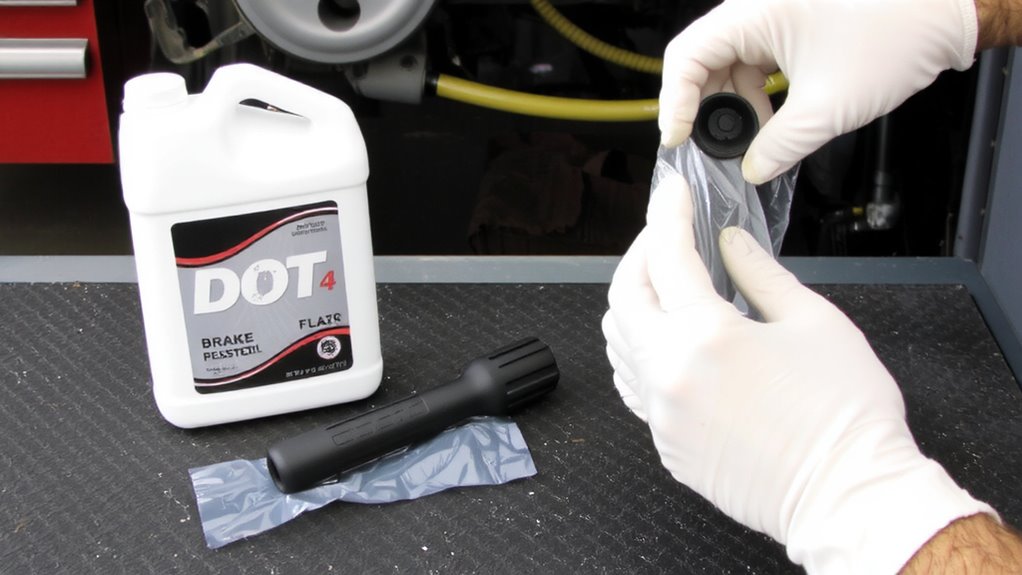
How quickly does brake fluid start absorbing moisture once it’s exposed to air? Immediately. Brake fluid’s hygroscopic nature means it attracts water vapor from the atmosphere the moment the container is opened. Within just 15 minutes of exposure time, measurable moisture absorption begins, compromising performance. DOT 3 fluid can absorb up to 2% water by volume over one year, but open exposure accelerates this drastically. Moisture contamination lowers boiling point-critical during high-temperature braking. Fresh DOT 4 fluid boils at around 230°C (dry), but with only 3.7% moisture, that drops to 155°C. That increases brake fade risk. The hygroscopic nature doesn’t discriminate-humidity levels only influence speed, not occurrence. Short exposure time still introduces contamination. Once moisture enters the system, corrosion and reduced brake efficiency follow. Always assume opened fluid is degrading. Your brake system relies on fluid integrity-treat it accordingly.
Keep Brake Fluid Closed: Even During Breaks
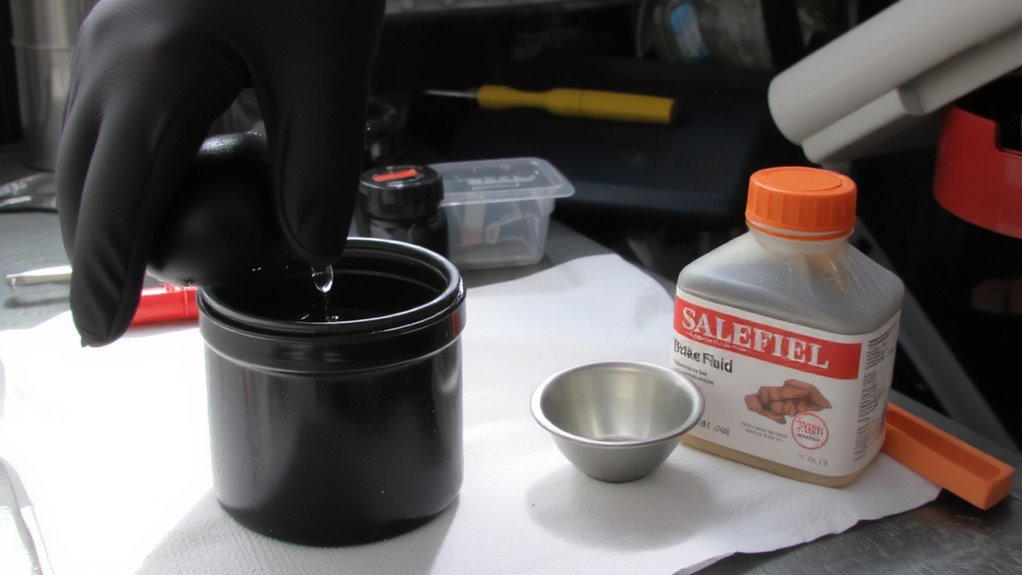
Keep the brake fluid container sealed at all times-even during service breaks. Exposure to air introduces moisture, degrading fluid performance. Brake fluid absorbs water rapidly; DOT 3 can pull in up to 2% moisture annually when exposed. Always reseal tightly with the original cap to maintain integrity. Proper labeling guarantees quick identification and prevents cross-contamination with incompatible fluids. Use factory-approved containers marked with DOT specifications and expiration dates. Unlabeled or unknown fluids must be discarded. Spill prevention is critical-brake fluid damages paint and reduces braking efficiency. Clean any drips immediately with isopropyl alcohol. Store upright on absorbent mats during work pauses. Never leave open containers unattended, even for five minutes. A sealed system preserves dry boiling points, typically 205°C (401°F) for DOT 3. Keep lids on, avoid contamination, and protect system reliability.
Work in a Dry, Climate-Controlled Area
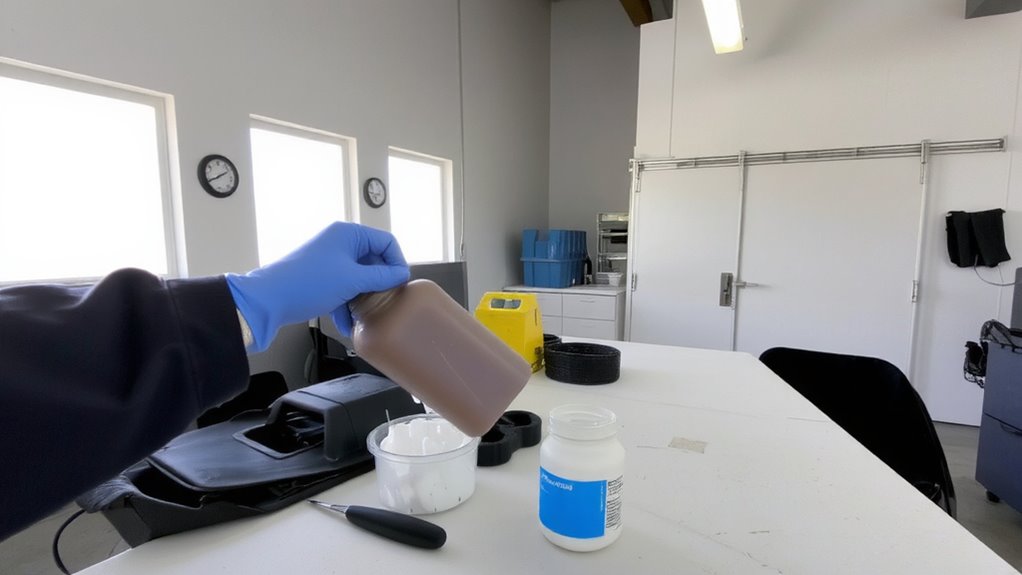
Because humidity impacts brake fluid performance, always work in a dry, climate-controlled environment. Moisture absorption begins rapidly when brake fluid is exposed to air, degrading its boiling point and compromising braking efficiency. Maintain indoor ventilation to prevent stagnant, moist air buildup. Use air conditioning or dehumidifiers to keep relative humidity below 50%. Static control is critical-use grounded mats and wrist straps to avoid sparks near flammable vapors. A stable temperature between 68°F and 77°F (20°C–25°C) guarantees superior handling and minimizes condensation risks.
| Factor | Recommended Level |
|---|---|
| Relative Humidity | < 50% |
| Temperature | 68°F–77°F (20°C–25°C) |
| Indoor Ventilation | Continuous, filtered airflow |
| Static Control | Grounded work surfaces and personnel |
Seal Brake Fluid Containers Immediately After Use
Once opened, brake fluid starts absorbing moisture from the air-so seal containers right after use. Container integrity is critical to maintaining fluid performance. Most brake fluids, like DOT 3 and DOT 4, are hygroscopic, meaning they attract water vapor rapidly. An unsealed container can absorb over 2% moisture within 24 hours in a 60% humidity environment. Moisture prevention isn’t optional-it directly affects boiling point. For example, dry DOT 4 has a boiling point of 230°C, but with just 3% moisture, it drops to 155°C. That increases the risk of brake fade. Always reseal with the original cap to prevent leaks and contamination. Check closures for cracks or warping to guarantee airtight sealing. A compromised seal degrades fluid quality, even in climate-controlled spaces. Immediate sealing limits exposure, preserving chemical stability and safety. You’re not just closing a bottle-you’re maintaining system reliability.
Use Only Clean Tools With Open Brake Fluid
Contamination is the enemy when working with open brake fluid-always use clean tools to prevent compromising the system. Tool cleanliness is critical because even small amounts of dirt, oil, or debris can degrade brake fluid performance. Brake systems operate under high pressure, typically 800–1,200 psi, and contaminants can disrupt hydraulic efficiency. Always wipe tools with isopropyl alcohol before use and store them in sealed containers. Reusing grimy wrenches or funnels introduces particulates that accelerate wear in master cylinders and calipers. For contamination prevention, dedicate specific tools solely to brake work. These shouldn’t be shared with engine or transmission tasks. Use stainless steel or plastic tools designed for brake systems-they resist corrosion from moisture and fluid exposure. Never dip a dirty tool into the reservoir or open container. Moisture-laden contaminants reduce fluid boiling point; DOT 3 fluid absorbs 2% water annually if exposed. Clean tools protect that specification.
Check Humidity Before Handling Brake Fluid
Why risk compromising your brake system when the air itself can introduce invisible threats? Moisture in the atmosphere absorbs into brake fluid quickly, degrading its performance. You should always check humidity before opening a container. High humidity accelerates fluid contamination, lowering its boiling point and risking brake failure. Use hygrometer readings to confirm ambient relative humidity is below 60%. If it’s higher, delay the job. Dew point monitoring is equally critical-ensure the dew point is at least 10°F below the brake fluid’s expected operating temperature. This prevents condensation from forming in lines or reservoirs. Moisture-laden fluid can boil under braking stress, creating air bubbles and spongy pedal feel. Even brief exposure to damp air during servicing can alter fluid chemistry. For maximum safety and performance, rely on precise environmental data, not estimates. Your brake system depends on dry conditions-monitor them rigorously.
Store Brake Fluid in Sealed, Cool Conditions
While brake fluid is essential for stopping power, it’s also hygroscopic-meaning it actively pulls moisture from the air. You must store it in sealed, cool conditions to preserve container integrity and maintain performance. Even brief exposure to humidity degrades brake fluid, reducing its boiling point and risking brake fade. Always keep the cap tightly closed on DOT 3, 4, or 5.1 fluid containers; microscopic leaks compromise seal integrity over time. Store below 77°F (25°C) with consistent temperature control, as heat accelerates moisture absorption and chemical breakdown. Ideal storage is in a dry, dark cabinet away from concrete floors, which emit humidity. Unopened, brake fluid lasts 2–3 years, but once opened, use within 12 months. UV light and fluctuating temperatures deteriorate rubber seals inside containers. Proper storage prevents system corrosion, guarantees reliable braking, and extends fluid service life.
On a final note
You must keep brake fluid containers closed-even during brief breaks. Brake fluid absorbs moisture rapidly; DOT 3 can exceed 3.7% water content in 12 months, reducing boiling point from 205°C to 140°C. Work in dry, climate-controlled areas below 50% humidity. Always seal containers immediately after use. Use only clean, dedicated tools to prevent contamination. Store fluid in original, sealed packaging at 15–25°C to maintain performance integrity.