How to Use a Foam Cannon for Maximum Paint Protection During Washing
Use a foam cannon compatible with your pressure washer’s flow rate-verify at least 1.5 GPM at 1,200 PSI for effective foam induction. Match the inlet thread size, typically 1/4-inch or M22, and use a green (40°) nozzle for stable flow. Mix snow foam at a 3:1 to 5:1 water-to-detergent ratio using distilled water if needed. Apply from roof down, maintaining 12–18 inches from the surface for full coverage. Keep foam wet for 3–5 minutes, avoiding dry residue. Rinse top to bottom with a 40° fan nozzle at 1,200–1,800 PSI to guide dirty water away. Proper technique ensures contaminant removal without marring, preserving wax or sealant layers. More details on ideal dwell conditions follow.
Notable Insights
- Ensure your pressure washer delivers at least 1.5 GPM at 1,200 PSI for effective foam production and paint protection.
- Mix snow foam detergent at a 3:1 to 5:1 water ratio using distilled water to maximize lubricity and reduce mineral interference.
- Apply foam from the roof downward in thick, even layers to encapsulate contaminants and prevent scratching during wash.
- Maintain foam dwell time between 3 to 5 minutes, avoiding drying to protect wax or sealant layers and prevent residue.
- Rinse top to bottom with a 40° fan nozzle at moderate pressure to safely remove foam and debris without swirl marks.
Pick the Right Foam Cannon for Your Pressure Washer
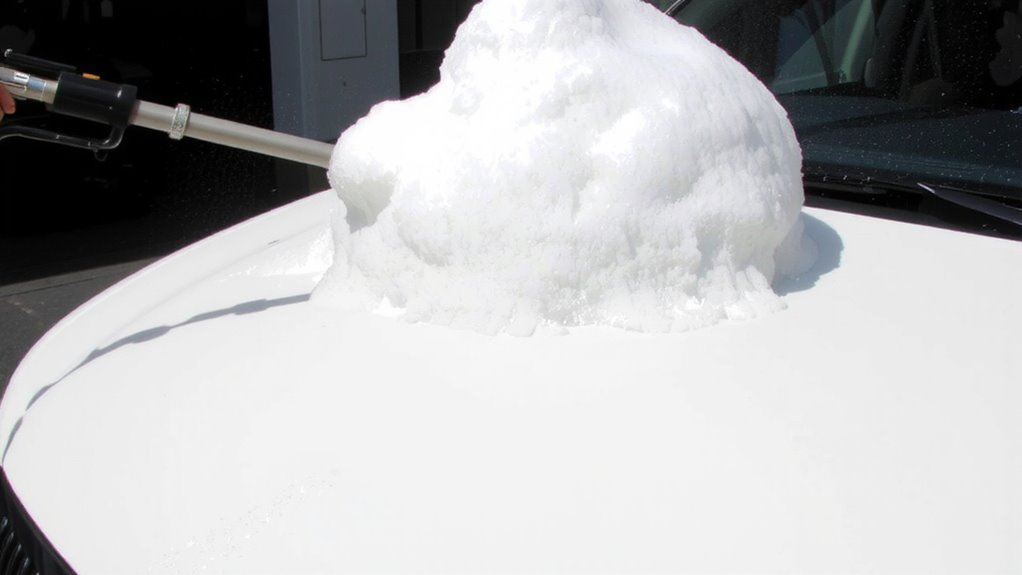
A single mismatch between your foam cannon and pressure washer can undermine the entire paint protection process-so choosing compatibility first is essential. Your pressure washer must deliver at least 1.5 GPM at 1,200 PSI for proper foam induction. Most foam cannons require a quick-connect inlet sized for 1/4-inch or M22 threads-verify yours matches. Nozzle compatibility directly impacts foam density; incorrect nozzles disrupt air-to-liquid ratios, producing thin, ineffective suds. Use a standard green or black pressure washer tip (40° or 0°) to guarantee stable flow. Foam cannons with adjustable suck hoses let you control solution draw, but only if matched to your washer’s flow rate. A mismatch starves the cannon or floods it, reducing foam density and coverage. Always confirm OEM specs: some brands, like Karch or AR Blue, need proprietary adapters. Without proper nozzle compatibility, even high-output washers fail to generate thick, clingy foam-critical for safe, protective washing. For best results, choose one of the top-rated foam cannons based on performance and compatibility with major pressure washer models.
Mix Snow Foam for Maximum Lubrication
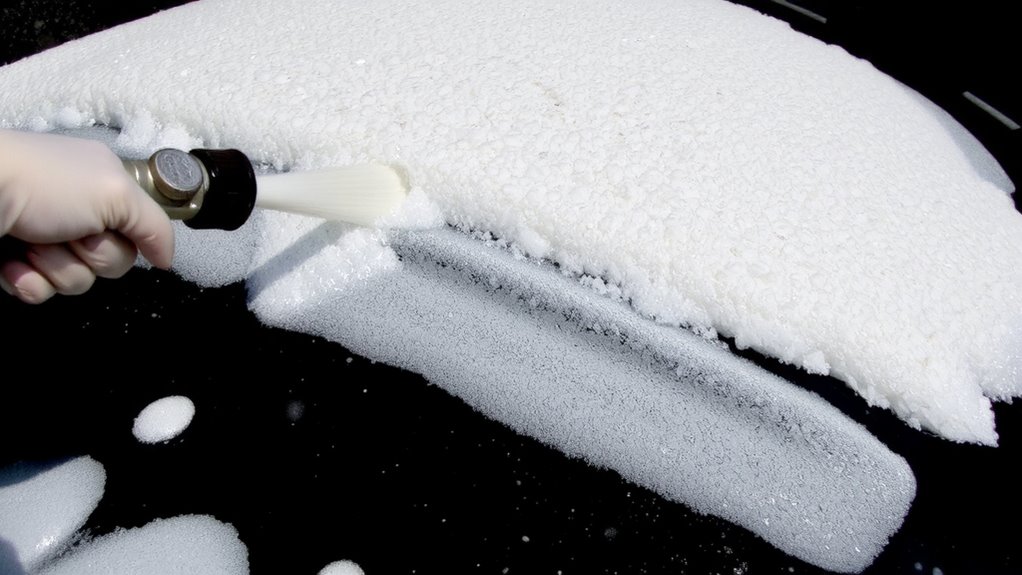
With the right mix, your snow foam becomes a high-lubricity barrier that lifts dirt without scratching. Foam consistency directly impacts lubrication-aim for thick, clinging foam resembling whipped cream. This guarantees extended dwell time and effective soil suspension. Achieving this texture depends on proper detergent concentration. Most quality snow foam chemicals recommend a 3:1 to 5:1 water-to-detergent ratio. Using less water increases detergent concentration, boosting lubricity but risking residue if overdone. Always follow manufacturer specifications-typically 2–4 oz of detergent per gallon. Use distilled water in hard water areas to prevent interference with surfactants. Mix in a dedicated foam lance bottle first, then pour into your washer’s foam tank. The right balance maximizes cleaning efficiency while minimizing contact damage. Consistent texture means consistent protection.
Apply Foam From Top to Bottom for Full Coverage
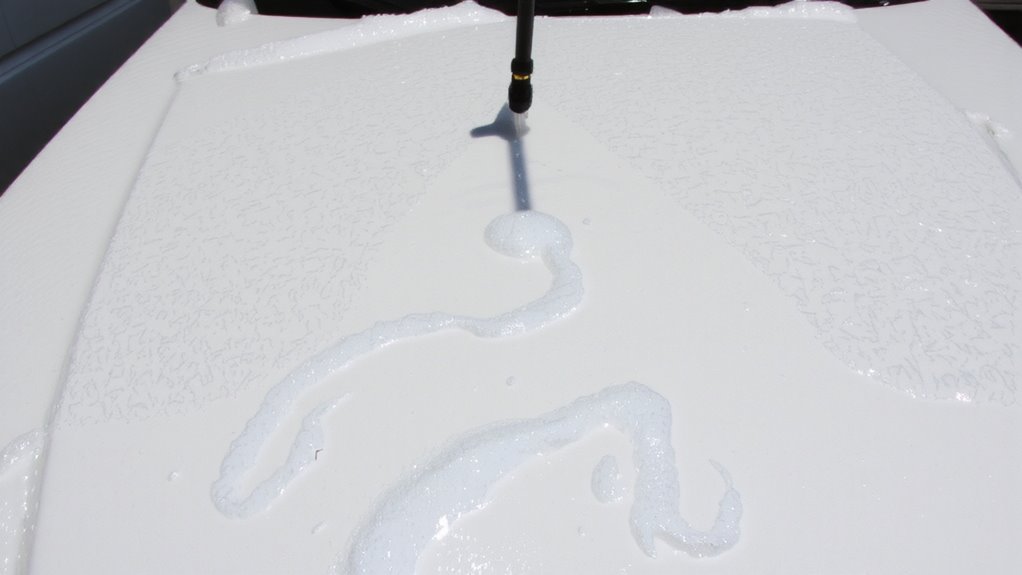
Once you begin washing, always apply the foam from the roof down to the lower panels. This guarantees full coverage and prevents debris from sliding onto already-cleaned sections. Maintain a consistent foam consistency-thick, like shaving cream-for maximum cling and lubrication. Adjust the nozzle angle between 15° and 25° to optimize spray width without overspray. Hold the wand 12–18 inches from the surface to avoid splash-back and guarantee even distribution.
| Panel Area | Recommended Nozzle Angle |
|---|---|
| Roof | 15° |
| Hood | 20° |
| Side Panels | 25° |
| Fenders | 20° |
| Lower Bumper | 15° |
Controlled application minimizes waste and boosts cleaning efficiency. Proper foam consistency traps contaminants, reducing the risk of swirls during washdown.
Let Foam Dwell Without Drying
Let the foam sit for 3 to 5 minutes after application, but don’t let it dry. This window defines ideal foam dwell time, allowing the lubricating agents and surfactants to lift contaminants gently from the paint surface. Chemical reactions in the foam break down grime, so rushing this phase reduces cleaning efficiency. Maintaining foam moisture is essential-drying prevention stops dirt from reattaching and minimizes scratch risks. If the foam dries, it can leave residue that’s harder to rinse, increasing chances for micro-marring. Work in shaded areas or on cool surfaces to extend effective dwell time, especially in direct sunlight or temperatures above 75°F (24°C). Humidity below 40% accelerates drying, so adjust timing accordingly. Never exceed 7 minutes-prolonged exposure without agitation may compromise wax or sealant layers. Stay vigilant. Foam should remain moist and opaque, not crusty or clear.
Rinse From Top to Bottom to Avoid Swirls
Though rinsing seems straightforward, doing it improperly can undo all the careful work you’ve done so far. Always rinse from top to bottom to prevent swirls. Starting at the roof guarantees that dirty water flows downward, away from already-clean areas. Use moderate water pressure-between 1,200 and 1,800 PSI-to effectively remove foam and debris without forcing contaminants into the paint. High pressure can compromise rinse efficiency by atomizing water, increasing surface tension effects that leave spots. Gravity aids the process when you work top-down, allowing sheets of water to carry grime off smoothly. Maintain a consistent spray pattern with overlapping passes to avoid missed spots. A wide fan nozzle, around 40 degrees, optimizes coverage and minimizes turbulence. This controlled approach reduces the risk of marring. Proper rinsing protects the finish and prepares the surface for safe drying.
On a final note
You’ve chosen the right foam cannon for your pressure washer’s PSI and GPM ratings. This guarantees peak foam output. Use a 1:5 to 1:10 dilution ratio of snow foam to water for maximum lubrication. Apply foam top to bottom evenly. Dwell time should be 5–7 minutes-no longer, to prevent drying. Rinse thoroughly top to bottom. This method minimizes swirls.