Internal Combustion Engine Anatomy: Parts, Specs & Ratios
You start with air and fuel mixing at 30–70 psi, drawn into cylinders during the intake stroke. The piston compresses this mix at 9:1 to 12:1 ratios before the spark plug fires, its 0.6–1.8 mm gap igniting combustion. That explosion drives the piston down, turning the crankshaft via connecting rods. Cooled by fluid between 195–220°F and lubricated by full-synthetic oil, the engine cycles through exhaust and repeats. Precision air-fuel control at 14.7:1 comes next.
Notable Insights
- Fuel injection systems deliver precise amounts of atomized fuel into the cylinder, improving efficiency over carburetors.
- The four-stroke cycle consists of intake, compression, power, and exhaust strokes to produce continuous engine operation.
- Cylinders house pistons that move up and down, converting combustion pressure into mechanical motion via connecting rods.
- Spark plugs ignite the compressed air-fuel mixture at precisely timed intervals to maximize power and efficiency.
- The crankshaft converts linear piston motion into rotational output while cooling and lubrication systems prevent overheating and wear.
How the Internal Combustion Engine Works
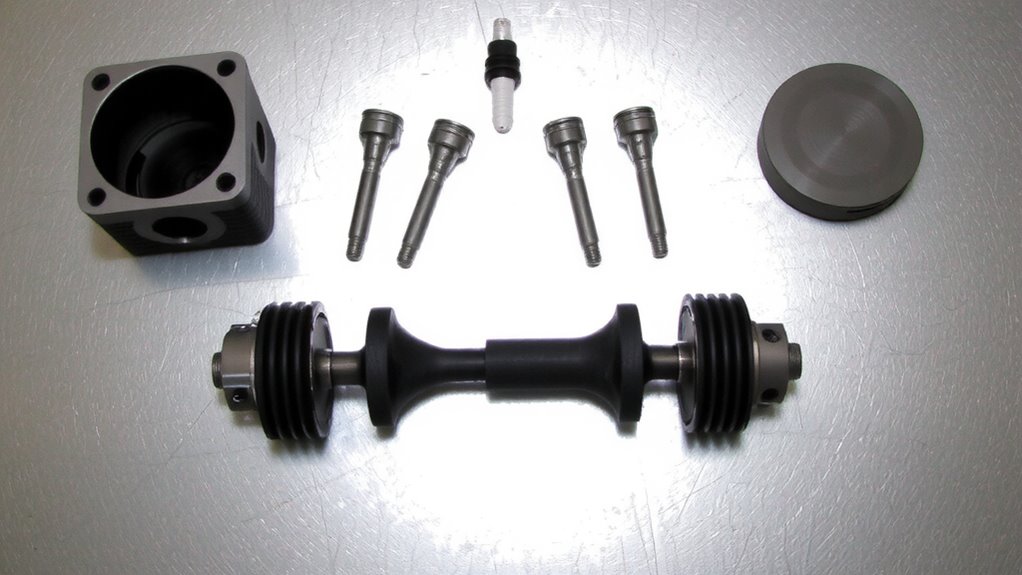
How does the magic happen under your hood? Your engine relies on precise coordination between fuel injection and air intake. Fuel injection delivers atomized gasoline directly into the combustion chamber or intake manifold at pressures between 30–70 psi, depending on engine design. This system replaces carburetors, offering better fuel control and efficiency. Simultaneously, the air intake draws ambient air through a filter, measuring its volume and density via the mass airflow sensor. Proper air-fuel ratio-typically 14.7:1 for gasoline-is critical for complete combustion. The engine control unit (ECU) adjusts both systems in real time using input from oxygen sensors and throttle position. Without accurate fuel injection timing and sufficient air intake flow, performance drops, emissions rise, and efficiency suffers. These subsystems work silently but decisively, ensuring ideal engine operation across all conditions.
The Four-Stroke Cycle: Intake, Compression, Power, Exhaust
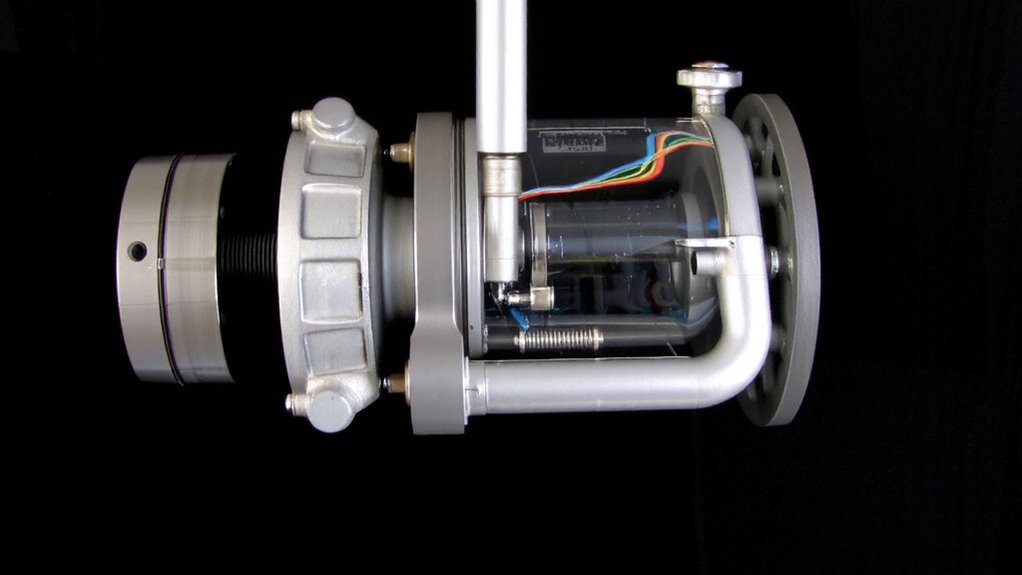
The heart of your engine’s operation beats in a rhythmic sequence of four precise strokes: intake, compression, power, and exhaust. During the intake stroke, the piston moves down, the intake valve opens, and valve timing guarantees a precise air-fuel mixture enters the cylinder. Modern engines use direct fuel injection to deliver fuel efficiently at high pressure, improving combustion. In the compression stroke, the valves close, and the piston rises, compressing the mixture into a smaller space-typically achieving a compression ratio between 9:1 and 12:1. The power stroke follows ignition, where the spark plug fires, releasing energy that forces the piston down. Finally, during the exhaust stroke, the exhaust valve opens, and the piston pushes out spent gases. Valve timing is critical here-overlapping slightly at extremes to enhance scavenging. This cycle repeats continuously, generating power with precision.
Cylinders and Pistons: Where Combustion Happens
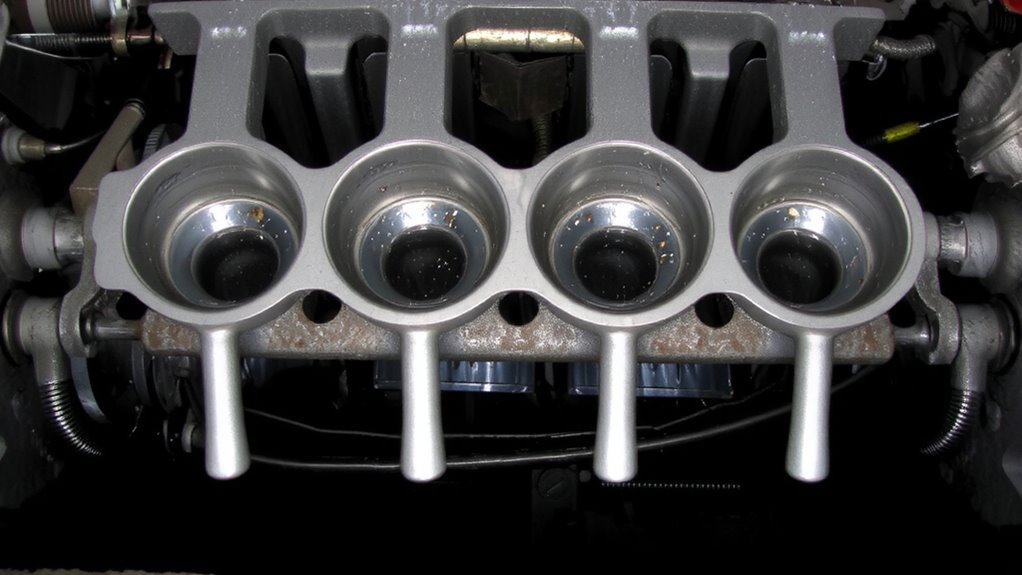
Combustion unfolds inside cylindrical chambers forged from cast iron or aluminum alloy, where precision machining guarantees tight tolerances and peak performance. These cylinders house pistons that move up and down with exacting control. The cylinder arrangement-whether inline, V-type, or flat-affects balance, space, and engine efficiency. Each piston connects to the crankshaft via a connecting rod, converting linear motion into rotation. Piston rings seal the gap between the piston and cylinder wall, ensuring compression stays high and oil doesn’t enter the combustion chamber. Typically, three rings per piston manage compression, secondary sealing, and oil control. Made from durable steel or cast iron, they withstand extreme heat and pressure. Pistons themselves are light yet strong, often forged from aluminum alloy to reduce inertia. Their precise fit minimizes friction while maintaining durability. This controlled environment allows the power stroke to deliver consistent force.
How Spark Plugs Ignite the Fuel-Air Mix
Though invisible to the eye, the spark that kicks off power in your engine starts with a precisely timed electrical discharge across a tiny gap. This event occurs at the spark plug, where high voltage jumps the electrode gap, typically set between 0.6 to 1.8 mm, to ignite the compressed fuel-air mixture. Correct spark timing guarantees combustion happens at the best piston position, maximizing efficiency and power.
| Factor | Importance |
|---|---|
| Spark timing | Determines when combustion begins in the cycle, affecting performance and emissions |
| Electrode gap | Influences spark energy; too wide may cause misfires, too narrow reduces ignition efficiency |
Proper gap setting and accurate spark timing are critical. Modern engines use engine control units to adjust timing dynamically. A worn or improperly gapped plug disrupts ignition, leading to poor fuel economy and reduced engine output. Replace spark plugs per manufacturer intervals to maintain peak operation. Choosing a reliable spark plug brand can significantly impact long-term engine performance and reliability.
From Piston Movement to Wheel Power: The Crankshaft’s Role
As each piston descends from the force of combustion, it transfers energy directly to the crankshaft through connecting rods. You see this motion converted from linear to rotational as the crankshaft spins. Counterweights on the crankshaft maintain crankshaft balance, minimizing vibrations during operation. Without proper balance, engine wear increases and performance suffers. The crankshaft’s design leverages rotational inertia to maintain consistent speed between power strokes. Heavier crankshafts store more energy, smoothing out RPM fluctuations. Typical forged steel crankshafts weigh between 30–50 lbs, depending on engine size. Journal diameters range from 1.8 to 2.5 inches, engineered for load distribution and oil retention. High-performance engines often use nitride-hardened surfaces for durability. The crankshaft’s throw-the distance from the main journal centerline to the rod journal centerline-determines piston stroke and affects engine torque output. You rely on its reliable rotation to deliver power steadily to the transmission and, ultimately, the wheels.
Cooling and Oil: Preventing Overheating and Wear
When your engine runs, heat builds up fast-up to 2,500°F in the combustion chamber-and without a reliable cooling system, critical components can warp, seize, or fail. Your coolant circulates through the cycle and radiator, absorbing heat and preventing excessive thermal expansion. This expansion can misalign parts, increasing friction and wear. The system typically operates at 195–220°F, regulated by the thermostat. If temperatures rise too high, you risk engine knock-those pinging sounds from premature fuel ignition. Knock damages pistons and reduces efficiency. Oil complements cooling by lubricating moving parts, reducing friction by up to 90%. It also carries heat away from pistons and bearings. Full-synthetic oils maintain viscosity across extreme temperatures, protecting during cold starts and high-load operation. Together, coolant and oil guarantee durability, performance, and longevity under real-world driving conditions. Upgrading to high-performance best spark plugs for better fuel efficiency can further enhance engine operation by promoting more complete combustion and reducing fuel waste.
On a final note
You now understand the internal combustion engine’s core systems. The four-stroke cycle governs operation: intake, compression, power, and exhaust occur in precise sequence. Cylinders house pistons moving at high speed, driven by controlled explosions. Spark plugs ignite the air-fuel mixture at exactly timed intervals, typically 15,000 times per hour in a four-cylinder engine. The crankshaft converts linear piston motion into rotational force. Cooling and lubrication systems maintain ideal temperatures and reduce friction, preventing seizure and wear.