How to Wax Carbon Fiber Parts Without Causing Hazing
First, confirm your carbon fiber has a clear coat finish by checking for a smooth, glossy surface-raw weave is porous and must not be waxed. Clean with a pH-neutral soap diluted 40:1 using a microfiber mitt. Use a 100% silicone-free wax, as silicone-based products cause hazing on epoxy-rich surfaces. Apply with a napped microfiber pad in cool, shaded conditions using light pressure. Buff off residue within 5–10 minutes with a clean polyester towel to prevent curing. Thin, even coats guarantee clarity and adhesion. Proper application preserves optical integrity and enhances depth. Further refinement of finish preservation follows.
Notable Insights
- Identify the carbon fiber finish type before waxing, as raw carbon requires protectant, not wax.
- Use only pH-neutral soap to clean carbon fiber and prevent clear coat damage.
- Choose a 100% silicone-free wax to avoid hazing and residue buildup on low-porosity surfaces.
- Apply wax with a microfiber applicator using light pressure and minimal product per section.
- Remove wax residue within 5–10 minutes using a clean polyester microfiber towel to prevent curing.
Identify Your Carbon Fiber Finish First
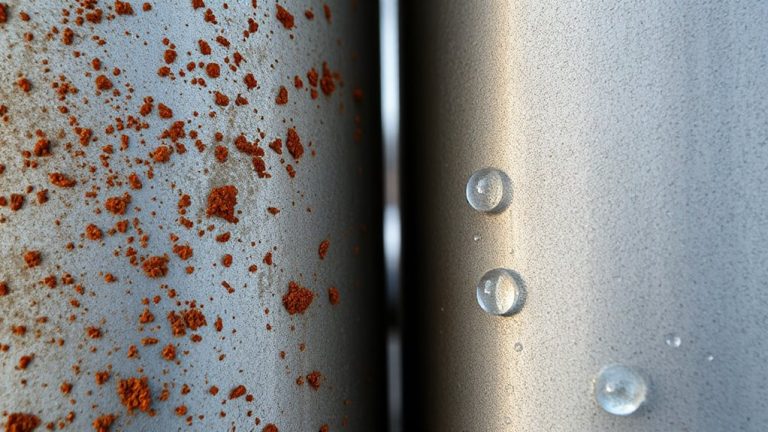
Finish type matters-knowing whether your carbon fiber part has a dry, raw weave or a protective clear coat is the first step to proper waxing. If the surface feels rough and matte, it’s raw carbon fiber-porous and vulnerable. Raw weaves lack UV protection and chemical resistance, so waxing them directly causes degradation. Instead, they require sealing with a resin-based protectant first. If the surface is smooth and glossy, it has a clear coat. Most OEM and high-end aftermarket parts use epoxy or polyurethane clear coats. These finishes already offer UV protection and strong chemical resistance, making them wax-safe. Always verify with a solvent test: dab isopropyl alcohol on a hidden area. No finish softening means the coating is stable. Waxing without identifying the finish risks hazing, etching, or delamination. Confirming the type guarantees compatibility, preserves appearance, and maintains structural integrity over time.
Clean With pH-Neutral Soap Only
You’ve confirmed your carbon fiber has a clear coat, so now it’s safe to begin surface preparation. Use only a pH-neutral soap, typically with a pH between 6.5 and 7.5, to avoid chemical sensitivity that can compromise the clear coat. Harsh detergents or acidic cleaners trigger degradation, leading to hazing and reduced gloss retention. Dilute the soap at a 40:1 water-to-soap ratio and apply with a microfiber wash mitt to minimize surface abrasion. Carbon fiber’s thin clear coat is less forgiving than paint, so even light scratching from improper washing compounds over time. Rinse thoroughly with distilled water to prevent mineral deposits. Wash in a shaded area to avoid rapid drying, which can leave residue streaks. Always use separate, clean wash tools designated for carbon fiber to eliminate grit transfer. This guarantees a contaminant-free surface prior to wax application.
Pick a Non-Silicone Wax for Carbon Fiber
Most high-performance waxes contain silicone-based polymers, but these compounds can build up on carbon fiber’s delicate clear coat over time. You need a non-silicone wax to prevent hazing and maintain finish integrity. The chemical composition of silicone waxes often includes PDMS (polydimethylsiloxane), which fills micro-voids but doesn’t bond well with epoxy resins used in carbon fiber clear coats. Over time, this leads to residue accumulation and optical distortion. Carbon fiber has low surface porosity, so it absorbs minimal product-meaning any leftover residue sits atop the surface, worsening light scatter. Non-silicone waxes, typically based on carnauba or synthetic polymers likePTFE, provide durable protection without build-up. They bond cleanly and resist UV degradation. Choose products labeled “100% silicone-free” with a solvent carrier that evaporates completely. These deliver a high-gloss, optically clear finish while preserving the part’s original appearance and structural clarity.
Apply Wax Using a Microfiber Applicator
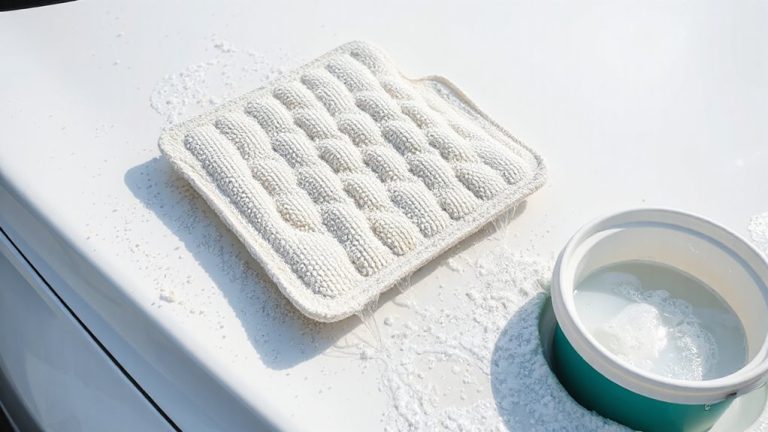
A clean microfiber applicator pad is essential for achieving an even, streak-free wax application on carbon fiber surfaces. Use a high-quality, non-abrasive microfiber pad with a napped texture to guarantee proper wax transfer. Your application technique directly impacts finish clarity-apply wax in small, overlapping circles using light to moderate pressure. This minimizes shear forces that can disturb the clear coat. Always complete surface preparation before beginning; guarantee the part is cool, dry, and free of contaminants. Work in shaded areas to prevent premature drying. Apply wax sparingly-one pea-sized drop per 2×2-foot section is sufficient. Over-application increases removal difficulty and raises hazing risk. The microfiber pad should glide smoothly, distributing wax uniformly without grabbing or clumping. Proper technique and preparation protect the carbon fiber’s integrity and enhance optical depth.
Wipe Residue Before It Dries
Timing matters when it comes to removing wax from carbon fiber. Wipe residue before it dries to prevent residue buildup and guarantee streak prevention. Waiting too long causes wax to cure, making removal difficult and increasing the risk of surface defects. Use a clean microfiber towel immediately after application. Below is a quick-reference chart for proper wiping technique:
| Step | Action | Purpose |
|---|---|---|
| 1 | Wait 5–10 minutes | Allows wax to flash but not harden |
| 2 | Use 100% polyester microfiber | Prevents lint and scratching |
| 3 | Apply light, circular motions | Promotes even wax removal |
| 4 | Flip towel frequently | Avoids redistributing residue |
This approach guarantees peak clarity and finish integrity. Immediate action prevents film formation. Carbon fiber’s non-porous surface amplifies streaks if ignored. Stick to this method every time for a flawless, haze-free result.
Avoid Hazing With Light, Even Coats
Applying wax in thin, uniform layers is essential to preventing hazing on carbon fiber surfaces. Thick applications trap solvents, leading to cloudiness as they evaporate. Use a microfiber applicator with light pressure to spread wax evenly, following the product’s recommended coverage-typically 3–4 ounces per 3×3-foot section. This preserves the surface texture and enhances finish clarity by allowing the wax to bond uniformly without pooling. Carbon fiber’s exposed weave reacts poorly to excess product, so work in 2×2-foot zones. Apply in circular motions at 60 rpm if using a polisher. Let the wax haze slightly-about 5–10 minutes-before removal. Over-application increases risk of residue in the weave, diffusing light reflection and dulling appearance. A single, light coat provides maximum clarity and protection. Repeating layers without buffing worsens hazing. For best results, less is more.
Maintain Shine With Monthly Detailing
While regular washing removes surface contaminants, it won’t sustain the glossy depth of carbon fiber over time-monthly detailing is necessary to preserve both luster and protection. Apply a high-grade wax with UV protection to prevent resin degradation and color fading from prolonged sun exposure. Most quality waxes contain UV inhibitors that block up to 95% of harmful rays, extending the finish life by months. Use a microfiber applicator with light, circular motions for even coverage. This enhances the dust repellent properties, reducing particle adhesion that can lead to micro-scratches. A properly detailed surface maintains a contact angle of over 90°, repelling water and contaminants efficiently. Inspect the finish each month; reapply wax if beading diminishes. Consistent care guarantees long-term clarity and depth. Monthly attention isn’t excessive-it’s essential.
On a final note
You must identify your carbon fiber’s finish before waxing-clear-coated surfaces only. Apply a non-silicone, automotive-grade wax using a clean microfiber applicator. Use light, even coats no larger than 2′ x 2′ to prevent hazing. Wipe residue promptly with a 100% polyester microfiber cloth rated at 300 GSM. Clean with pH-neutral soap (pH 7.0 ± 0.5) before application. Repeat monthly for sustained gloss and UV protection.