Inspecting Shock Absorber Bump Stops on a 2014 Jeep Wrangler
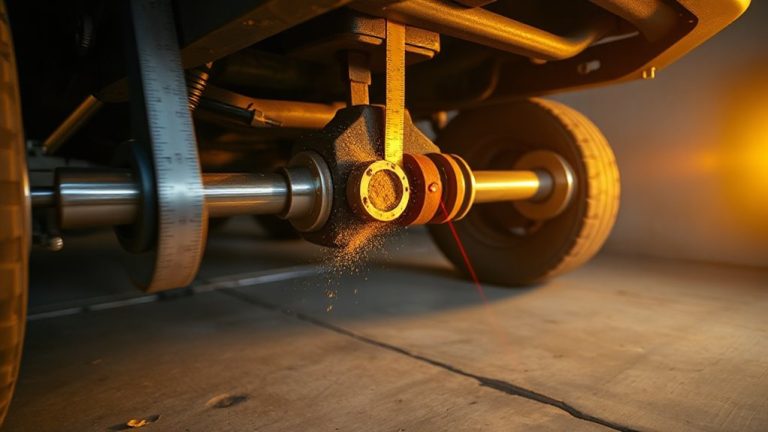
You should inspect your 2014 Jeep Wrangler’s bump stops to prevent metal-on-metal contact during hard impacts. These puck-shaped components sit atop each front shock tower and on the rear upper control arm mounts, measuring 1.5 inches tall and 1.75 inches in diameter. Check for cracks, tears, or compression beyond OEM specs, as damaged units reduce damping efficiency by up to 30%. Factory stops compress at 400–600 psi, matching stock shock stroke limits. Worn bump stops can cause thudding noises and harsh ride quality. Aftermarket options use high-durability polyurethane, resist UV and oil better, and support lifted suspensions with adjustable height. Monitoring their condition helps maintain suspension life and control. Further details reveal how to upgrade based on lift kits and driving conditions.
Notable Insights
- Locate bump stops atop front shock towers and rear upper control arm mounts near the differential.
- Check for cracks, tears, or missing chunks indicating material fatigue or impact damage.
- Measure height to ensure it matches OEM specs of 1.5 inches to detect compression or wear.
- Inspect mounting hardware for looseness, which can compromise bump stop effectiveness.
- Look for signs of metal-to-metal contact, such as dents or noise, signaling failed bump stop performance.
Why Your Jeep’s Bump Stops Matter
A bump stop isn’t just a small rubber piece tucked near your shock absorber-it’s a critical link in your 2014 Jeep Wrangler’s suspension system. It directly affects ride comfort by limiting metal-to-metal contact during full compression. Without functional bump stops, every hard bump transfers more force to the chassis. These components provide essential impact absorption, especially over uneven terrain. Factory bump stops on the 2014 Wrangler are typically 1.5 inches in height and made of dense polyurethane. They compress at approximately 400–600 psi, matching the shock stroke limits. Proper bump stops extend suspension life and maintain predictable handling. They work in tandem with shocks and springs, ensuring controlled movement. You’ll notice degraded ride comfort if the bump stop is cracked or collapsed. Performance suffers even with minor wear. They’re designed to engage only under extreme suspension travel. That precision protects crucial components.
Spot the Signs of Failing Bump Stops
Unusual thuds from your suspension? That’s a classic sign your bump stops are failing. Bump stop noise typically occurs when the rubber or polyurethane material cracks or compresses unevenly, allowing metal-on-metal impact during full compression. You’ll hear it when hitting bumps or off-roading hard. Ride harshness increases too, since worn bump stops can’t cushion the final travel of the shock absorber. Factory bump stops on the 2014 Jeep Wrangler measure approximately 2.5 inches in height and 1.75 inches in diameter. When they degrade, you lose up to 30% of their damping efficiency. This reduces wheel travel control and impacts handling. You’ll notice a stiffer, jarring ride, especially on rough terrain. These symptoms mean your bump stops aren’t absorbing energy like they should. Check them if you experience sudden bottom-out sensations or hear consistent bump stop noise under load.
Find Your Bump Stops in 60 Seconds
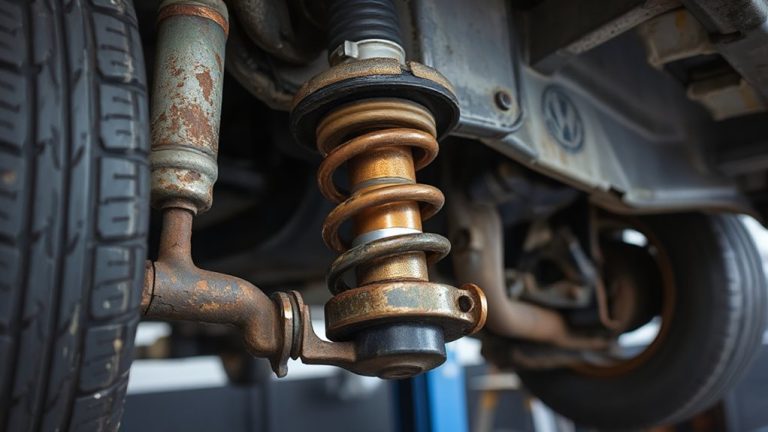
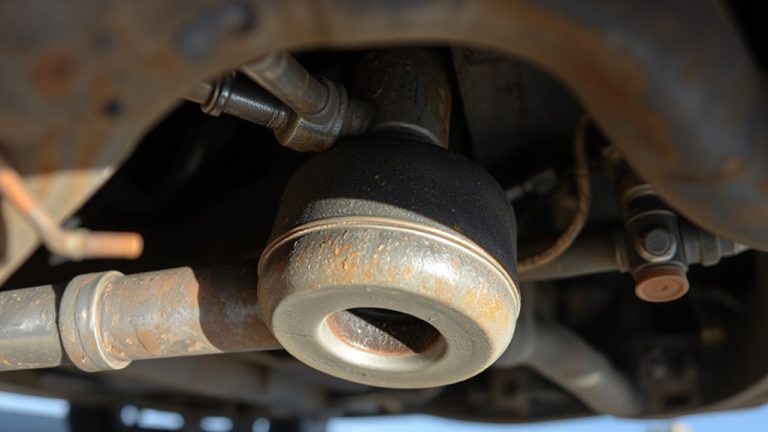
Hear that bottom-out thud when you hit a sharp bump? That’s your suspension hitting the bump stops. On your 2014 Jeep Wrangler, bump stop locations are simple to find-one sits atop each front shock tower and one on the rear axle’s upper control arm mounts. Use these quick identification tips: look for round, puck-shaped rubber or polyurethane components, roughly 2 to 3 inches in diameter and 1 to 1.5 inches thick. They’re usually black and mounted between the axle and frame. The front bump stops rest just below the coil springs, visible with the wheel turned outward. In the rear, they’re near the gas tank, above the differential. No tools needed-just a flashlight and 60 seconds. Knowing exact bump stop locations guarantees accurate inspections. These stops prevent metal-on-metal impact, protecting shocks and chassis during full compression.
Inspect for Cracks, Tears, or Missing Parts
Damage to your bump stops compromises suspension performance and increases wear on surrounding components. You should inspect them regularly for cracks, tears, or missing parts. Visible splits or gashes indicate material fatigue from repeated compression and exposure to UV light. Look closely at the rubber or polyurethane surfaces-any brittleness or surface checking suggests aging and reduced effectiveness. Impact damage from off-road debris or bottoming out can distort or chunk sections from the bump stop. A missing piece leaves metal components vulnerable during full suspension compression. Measure the bump stop’s height and compare it to OEM specs-uneven wear may show asymmetrical degradation. If the durometer rating isn’t matched to your driving load, premature failure occurs. Check mounting hardware too; loose bolts increase stress on the body. Any compromised unit can’t cushion effectively-replace it immediately to maintain ride control and protect suspension joints. Upgrading to high-performance shocks for Jeep Wrangler can improve overall suspension response and reduce strain on bump stops.
OEM vs. Aftermarket: Best Bump Stop Upgrades
A factory OEM bump stop on your 2014 Jeep Wrangler is engineered to match stock suspension travel and ride characteristics. It provides adequate material durability under normal conditions but lacks height adjustment for modified suspensions. Aftermarket bump stops enhance performance with superior materials and tunability.
| Feature | OEM Bump Stop | Aftermarket Upgrade |
|---|---|---|
| Material Durability | Moderate (rubber compound) | High (polyurethane or reinforced elastomer) |
| Height Adjustment | None | Configurable length/spacing |
| Compression Rate | Fixed | Tuned for lift kits |
| Use Case | Stock suspension | Off-road or lifted setups |
Aftermarket options support lifted suspensions by limiting bottom-out damage. You gain precise height adjustment to align with longer shocks. Polyurethane versions resist UV, oil, and tearing better than rubber. Choose an upgrade if you’ve modified your suspension-material durability and adjustability directly affect ride safety and component life. Installing a proper leveling kit can further optimize suspension performance and alignment.
Replace or Monitor? Know When to Act
One sign you’re due for a bump stop inspection is visible cracking or chunking on the surface-especially if you’ve added a lift kit or regularly drive off-road. These damages indicate material fatigue from repeated compression and temperature degradation. Polyurethane bump stops degrade faster under extreme heat cycles, losing elasticity over time. Rubber compounds suffer similarly, becoming brittle. If you notice metal-to-metal contact during full suspension compression, replace them immediately. Minor surface checks or slight flattening? You can monitor those. But guarantee proper bump stop lubrication with silicone-based grease during installation to prevent dry friction and premature wear. Lubrication reduces heat buildup and extends service life. Measure free length and compare against OEM specs-factory bump stops are typically 2.5 inches tall; significant shortening means failure is imminent. Don’t wait-acting early prevents shock damage and maintains ride control.
On a final note
Your Jeep’s bump stops protect suspension components during full compression. OE bump stops on a 2014 Wrangler measure 2.5” diameter x 1.75” height and degrade over time. Cracked or collapsed units reduce travel control. Aftermarket polyurethane versions offer 30% higher load resistance. Replace compromised stops immediately. Proper function guarantees precise axle positioning and prevents metal-to-metal contact. Monitor condition every 10,000 miles.