Identifying Signs of Failing Struts on a Volkswagen Jetta With Visual Inspection Tips
Check for oily fluid around the strut body-fresh leaks look shiny, while older residue is dark and sticky. Losing just 1–2 oz of the 8–10 oz hydraulic charge reduces damping. Inspect the rubber boot for tears or splits; even small cracks let in dirt, damaging the piston rod. Look for cupped tire tread or edge wear, especially if alignment is correct. Perform a bounce test: if the car rebounds more than once, the struts are worn. Listen for clunks over bumps, which suggest loose mounts or bushings. You’ll find specific replacement guidelines and torque specs next.
Notable Insights
- Look for oily fluid residue on the strut body, especially near the shaft seal, indicating internal leakage and loss of damping performance.
- Inspect the rubber strut boot for tears, cracks, or missing sections, which can allow contaminants to damage the piston rod.
- Check for uneven tire wear, particularly cupping or excessive wear on inner/outer edges, even after proper alignment.
- Perform a bounce test by pressing down on each corner; if the vehicle rebounds more than once, struts are likely worn.
- Listen for clunking noises over bumps, which may signal damaged mounts, loose bolts, or worn bushings in the strut assembly.
Spot Leaking Strut Fluid
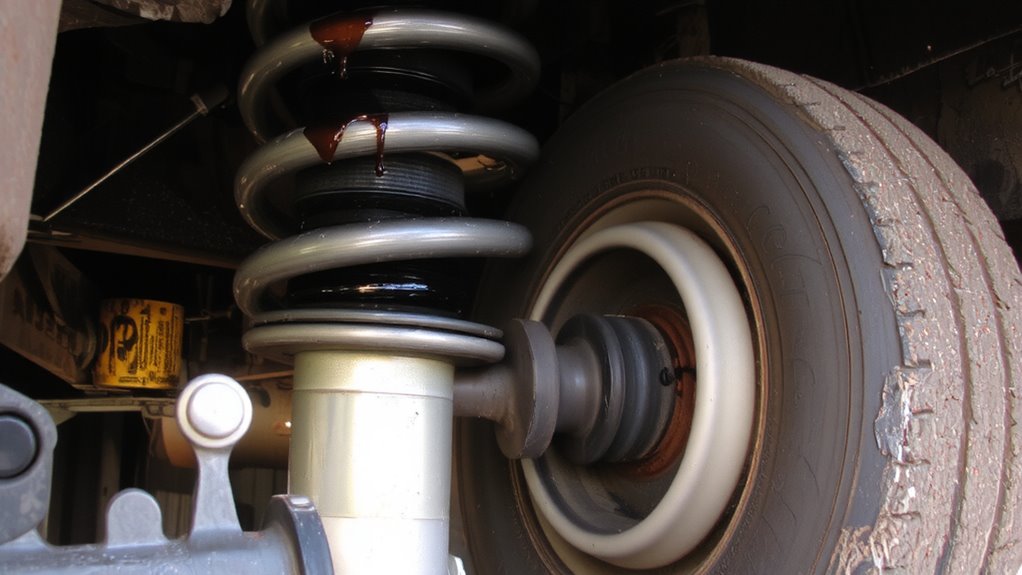
A leaking strut is one of the clearest signs your Volkswagen Jetta’s suspension needs attention. You’ll notice oily fluid leakage around the strut body, especially near the shaft seal. This residue is a telltale symptom of internal pressure loss. Struts rely on hydraulic fluid to dampen spring motion and maintain ride control. When fluid leaks, shock deterioration accelerates. A compromised strut can’t maintain consistent damping force, reducing handling precision. Most OEM struts contain roughly 8–10 oz of specialized hydraulic oil; losing even 1–2 oz degrades performance. Inspect each strut after driving; fresh leaks appear shiny, while old residue is sticky and dark. Persistent fluid leakage leads to uneven tire wear and longer stopping distances. Ignoring it increases stress on related components. Address fluid leakage early to prevent advanced shock deterioration and unsafe driving conditions. Replace leaking struts in pairs for balanced performance.
Look for Torn Strut Boots
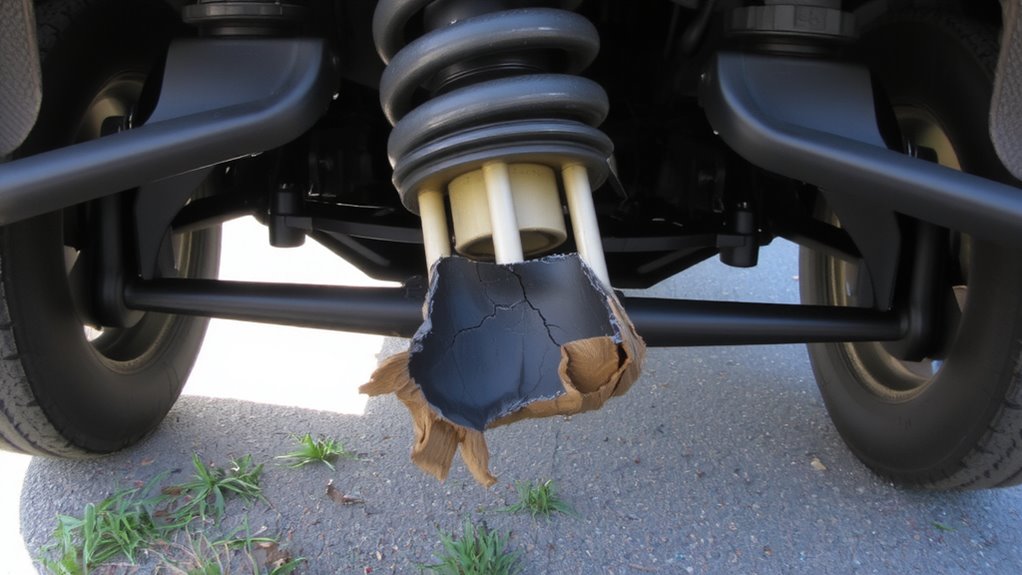
You just checked for leaking strut fluid, and if you spotted oily residue on the strut shaft, there’s another key component to inspect-the boot. The strut boot design protects the strut’s piston rod from dirt, moisture, and road debris. A torn or cracked boot compromises this protection, accelerating wear. Most Volkswagen Jetta strut boots are made from synthetic rubber, with wall thickness averaging 3–4 mm for durability. Over time, exposure to UV rays and temperature extremes degrades rubber material quality, making boots brittle. Inspect the boot for splits, bulges, or missing sections, especially near the base and folds. Even a small tear can let contaminants in, leading to internal damage. OEM boots typically last 60,000–80,000 miles under normal conditions. If the boot is damaged, replace it immediately-paired with a new strut mount-to maintain performance and prevent premature strut failure.
Check for Uneven Tire Wear
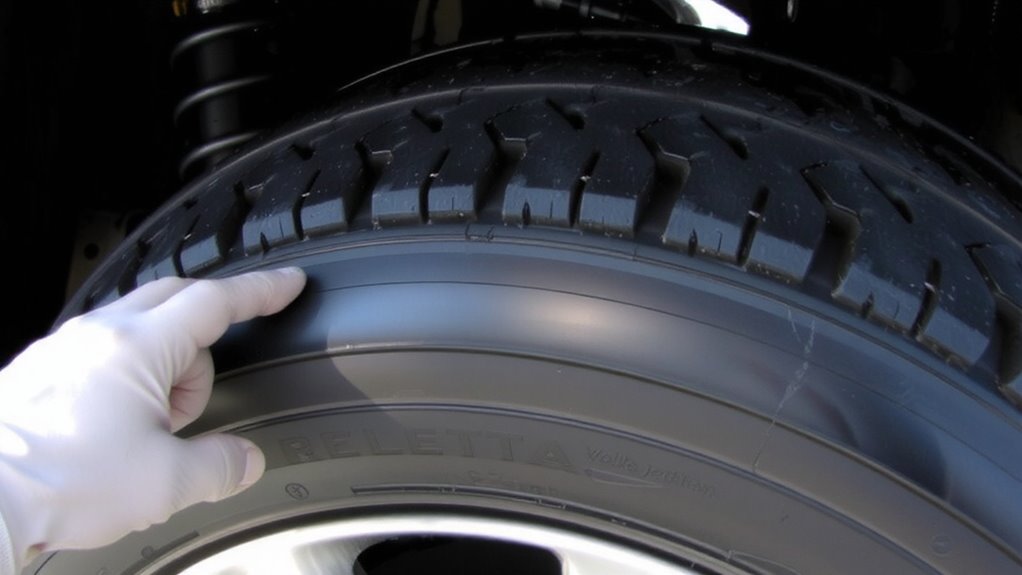
Why might your Jetta’s tires show excessive wear on one edge? Worn struts fail to keep tires firmly planted on the road, causing uneven contact with the surface. You’ll notice excessive wear on the inner or outer tread edge, known as camber wear. This pattern often mimics alignment issues, but even correct alignment can’t compensate for strut failure. Check your tire pressure regularly-underinflated tires worsen wear-but proper inflation won’t fix mechanical faults. Struts maintain wheel stability; when they degrade, the suspension can’t control wheel angle during cornering or over bumps. Over time, this leads to cupping or scalloped dips around the tire surface. These signs indicate the shock absorption system is compromised. Ignoring them reduces grip, increases stopping distances, and accelerates tire wear. Inspect all four tires thoroughly. Uneven wear combined with other symptoms points directly to strut problems, not just tire pressure or alignment issues.
Try the Bounce Test
The bounce test remains one of the quickest, most reliable field checks for strut performance. To perform the bounce test, press down firmly on each corner of your Jetta with both hands and release. Observe the suspension movement-healthy struts should dampen motion immediately. If the car continues to bounce more than once after you let go, the strut assembly is likely worn. A functional suspension settles after a single rebound due to effective hydraulic damping. Excessive oscillation indicates internal strut damage or fluid leakage. Perform the bounce test at all four wheels, comparing results side to side. Normal suspension movement is controlled and swift, returning to level within one cycle. Delayed stabilization or repeated bouncing confirms diminished damping ability. This simple evaluation provides direct insight into strut efficiency without specialized tools. For more accurate and lasting results, consider replacing worn struts with top-tier options from best strut brands.
Listen for Clunks Over Bumps
A consistent bounce during the test suggests worn struts, but unusual noises point to other suspension faults. Listen for clunks when driving over bumps-these impact sounds often indicate loose or damaged suspension components. A sharp, metallic clunk usually comes from a failing strut mount or detached stabilizer link. Suspension noise like knocking or thudding may stem from degraded bushings or cracked spring seats. These sounds worsen over time as parts wear. Inspect the strut assembly: the mounting bolt torque spec is 30–35 lb-ft; looseness beyond this range can cause clunking. Compare noise levels on smooth versus uneven pavement. Impact sounds should be minimal in a healthy suspension. Persistent clunks aren’t normal and suggest mechanical play exceeding 2–3 mm at connection points. Address them early to prevent accelerated wear. Ignoring such suspension noise compromises ride quality and safety. Diagnosis requires lifting the vehicle and checking for movement at each joint.
How Bad Struts Affect Your Jetta
Ever wonder why your Jetta feels less stable on rough roads? Worn struts degrade ride comfort and handling performance markedly. Struts support your car’s weight, dampen spring oscillations, and maintain tire contact with the road. When they fail, vertical control diminishes, increasing body roll during cornering by up to 30%. This directly compromises handling performance, especially in emergency maneuvers. You’ll notice excessive nose dive during braking-sometimes extending stopping distance by several feet. Bounce tests reveal worn struts: push down on the fender, release, and if the car rocks more than twice, they’re failing. Reduced ride comfort occurs as uncontrolled vibrations transfer into the cabin. Tire wear becomes uneven due to misalignment from strut-induced geometry changes. Consistent damping force drops below 50% effectiveness in degraded units. Without proper strut function, steering precision declines and highway stability suffers. Upgrading to high-performance best shocks for every ride can significantly restore control and comfort.
Replace or Repair Jetta Struts
Worn struts demand a clear decision: repair or replace. Most of the time, replacement is the smarter choice. Repairs often fail due to underlying issues like mounting corrosion, which compromises structural integrity. Corrosion damages mounting points, making reinstallation unreliable. Strut alignment also suffers when mounts degrade, leading to improper suspension geometry. Factory torque specs for Jetta strut mounts are 96 ft-lbs; loose or damaged mounts can’t meet this standard. Modern struts come as complete assemblies-spring, damper, and top mount-ensuring consistent performance. Replacing both front struts maintains balanced handling. After installation, always perform a wheel alignment to restore proper camber and toe angles. Mismatched or degraded struts increase stopping distance by up to 20% on rough roads. For safety and ride quality, full replacement beats repair. Don’t risk strut alignment errors or hidden corrosion-invest in matched, OEM-spec units.
On a final note
You should replace worn struts promptly to maintain ride stability and safety. Faulty struts reduce tire contact by up to 30%, increasing stopping distances. Inspect every 25,000 miles; most OEM struts last 50,000–70,000 miles. Use a torque wrench to tighten mount bolts to 35–40 ft-lbs during replacement. Worn struts accelerate suspension wear, costing 20% more in long-term repairs. Always replace struts in pairs.