Inspecting Shock Absorber Mounts on a 2015 Nissan Pathfinder
You’ll hear a clunking noise over bumps if your 2015 Nissan Pathfinder’s shock mounts are worn. Front mounts are under the hood, bolted to the inner fender apron with a 14mm central bolt and 7-inch diameter; rears sit near the trunk with a 5.5-inch body and 12mm bolt. Check for over 1/8 inch of play using a pry bar. Cracked rubber, corrosion, or collapsed bushings mean replacement. Use OEM-spec mounts with Shore A 65–70 hardness and torque mounting bolts to 64–85 lb-ft. Misalignment risks remain if specs aren’t followed-there’s more to get right for lasting performance.
Notable Insights
- Inspect front and rear shock absorber mounts for cracks, tears, or collapsed rubber every 15,000 miles.
- Listen for clunking noises over bumps or during turns, indicating worn mounts on your 2015 Pathfinder.
- Use a pry bar to check for excess play; more than 1/8 inch suggests mount damage.
- Verify torque on mount bolts to 64–85 lb-ft using a torque wrench to prevent premature wear.
- Replace mounts if rubber is brittle or separated, using OEM-spec parts with Shore A 65–70 hardness.
Noises and Ride Problems From Bad Shock Mounts
Ever wonder why your 2015 Nissan Pathfinder emits a rhythmic thudding or clunking sound when driving over bumps? That’s likely suspension noise caused by worn shock absorber mounts. These mounts secure the top of the strut assembly to the vehicle’s body. When they deteriorate, you’ll hear clunking during compression and rebound. Most 2015 Pathfinders use a MacPherson strut front suspension with rubber-isolated top mounts rated for 70,000 to 100,000 miles. Once rubber cracks or separates, Handling issues arise. You may feel vague steering response or nose-diving on hard braking. Rear mounts can fail too, affecting ride stability. Misalignment isn’t common, but loose mounts increase tire wear over time. The noise often worsens on rough roads or sharp turns. Ignoring it accelerates strut wear and reduces ride comfort. Early diagnosis prevents further damage to suspension components. Upgrading to high-performance best shocks for every ride can significantly improve comfort and control when replacing worn components.
Find the Shock Mounts on Your 2015 Pathfinder
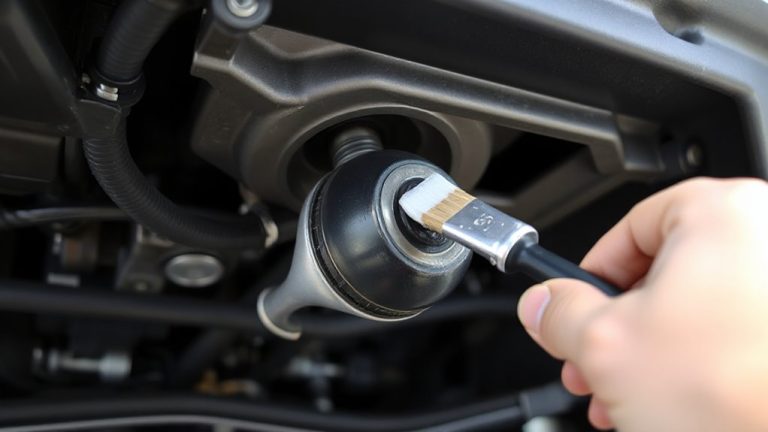
Your 2015 Nissan Pathfinder’s shock absorber mounts sit at the top of each strut assembly, connecting the suspension to the body. These mounts are critical for shock location and smooth force transfer. You’ll find one at each corner-two in front, two in rear-just above the wheel wells. In the front, the mount centers beneath the hood, mounted to the inner fender apron. Rear mounts attach to the body near the trunk floor. For accurate mount identification, look for a metal top plate with a central rubber bushing and a large through-bolt. The front mount measures approximately 7 inches in diameter, with a 14mm central bolt. The rear is smaller, around 5.5 inches, using a 12mm bolt. Correctly identifying these components guarantees you’re inspecting the right part during maintenance.
Use These Tools to Inspect the Mounts
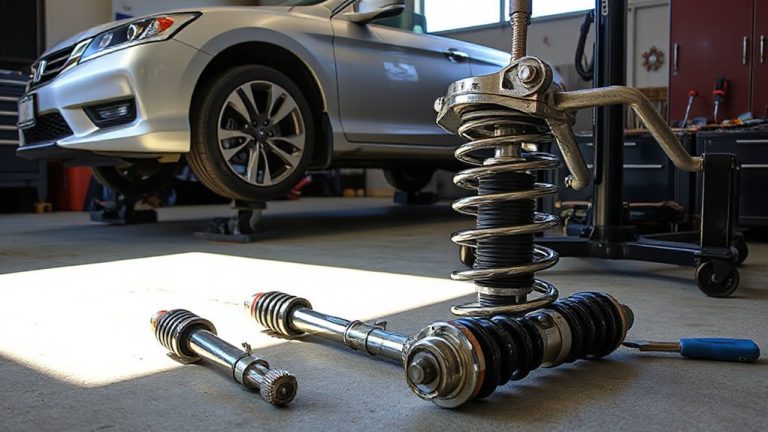
A proper inspection of your 2015 Nissan Pathfinder’s shock absorber mounts starts with the right tools. You’ll need a torque wrench, socket set, pry bar, and flashlight. Use the torque wrench to verify mounting bolts meet factory torque specifications-typically 64–85 lb-ft, depending on location. Incorrect torque can distort rubber components and lead to premature failure. A pry bar helps detect hidden play without damaging parts. Inspect upper and lower mounts systematically. An alignment check is critical afterward, as worn or improperly installed mounts can alter camber and caster angles. Even slight misalignments affect tire wear and handling. Use a digital level or alignment gauge to confirm vertical positioning of the strut assembly. Always consult the service manual for exact measurements and torque specifications. These steps guarantee accuracy, safety, and long-term suspension performance. Proper tool use isn’t optional-it’s essential.
Inspect for Wear, Cracks, and Loose Parts
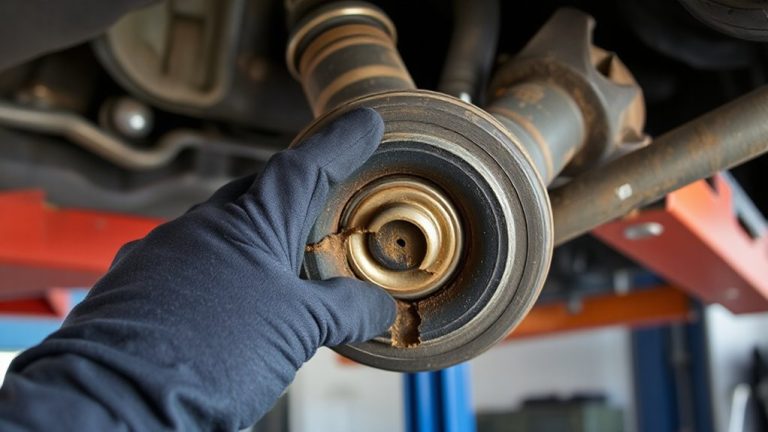
Start by visually examining each shock absorber mount for signs of deterioration, paying close attention to rubber bushings and metal housings. Check the mount condition carefully-cracks, tears, or collapsed rubber indicate failure. The rubber should be pliable but not overly soft or brittle. Inspect metal components for warping or corrosion, especially around stress points. Look for uneven wear patterns, which suggest misalignment or excessive movement. Next, assess bolt tightness using a torque wrench. Mounting bolts typically require 85–95 ft-lbs of torque. Loose bolts create play, accelerating wear and reducing ride stability. Even slight movement can compromise handling. Use a pry bar gently around the mount to detect hidden looseness. Any lateral movement beyond 1/8 inch signals internal damage. Note if brackets appear bent or if bushings are visibly separated from housing. Document all findings before deciding on next steps. Upgrading to high-performance shocks like the Best Shocks for Ram 2500 4×4 can significantly improve ride quality and durability under heavy loads.
Replace or Repair? Know the Difference
How do you know when a damaged shock absorber mount needs replacement instead of repair? If the mount condition shows cracks, deformation, or separated rubber, replacement is required-repairs aren’t viable. The 2015 Nissan Pathfinder’s mount uses bonded rubber and metal to dampen vibrations and maintain alignment. Once the rubber deteriorates or the base cracks, structural integrity is compromised. You can’t safely weld or epoxy these parts; they bear dynamic loads up to 1,500 pounds during impacts. Ignoring this leads to safety risks like erratic handling, uneven tire wear, or complete strut failure. A compromised mount may also misalign the steering axis by over 2 degrees, exceeding OEM tolerance. Minor surface rust or loose bolts may allow repair. But when the core structure fails, only replacement restores performance. Use OEM-spec mounts with Shore A hardness rating of 65–70 for correct ride dynamics.
Fix Mounts Without Mistakes: Key Tips
You’ve confirmed replacement is necessary-now the real work begins. Start with a clean mounting surface to guarantee proper fit and function. Always refer to factory Torque Specs-typically 64–88 ft-lbs for the strut-to-knob nut and 18–25 ft-lbs for mount-to-tower bolts. Under-torquing risks loosening; over-torquing can warp the mount or strip threads. Reassemble components in correct order: insulator, bearing, mount, and retaining nut. Verify the strut seats fully into the knuckle and mount. A misaligned assembly causes premature wear and noise. Perform an Alignment Check post-installation-camber and caster often shift when suspension is disturbed. Even slight deviations impact tire wear and handling. Use OEM-grade parts to maintain factory tolerances. Never reuse old fasteners; they lose clamping force. Double-check each connection before lowering the vehicle. Precision now prevents failures later.
Keep Your Ride Smooth: Prevent Future Damage
While routine inspections can’t stop every issue, they catch early signs of wear that lead to major problems down the road. You should inspect your 2015 Nissan Pathfinder’s shock absorber mounts every 15,000 miles. Worn mounts degrade ride comfort and compromise vehicle stability, especially on uneven terrain. Look for visible cracks, misalignment, or separated rubber in the mount assembly. The OEM mount (Part No. 55580-8E000) uses a bonded rubber-metal design rated for 60,000 miles under normal conditions. Excessive vibration or a clunking noise over bumps often signals failure. Moisture intrusion accelerates deterioration, so check for torn rubber boots. Replacing mounts at the first sign of wear maintains suspension geometry and steering response. Proper torque specs-19 lb-ft for upper nuts-are critical. Neglect risks uneven tire wear and reduced control. Preventive maintenance guarantees long-term performance, preserving ride comfort and vehicle stability.
On a final note
You must inspect your 2015 Nissan Pathfinder’s shock absorber mounts regularly. Worn mounts cause noise and reduce ride stability. Look for cracks, rust, or collapsed rubber-especially in the upper strut mount, which houses a bearing for steering rotation. Mounts measure approximately 80 mm in outer diameter and fit 14 mm bolts. Replace if loose or damaged. Use OEM-specified torque: 134–140 ft-lbs for mounting nuts. Proper installation prevents uneven tire wear and maintains suspension alignment.