Inspecting Shock Absorber Rod Seals on a 2016 Jeep Grand Cherokee
Check your 2016 Jeep Grand Cherokee’s shock absorber seals by inspecting the rod for dark oil residue above the lower third-this indicates a failed seal. Each front shock holds 145 cc of hydraulic fluid; leakage disrupts damping and invites air into the system, causing foaming. Use a high-lumen flashlight and lint-free rag to spot seepage and corrosion. Damaged rubber boots accelerate wear. Replace both shocks on the same axle if leaks are found to maintain balance and control. Further details on inspection techniques follow.
Notable Insights
- Inspect the shock absorber rod for dark oil residue, indicating seal failure on your 2016 Jeep Grand Cherokee.
- Use a high-lumen LED flashlight to detect subtle seepage or corrosion around the rod and seal area.
- Check that hydraulic fluid hasn’t migrated beyond the lower third of the rod, signaling internal pressure loss.
- Examine rubber boots for damage, as missing or torn boots allow debris that accelerates seal wear.
- Replace both shocks on the same axle if leaks are found to maintain balanced handling and ride control.
Signs of Leaking Shock Absorber Seals in a 2016 Jeep Grand Cherokee
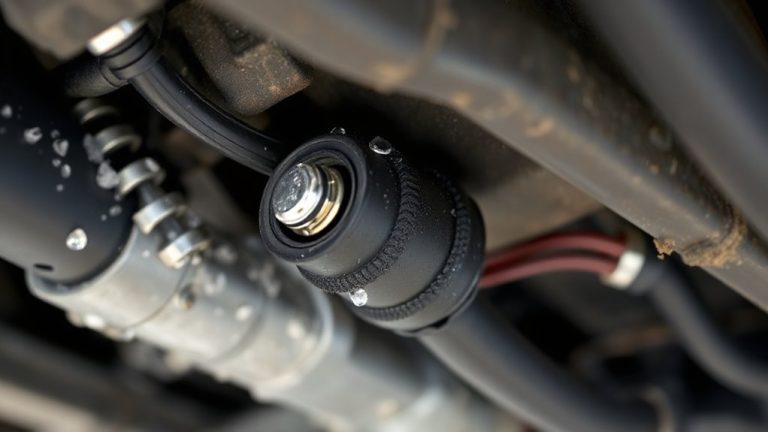
Fluid buildup around the shock absorber rod is your first clue. You’ll notice dark oil residue near the rod’s upper shaft-this isn’t normal seepage; it indicates seal failure. The 2016 Jeep Grand Cherokee’s front shocks hold approximately 145 cc of hydraulic fluid; any loss reduces damping efficiency. Look closely: if oil residue coats more than the lower third of the rod, internal pressure has compromised the seal. Damaged boots accelerate the problem. The rubber boots protect the rod and seal from debris and abrasion. When cracked, torn, or missing-common after off-road use-contaminants enter, scoring the rod and degrading the seal. Inspect each corner: front shocks measure 550 mm extended, 350 mm compressed; rears are 480 mm and 295 mm respectively. Consistent dampness or greasy buildup means replacement is due. Left unchecked, leaks lead to premature wear, not just poor ride control.
How Shock Absorber Rod Seals Affect Ride Quality
When your 2016 Jeep Grand Cherokee starts feeling loose over bumps or dives sharply during braking, failing shock absorber rod seals could be the culprit. These seals maintain internal fluid dynamics by preventing hydraulic oil from leaking out of the shock body. Proper fluid dynamics guarantee consistent damping force, which stabilizes the vehicle. When seal integrity degrades, oil escapes, reducing the shock’s ability to control spring motion. You’ll notice increased body roll, nose-diving during stops, and a generally bouncy ride. The shock absorber relies on a precise volume of oil under pressure; even minor seepage disrupts this balance. Once the rod seal fails, air can enter the system, causing foaming and diminished performance. Without intact seals, the piston rod corrodes faster, worsening the malfunction. Maintaining seal integrity isn’t just about preventing leaks-it’s about preserving ride control, handling precision, and long-term suspension health. Upgrading to high-performance shocks for towing can significantly improve stability under load and reduce seal stress over time.
Tools You Need to Inspect Shock Seal Rods
You can’t evaluate shock absorber rod seal condition without the right tools-visual signs like oil streaks or dampness near the dust boot may hint at trouble, but proper inspection requires more than a glance. You’ll need a high-lumen LED flashlight to illuminate grime-covered areas and spot subtle seepage. Use clean lint-free rags to wipe the rod before inspection. A set of metric wrenches and socket extensions is essential for removing mounting hardware. Verify your tools have proper thread compatibility with OEM M12x1.25 or M14x1.5 studs, depending on your Grand Cherokee’s trim. Torque specifications for shock mounting nuts are typically 65–75 ft-lbs-use a calibrated torque wrench to avoid under- or over-tightening. Calipers help measure rod diameter wear, critical for evaluating seal integrity. A pry bar aids controlled suspension movement, letting you examine the rod’s full travel. These tools, correctly used, deliver accurate, actionable evaluations. Upgrading to high-performance top picks for Jeep Wrangler shocks can significantly improve ride quality and off-road capability.
How to Check Your Shock Absorber Seals for Leaks
Why might your Jeep’s ride feel looser than usual? You may have leaking shock absorber seals. Start by visually inspecting each shock’s rod for wetness or oily residue. Oil streaks indicate seal failure. Use a flashlight to check for rod corrosion-pitting or rust disrupts seal integrity. Even minor corrosion accelerates wear. Look closely at the seal area for visible seal deformation; distorted or swollen rubber means it can’t maintain a tight seal. A deformed seal won’t retain hydraulic fluid under pressure. The 2016 Jeep Grand Cherokee’s shocks operate under 150–200 psi; compromised seals reduce damping efficiency. Leaks reduce control, especially on uneven terrain. Inspect all four shocks, front and rear. Don’t rely on bounce tests-they won’t detect early leaks. Direct visual confirmation of rod corrosion or seal deformation confirms the need for replacement. Upgrading to high-performance best shocks for Jeep Wrangler can improve overall ride stability and sealing durability.
What to Do If Your Shock Seals Are Leaking
How quickly should you act when you spot oil streaks on your shock absorber rods? Immediately. Any visible oil means the seal is compromised, allowing fluid contamination and accelerating internal wear. Left unchecked, leaking fluid attracts dirt and grit, which abrades the rod surface. This damage promotes rust formation, especially in humid or salty conditions common to off-road driving. Once rust forms, it destroys the precise seal fit-measured in microns-between the rod and O-ring. A pitted rod increases internal leakage, reducing damping force by up to 30% over time. You’ll notice poor ride control and excessive body roll. Do not delay. Replace both shocks on the same axle, even if only one leaks. This maintains balanced handling. Use OEM-grade monotube shocks with Viton seals rated for -40°F to 250°F. This prevents repeat failure and guarantees long-term reliability.
On a final note
You now know how to inspect shock absorber rod seals on your 2016 Jeep Grand Cherokee. Visible oil residue on the shock body indicates seal failure. The KYB Excel-G shocks used in this model have a 5/8-inch piston rod and a dual-lip Viton seal. Unchecked leaks cause poor damping, uneven tire wear, and reduced control. Replace seals or the full unit if rod scoring exceeds 0.002 inches.