Tripod CV Joint Grease Fittings: Hidden Access Points & Tools
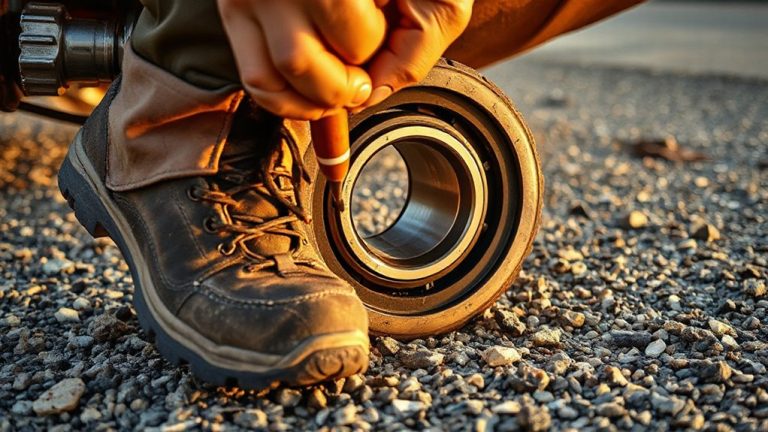
Check under the rubber boot near the outer housing edge of your tripod CV joint-some fittings hide beneath caps that look like solid plugs. These 1/8-inch NPT grease nipples withstand up to 15,000 psi and require a flathead or cap puller to access. If missed, the joint runs dry, causing rapid wear. Use a flexible, steel-braided extension hose with internal diameter over 0.125 inches for proper lubricant delivery. You’ll want to know which grease formulation maximizes protection and extends joint life under heavy loads.
Notable Insights
- Many tripod CV joints lack grease fittings entirely, designed as maintenance-free units with no lubrication access point.
- When present, grease fittings are often hidden under caps on the housing’s outer edge near the boot clamp.
- Removing the grease cap with a flathead or puller is necessary to confirm if a fitting lies beneath.
- Some caps cover only plugs, not grease fittings, leading to wasted effort if not verified before service.
- Buried fittings behind control arms require flexible, steel-braided extensions for proper grease gun access.
Where Hidden CV Joint Grease Fittings Are Located
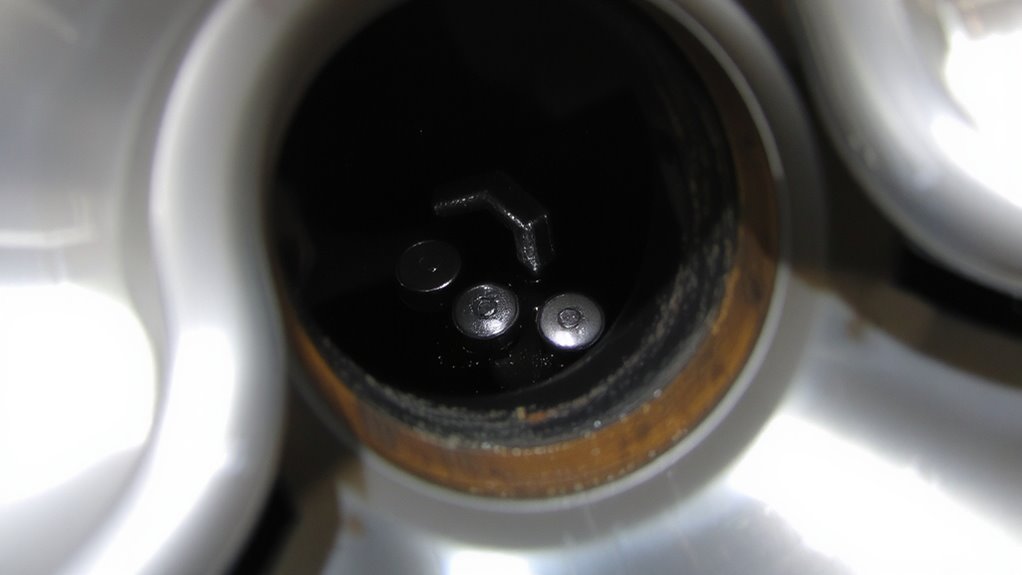
Where are the grease fittings on a tripod-type CV joint-if they’re even there at all? Most modern tripod CV joints don’t have them. Manufacturers often design these joints as maintenance-free, sealing lubrication inside during assembly. If a grease fitting exists, it’s typically on the outer edge of the housing, near the boot clamp. You’ll need grease cap removal to access it-use a flathead or cap puller carefully. Not all caps hide fittings; some are just plugs. Confirm presence before disassembly. During reassembly, correct joint boot alignment is critical. Misalignment causes boot tearing or clamp failure. Align the split in the rubber boot with the yoke tang for proper seating-usually at 12 o’clock. Use OEM-specified clamps; standard hose clamps fail under vibration. Boot diameter averages 60–70mm, depending on axle model. Precision here prevents contamination.
Signs Your Tripod CV Joint Is Running Dry
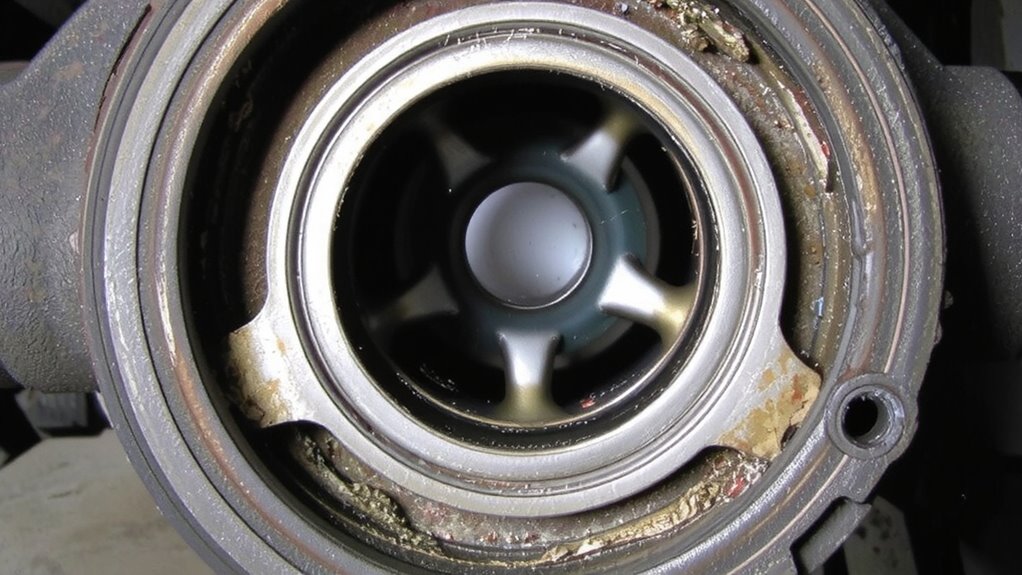
How do you know when a tripod CV joint is starved for lubrication? A lack of lubrication leads to increased friction and heat within the joint. You’ll notice a rhythmic clicking or grinding noise during acceleration, especially in tight turns. This sound indicates metal-on-metal contact, a direct result of insufficient grease. Over time, lack of lubrication causes excessive wear on the roller bearings and tripod spider. The rollers may develop flat spots exceeding 0.5 mm depth, compromising smooth movement. Inspect the boot; if it’s intact but the joint feels stiff, internal dryness is likely. You might also see visible pitting or discoloration on the track surfaces. Excessive wear reduces joint life by up to 70%. Without proper lubrication, temperatures can exceed 300°F, accelerating degradation. Early detection prevents catastrophic failure, avoiding costly drivetrain damage. Monitor for noise, resistance, and heat-they’re key indicators.
How to Grease Hard-to-Reach CV Fittings
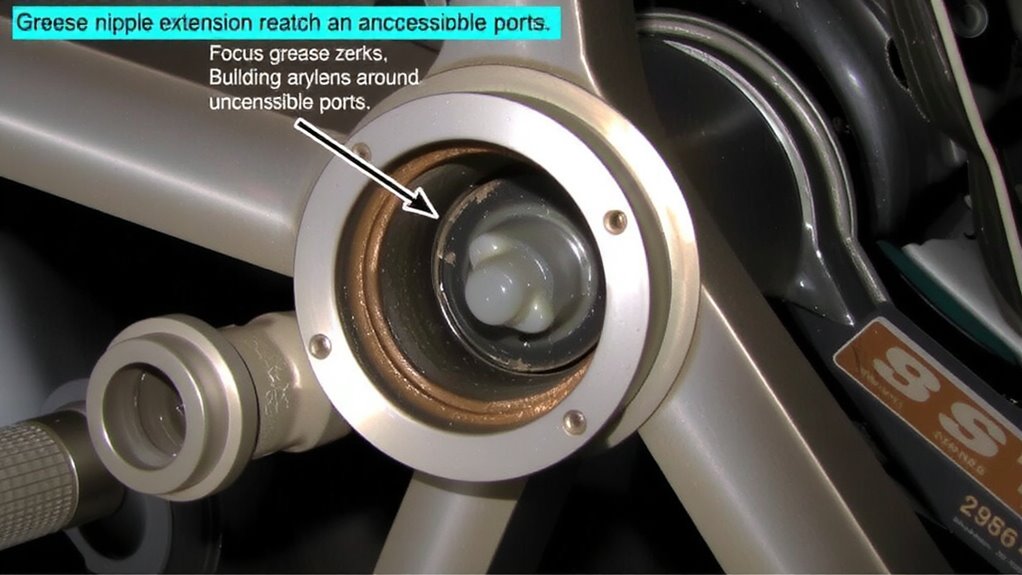
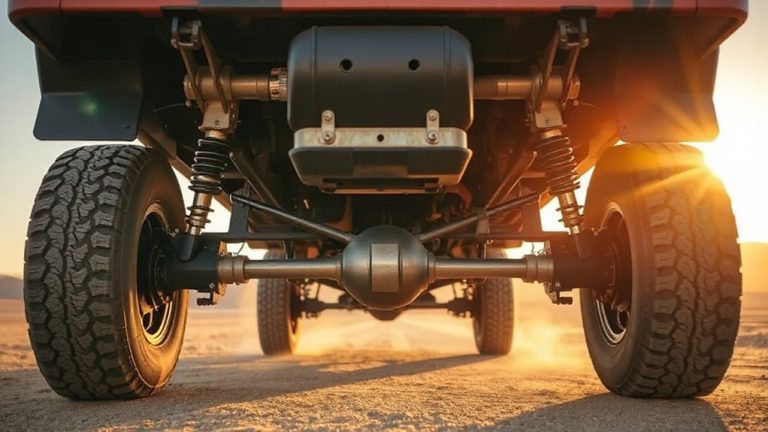
Ever tried greasing a tripod CV joint only to find the zerk fitting tucked behind a control arm or buried near the transmission crossmember? You’ll need a grease nozzle extension to reach those tight spots. Standard grease guns won’t fit without interference, especially when access port clearance is less than 1.5 inches. Use a flexible, steel-braided extension hose-typically 6 to 12 inches long-that attaches directly to your grease gun. This hose lets you navigate around suspension components and drive shafts with precision. Guarantee the extension’s internal diameter is at least 0.125 inches to maintain proper grease flow. Align the zerk fitting straight to avoid cross-threading. Pump slowly to allow the grease to displace old lubricant and fully fill the joint cavity. Proper tool alignment and extension use guarantee complete lubrication without damaging components.
Best Tools and Grease for Inner CV Joints
Reliability starts with the right tools and lubricant when servicing inner tripod CV joints. Use a high-pressure grease gun rated for at least 15,000 psi to guarantee effective delivery through narrow zerk fittings. Opt for guns with extended, flexible hoses-36 inches or longer-to reach tight spaces without straining. Tool durability matters; hardened steel drivers and reinforced couplers resist wear during repeated use. Choose molybdenum disulfide-based greases with EP (extreme pressure) additives for maximum protection under load. Guarantee grease compatibility with OEM specifications-CV joints typically require NLGI #2 grease with a working temperature range of -30°C to 150°C. Mismatched lubricants can degrade internal seals or wash out existing grease. PTFE-infused formulas reduce friction in high-slip conditions. Always verify base oil viscosity (100 cSt at 40°C) and drop point (above 260°C) to maintain film strength.
What Happens When You Skip CV Joint Greasing
Neglecting to grease your CV joints might seem like a time-saver, but it accelerates wear and invites premature failure. Without proper lubrication, metal-on-metal contact increases friction, leading to CV joint overheating. Excessive heat breaks down residual grease, reducing its viscosity and load-carrying capacity. This accelerates premature wear in the tripod’s needle bearings and sliding surfaces. Most OEM specifications require molybdenum-disulfide–infused grease with a dropping point above 500°F to withstand operational heat. Under-lubricated joints exceed 300°F quickly, well beyond safe thresholds. Over time, micro-welding and spalling occur on raceways, degrading performance. You’ll notice vibration or clunking during acceleration-symptoms of internal damage. Once wear begins, it’s irreversible. The joint’s lifespan can drop by up to 70% without proper greasing. Preventing CV joint overheating isn’t optional-it’s essential for achieving design service life.
How to Ensure Every Grease Point Gets Covered
Where do you start when every grease point matters? Begin by identifying all lubrication zones on the tripod joint-three roller ends and the central groove. Use a high-quality moly-disulfide grease to guarantee consistency under load. Apply grease in star patterns, rotating the joint to expose each passage. This method guarantees even grease patterns across moving surfaces. Perform coverage checks by rotating the joint through its full range-look for fresh grease weeping from seals and interfaces.
| Location | Grease Volume (cc) |
|---|---|
| Central spline | 5.0 |
| Each roller end | 1.5 |
| Outer cage interface | 3.0 |
| Boot edge seal | 1.0 |
Track application points systematically. Missed spots lead to premature wear. Use a grease nipple with a flexible extension to reach confined areas. Verify each zone with visual inspection-no guesswork.
Why Your CV Joint Needs Grease (And What Fails Without It)
A well-lubricated tripod CV joint runs smoothly under stress-without grease, metal-on-metal contact starts immediately. This friction generates excessive heat, accelerating wear and leading to material fatigue in the tripod’s rollers and inner race. Over time, repeated stress on fatigued metal causes microcracks, compromising joint integrity. You’ll notice vibrations or clunking during acceleration-early signs of internal damage. Grease also acts as a barrier against moisture and contaminants; without it, corrosion buildup occurs on precision-ground surfaces, disrupting smooth articulation. Salt, dirt, and road grime penetrate unprotected zones, worsening pitting and surface degradation. Most OEMs specify molybdenum-disulfide-based grease for its high-pressure stability and adhesion properties. Proper lubrication maintains low torque variation-critical for consistent driveline performance. Neglecting grease cuts joint life by up to 70%, per SAE J2897 standards. Prevent failure: guarantee complete grease coverage at every lubrication point during service.
On a final note
You must grease all CV joint fittings to guarantee longevity. Tripod-type inner joints have hidden zerks tucked behind the boot. Use a 45-degree swivel grease gun tip to reach them. Load with molybdenum-disulfide grease-NLGI #2, operating range -20°F to 350°F. Unlubricated joints wear rapidly. Metal-on-metal contact causes premature failure. Proper greasing extends joint life beyond 100,000 miles. Skip it, and you risk costly drivetrain damage.