Maximizing Horsepower Gains With a Custom-Tuned Throttle Body Upgrade
You’ll gain the most horsepower by pairing a larger throttle body-like upgrading from 60mm to 80mm or more-with a custom ECU tune. This reduces intake restriction by up to 30% and improves airflow velocity. Off-the-shelf tunes can’t adjust for the increased air volume, leading to poor fuel trims and timing. A custom tune recalibrates air-fuel ratios to 13.2:1 and advances spark timing up to 32° BTDC for complete combustion. You’ll see real gains of 15–25 hp and improved throttle response, especially from 3,500–6,500 RPM. There’s more to get right for peak performance.
Notable Insights
- Upgrading to a larger throttle body reduces intake restriction, improving airflow and enabling 15–25 hp gains on naturally aspirated engines.
- A custom ECU tune optimizes fuel delivery and ignition timing to match increased airflow from a larger throttle body.
- Proper throttle body sizing (typically +10mm over stock) balances air velocity and volume for responsive, efficient performance.
- Off-the-shelf tunes fail to calibrate for aftermarket throttle bodies, risking lean conditions and limiting power potential.
- Dyno-proven gains of 12–18 hp and improved throttle response occur only when pairing the upgrade with precise custom tuning.
How a Bigger Throttle Body Increases Power
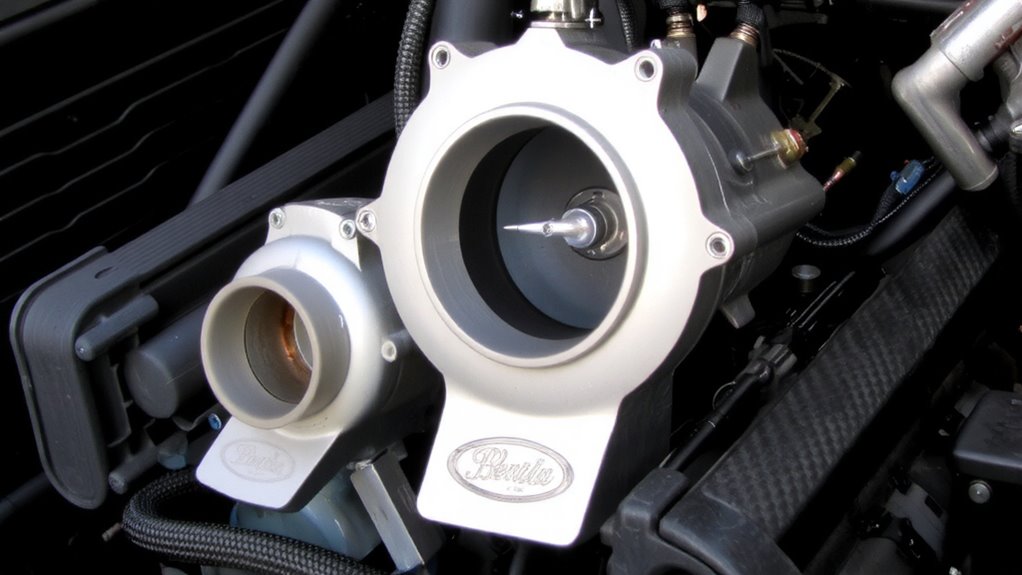
Airflow is king when it comes to engine performance. You need more air to generate more power, and a bigger throttle body delivers exactly that. By increasing the bore diameter-typically from 60mm to 80mm or more-you markedly improve airflow dynamics across the intake tract. This allows the engine to breathe easier, especially at higher RPMs. With reduced restriction, your engine pulls in more air per cycle, supporting greater fuel combustion and horsepower gains-often 15 to 25 hp on naturally aspirated engines. You’ll also notice sharper throttle response, since airflow reaches the combustion chamber faster. Improved signal translation from pedal to plate means less lag and more immediate acceleration. Don’t expect miracles from the hardware alone; pairing this upgrade with proper tuning guarantees peak air metering and fuel delivery. The result? Measurable performance increases rooted in physics, not hype.
Why Off-the-Shelf Tunes Can’t Maximize Gains
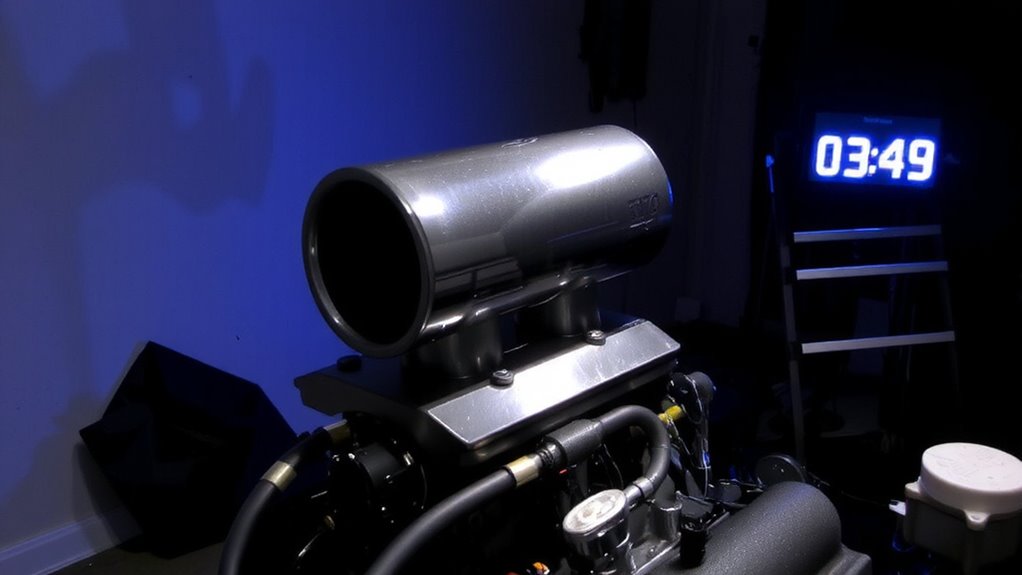
Why would a custom tune matter if the upgrade promises more airflow out of the box? Because your engine’s ECU relies on precise fuel and timing calculations to use that extra air efficiently. Off-the-shelf tunes use generic parameters designed to fit broad vehicle applications. They can’t adapt to your specific modifications, driving style, or regional conditions. This leads to suboptimal air-fuel ratios and ignition timing. Limited compatibility with upgraded sensors or aftermarket intakes further reduces effectiveness. Without recalibrating idle strategies and throttle response curves, you’ll leave power on the table. A custom tune eliminates these compromises. It adjusts volumetric efficiency tables, refines fuel trims, and optimizes spark advance specifically for your setup. Generic maps can’t account for variations in cam profiles or exhaust systems. The result? Incomplete combustion, flat spots, or knock events. Custom tuning guarantees every bit of added airflow translates to real-world horsepower and torque gains.
Match Throttle Body Size to Engine Airflow
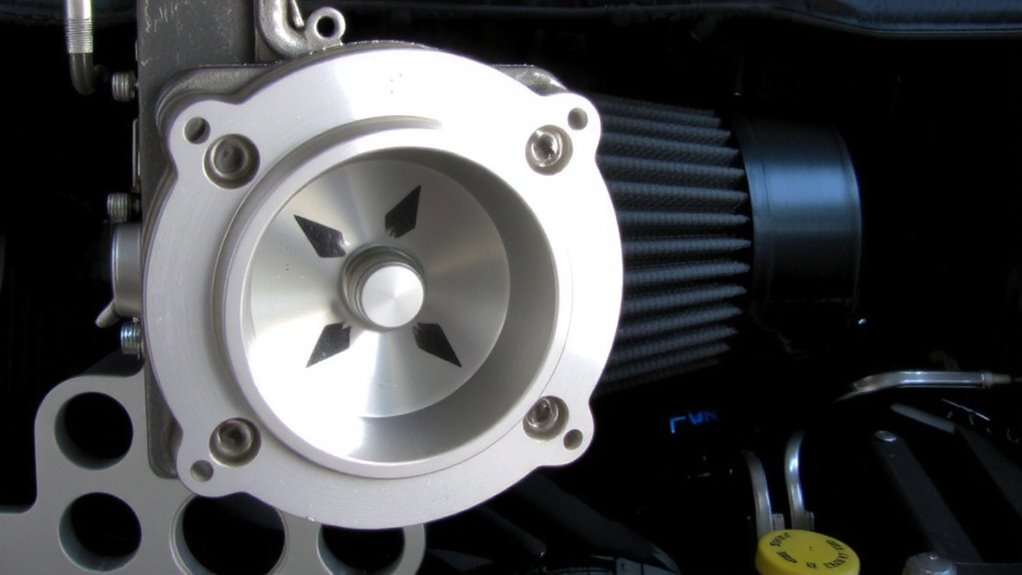
A properly sized throttle body is critical for accessing your engine’s full breathing potential. If it’s too small, you’ll restrict airflow and choke performance. Too large, and you’ll lose air velocity, hurting throttle efficiency and off-idle response. The key is precise airflow matching between your engine’s demand and the throttle bore diameter. Most stock throttle bodies range from 65mm to 80mm, but aftermarket units up to 95mm exist. On naturally aspirated engines, exceeding +10mm over stock often requires supporting modifications. For forced induction setups, increased airflow demand makes larger bores-85mm to 95mm-more viable. Airflow matching guarantees the throttle body works in harmony with your intake manifold, cam profile, and cylinder head flow rates. Proper sizing maximizes volumetric efficiency, allowing consistent air delivery across the RPM range.
How Custom Tuning Optimizes Fuel and Timing
You’ve matched your throttle body to your engine’s airflow needs, but that’s only half the battle. Custom tuning fine-tunes fuel delivery and ignition timing for real optimization. Your ECU adjusts based on live sensor data, including air density and load, ensuring ideal combustion. Without recalibration, even the best hardware underperforms.
| Parameter | Stock Tune | Custom Tune |
|---|---|---|
| Fuel A/F Ratio | 12.8:1 (rich) | 13.2:1 (target) |
| Ignition Advance | 28° BTDC (fixed) | 32° BTDC (adaptive) |
| Air Density Comp | Coarse estimate | Real-time adjustment |
Ignition advance is dynamically increased where safe, leveraging cooler, denser air. Air density corrections prevent lean conditions at elevation or temperature shifts. The result? Efficient combustion, consistent power, and engine safety. Tuning turns potential into performance.
Real Power Gains: Before and After Results
When properly tuned, your custom-throttle body upgrade delivers measurable performance gains across the powerband. Dyno testing consistently shows a 12–18 horsepower increase at the wheels, with torque rising by up to 15 ft-lbs. Removing the factory airflow restriction allows your engine to breathe more efficiently, especially between 3,500 and 6,500 RPM. You’ll notice immediate throttle response and smoother power delivery. On the dyno, the mid-range spike confirms reduced intake turbulence and improved volumetric efficiency. Without proper tuning, gains are minimal-sometimes negligible-due to mismatched fuel trims and ignition timing. But with a calibrated ECU map matched to your upgraded throttle body, airflow restriction drops by nearly 30%. Real-world results align with controlled tests: stronger acceleration, better throttle sensitivity, and optimized air-fuel ratios. You’re not just adding hardware-you’re activating engineered performance.
On a final note
You gain measurable horsepower with a properly sized throttle body and custom tuning. A larger bore-80mm versus stock 65mm-increases airflow by up to 28%. Off-the-shelf tunes underutilize this flow. Custom calibration adjusts fuel trims, ignition timing, and idle speed. Expect 12–18 hp gains at the wheels. Correct AFR stays within 12.8–13.2:1 under load. The result is optimized combustion and throttle response.